

What are the benefits of using black protective primer finishes over traditional coatings?
Black protective primer finishes provide a durable, corrosion-resistant foundation for subsequent coatings, helping protect metal parts more effectively than a traditional coating used alone. They are particularly valuable where components need sustained protection and a consistent base for the final finish.
The main benefit of a black protective primer finish is that it creates a specially prepared intermediate layer between the metal substrate and the final coating. Compared with relying on a conventional single coating, a primer-and-topcoat system can improve adhesion, provide more consistent coverage and give the finished component greater tolerance to demanding service conditions.
Improved adhesion between the substrate and topcoat
Primer is formulated to bond to prepared metal and provide a suitable surface for the subsequent coating. This can reduce the risk of poor intercoat adhesion, lifting or flaking where the component is exposed to handling, vibration, moisture or temperature changes. The topcoat is not required to perform every function by itself, because the primer supports the bond between the metal and the visible finish.
More controlled protection at vulnerable areas
Metal parts are not equally easy to coat. Edges, corners, recesses, weld zones, drilled holes and areas with minor surface variation can present challenges for a single conventional finish. A correctly specified primer can help create a more uniform protective system across these features. It does not replace proper preparation or correct application, but it adds an additional layer of control where coating continuity is important.
Greater flexibility in coating specifications
A primer allows the coating system to be designed around the component rather than treating the final colour coat as the only protective layer. The primer, topcoat and preparation method can be selected according to the metal substrate, exposure conditions, handling requirements and desired appearance. This is particularly useful for fabricated steelwork, machinery components, automotive parts and other items that may face different combinations of abrasion, moisture and industrial contamination.
Better support for a uniform final appearance
Black primer finishes can provide a consistent visual base beneath dark or black topcoats. This may help minimise noticeable variation where the top layer is thin at edges or where small areas are affected by handling during manufacture. A black base can also make minor gaps in visual coverage less conspicuous than a contrasting underlayer. The final appearance still depends on the selected topcoat, film thickness, substrate preparation and curing conditions.
Additional tolerance against minor coating damage
With a single-layer coating, a scratch or local loss of finish can expose the substrate directly. In a primer-and-topcoat system, the primer may remain as an additional protective layer beneath the damaged area. It should not be treated as a substitute for repairing significant damage, but this layered construction can reduce the immediate exposure of the metal and make local assessment more straightforward.
More predictable results across production batches
For manufacturers and fabricators processing repeated batches, a defined primer system can improve consistency between components. It establishes a repeatable stage in the coating specification, helping to control surface preparation, application and inspection before the final coat is applied. This is more dependable than expecting one conventional coating to provide adhesion, coverage, appearance and environmental protection without an intermediate layer.
Potential maintenance advantages
A properly specified layered finish can make the condition of a component easier to assess during inspection. Areas of wear, impact or coating breakdown can be identified against the surrounding finish, allowing maintenance decisions to be based on the location and extent of the defect. The actual maintenance interval depends on the exposure environment, coating specification, substrate preparation and how the component is used.
Black protective primer finishes are not automatically the best choice for every application. The specification should account for the metal type, surface cleanliness, required film build, topcoat compatibility, curing requirements and expected exposure. A conventional coating may be suitable for lower-risk conditions, whereas a primer-supported system is more appropriate where adhesion, layered protection, appearance consistency and long-term coating performance are important.
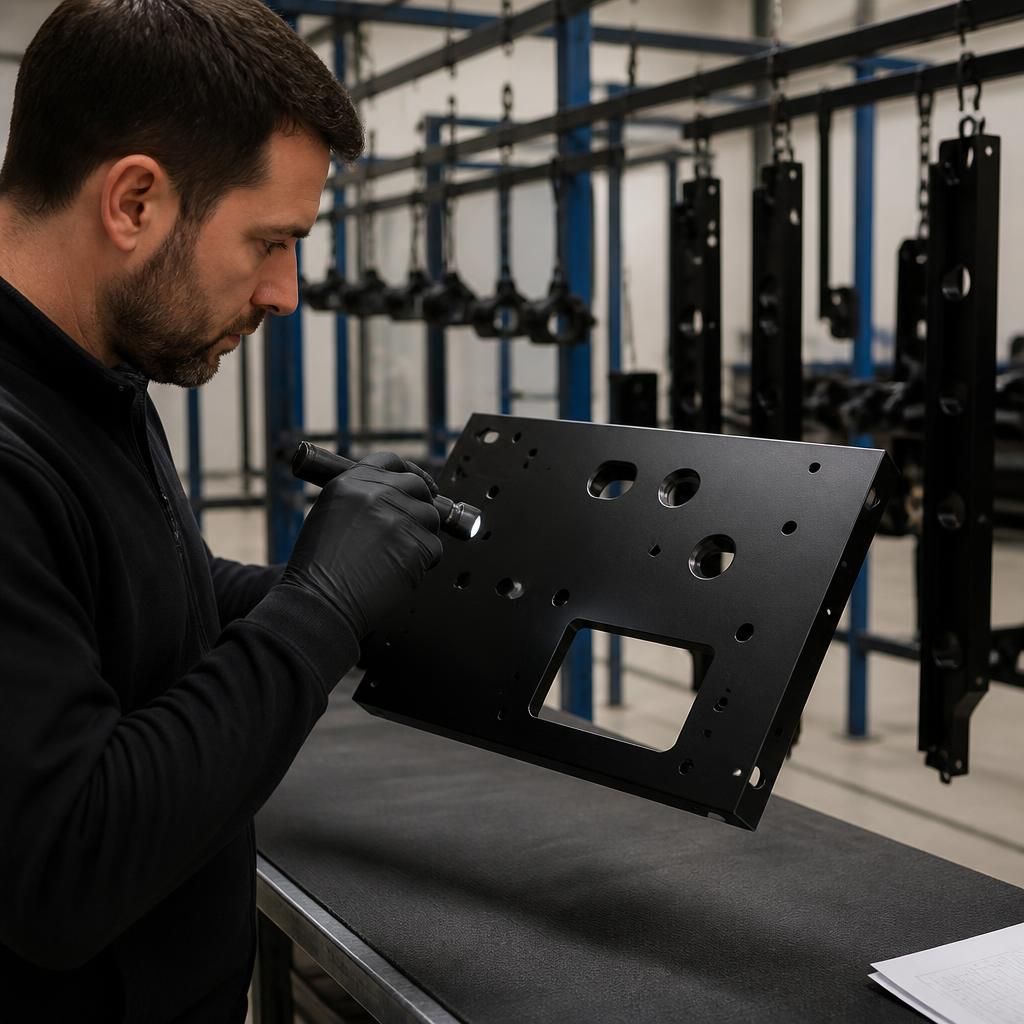
A black protective primer finish provides a separate quality-control stage before the final coating is applied. The prepared metal and primer layer can be inspected for contamination, incomplete coverage, pinholes or other defects before they are concealed by the topcoat. This makes it easier to identify whether a problem originates in surface preparation, primer application or the final coating.
With a traditional single-coat finish, these stages are combined, so a defect may only become apparent after the coating has been handled or exposed to service conditions. Separating the protective primer from the visible finish gives manufacturers and fabricators a clearer basis for checking work, correcting faults and documenting coating quality before components leave production.
Discuss the right black protective primer finish for your application
If you are comparing a black protective primer system with a traditional coating, discuss your substrate, exposure conditions, topcoat and required finish with a powder-coating specialist. This will help establish whether the additional primer layer is appropriate for your metal components.