

How do black protective primers enhance the environmental resistance and maintenance cycle of steel components?
Black protective primers enhance steel components’ environmental resistance by creating a sound, adherent foundation that helps shield the metal from moisture, corrosion and surface wear. When correctly specified and applied, they support longer intervals between inspections, touch-ups and recoating, making the maintenance cycle more manageable.
Black protective primers improve the environmental resistance of steel components by controlling how moisture, salts, chemicals and mechanical damage affect the coating system. Their main contribution is not the colour itself, but the primer’s formulation, adhesion, film integrity and compatibility with the specified topcoat. Together, these factors influence how often the component needs inspection, local repair and complete recoating.
On exposed steel, corrosion commonly begins at weak points such as cut edges, welds, fastener areas, sharp corners and small defects in the coating. A correctly selected primer helps provide consistent coverage across these areas and limits the routes through which contaminants can reach the substrate. This is particularly important where components face rain, condensation, road salt, industrial deposits or repeated handling.
The primer also affects the way the coating system responds to environmental cycling. Steel expands and contracts as its temperature changes, while coatings may respond differently from the metal beneath them. A primer with suitable flexibility and adhesion can help the system accommodate these movements without premature cracking or loss of bond. For black finishes, thermal loading should be considered during specification because dark surfaces can absorb more solar heat; the complete primer and topcoat system must therefore be suitable for the component’s exposure and operating temperature.
Resistance to chemicals and pollutants depends on the particular environment. Atmospheric deposits, oils, cleaning agents, alkaline materials and process chemicals can soften, stain or attack an unsuitable coating. A black protective primer may form part of a system designed for improved resistance, but it should not be treated as a universal barrier. The primer, topcoat and any required pre-treatment need to be selected together for the actual exposure, including indoor industrial conditions as well as outdoor weathering.
Good preparation is central to the maintenance cycle. Steel should be assessed for rust, mill scale, oil, grease, dust and other contaminants before coating. Surface preparation creates the profile and cleanliness needed for reliable adhesion, while correct application controls coverage, curing and the treatment of edges and welds. Inadequate preparation can cause blistering, flaking or corrosion beneath the film, creating maintenance work even when the visible finish initially appears satisfactory.
Once installed, maintenance should be condition-based rather than determined by colour alone. A practical inspection should look for:
- rust staining, blistering, bubbling or lifting around edges, welds and fixings;
- scratches, impact damage, abrasion and exposed steel;
- chalking, fading or loss of gloss caused by weathering or ultraviolet exposure;
- deposits such as salt, dust, oil or chemical residue; and
- cracks, pinholes or areas where water may remain trapped.
Light surface contamination can often be removed using a cleaning method compatible with the coating system. Damaged areas should be assessed before repair: loose material and corrosion need to be removed, the exposed steel prepared, and the repair coating selected for compatibility with the existing primer and topcoat. Localised treatment is generally more appropriate than covering a deteriorating surface without addressing the cause, particularly where moisture is entering through a defect.
The maintenance interval is influenced by exposure severity, component design, coating thickness, surface preparation, handling and drainage. Components exposed to coastal air, abrasive dust, frequent condensation or aggressive chemicals require closer observation than those kept in a clean, controlled environment. Design details also matter: ledges, crevices and horizontal surfaces that retain water can shorten the effective life of an otherwise suitable coating system.
For industrial steelwork, records can make the cycle more predictable. Documenting the primer and topcoat specifications, preparation method, application conditions, repairs and inspection findings helps identify recurring failure points and supports consistent future work. Black protective primers can therefore contribute to a lower-maintenance coating system, but their performance depends on correct specification, preparation, application, environmental suitability and timely attention to early defects.
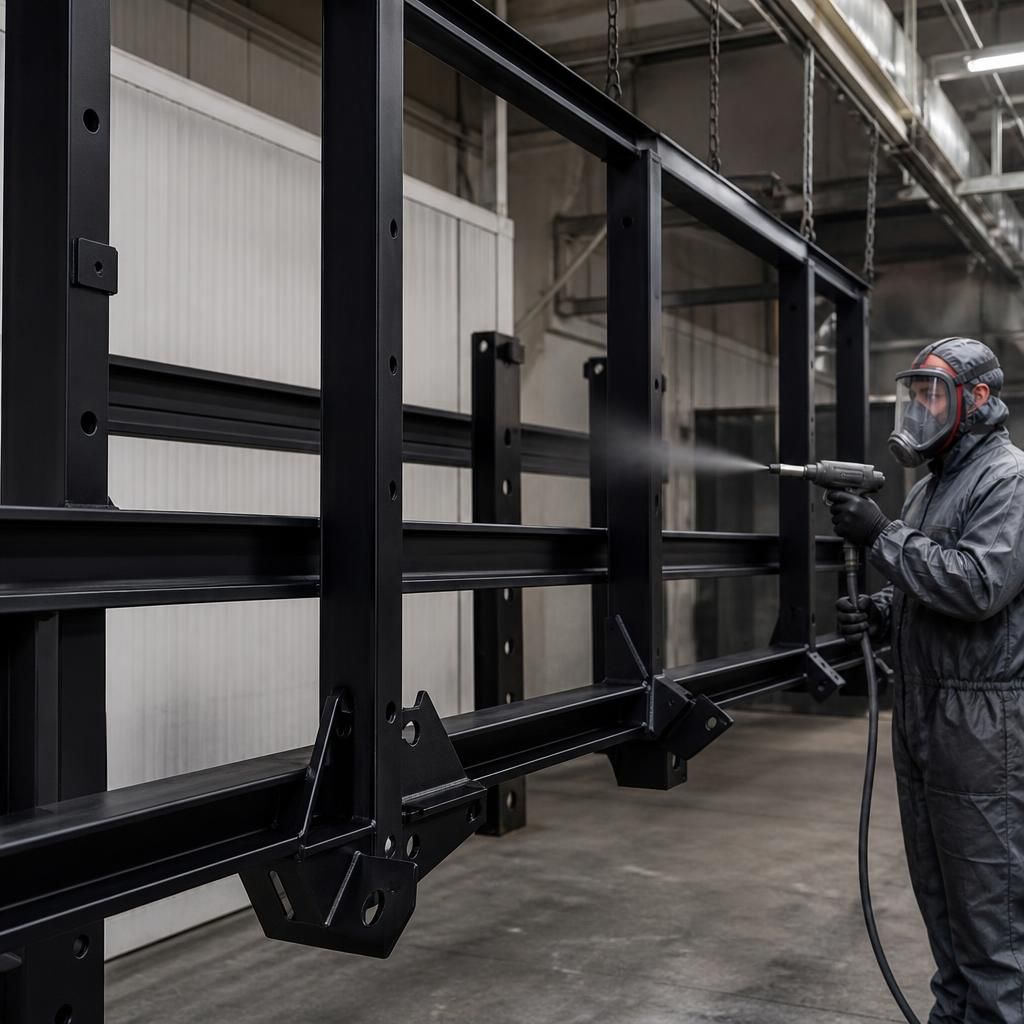
A black protective primer supports environmental resistance as the foundation of a complete coating system, rather than as a standalone finish. It is formulated to bond with prepared steel and provide a stable surface for the topcoat, while the topcoat supplies the required level of weathering, ultraviolet and chemical resistance for the operating environment.
This distinction matters when planning maintenance. If the topcoat is worn through, the exposed primer should be treated as a coating defect rather than assumed to provide lasting protection on its own. The repair specification should match the existing primer, topcoat and exposure conditions so that the restored area retains adhesion and does not introduce an incompatible layer. Correctly matched systems are easier to assess and maintain because visible deterioration can be addressed before it extends into the steel substrate.
Discuss Black Protective Primer Options for Steel Components
Discuss your steel components, exposure conditions and intended maintenance cycle with a powder-coating specialist to identify a compatible black protective primer system. Providing details of the substrate and operating environment helps inform the specification before coating begins.