

How do black protective primer finishes contribute to the longevity and performance of metal structures?
Black protective primer finishes help extend the service life of metal structures by improving corrosion resistance and creating a stable foundation for subsequent coating layers. When correctly specified, applied to properly prepared metal and matched to the operating environment, they support stronger adhesion, more consistent protection and durable performance.
Black protective primer finishes contribute to the longevity and performance of metal structures by forming a controlled protective layer between the substrate and the surrounding environment. Their main value is as part of a complete coating system: the primer helps condition and protect the metal, while the subsequent finish coat provides additional resistance to weathering, handling, abrasion and chemical exposure.
The primer supports structural durability in several ways:
- Limiting access to the substrate: A continuous primer film reduces the direct contact between steel and moisture, oxygen, salts and other contaminants that can initiate deterioration.
- Supporting the topcoat: A suitable primer gives the finishing layer a compatible surface to bond to and can reduce the risk of premature flaking, blistering or under-film deterioration.
- Helping protect vulnerable details: Welds, cut edges, drilled holes, corners and joints can be more susceptible to coating breakdown than broad flat areas. Correct preparation and coverage at these locations are therefore important to the service life of the whole component.
- Providing a consistent base: The black colour can make missed areas, uneven coverage and later coating damage easier to identify during inspection, depending on the colour and opacity of the finishing coat.
For load-bearing frames, fabricated assemblies, brackets, plant components and other industrial steelwork, coating failure is rarely caused by one factor alone. Surface contamination, retained moisture, sharp edges, inadequate curing, unsuitable primer and mechanical damage can all shorten the useful life of a finish. A black protective primer can reduce the effect of these risks only when it is selected for the metal, exposure conditions and intended topcoat.
Environmental exposure is a major consideration. Structures used outdoors may face rain, condensation, ultraviolet radiation, temperature changes, airborne pollutants and de-icing or industrial salts. Components in factories, workshops or vehicle-related environments may also encounter oils, cleaning agents, fuels or repeated contact. The primer should therefore be assessed as part of a specified system rather than chosen solely for its colour. A system designed for sheltered indoor steel may not be appropriate for exposed structural work or areas subject to frequent chemical cleaning.
Mechanical performance also affects longevity. Handling during fabrication, transport or installation can create scratches, impact marks and abrasion. In service, moving parts, contact points and exposed edges may experience repeated wear. A compatible primer and topcoat combination can help maintain the protective barrier, but damaged areas still need assessment and suitable repair. Coating thickness, curing and edge coverage should be controlled consistently across batches, particularly where components have different shapes or mass.
The condition of the metal before priming is equally important. Rust, mill scale, oil, grease, salts and dust can remain beneath a coating if preparation is insufficient. These contaminants may interfere with bonding or enable corrosion to develop beneath the film. Fabricators and manufacturers should also consider weld spatter, sharp projections and residues from fabrication processes before the component enters the coating process. Cleaning, preparation and inspection should be appropriate to the substrate and the required coating specification.
Black protective primer finishes can also assist with planned maintenance. A visible change in colour, local rust staining, blistering, cracking, peeling or impact damage may indicate that the coating system has been compromised. Early identification allows the affected area to be cleaned, prepared and recoated before deterioration spreads. Inspection should give particular attention to joints, fasteners, drainage points, underside areas and locations where water or debris can collect.
In practical terms, the longevity gained from a black protective primer depends on the complete chain of decisions:
- Identify the metal substrate and the conditions it will face.
- Choose a primer that is compatible with both the substrate and the intended finishing coat.
- Prepare the surface to remove contamination and create the required coating surface.
- Apply the primer evenly, including edges, recesses and fabrication details.
- Control curing and handling so the coating is not damaged before the system is complete.
- Inspect the finished component and maintain any areas affected by service damage.
When these controls are followed, the primer helps the full coating system remain intact for longer and supports more predictable performance from the metal structure. It should not, however, be treated as a substitute for correct design, drainage, joint detailing, material selection or routine inspection. For Midlands manufacturers, fabricators, construction firms and automotive businesses, specifying the primer with the complete coating system and the component’s operating conditions in mind is the most reliable way to obtain durable protection.
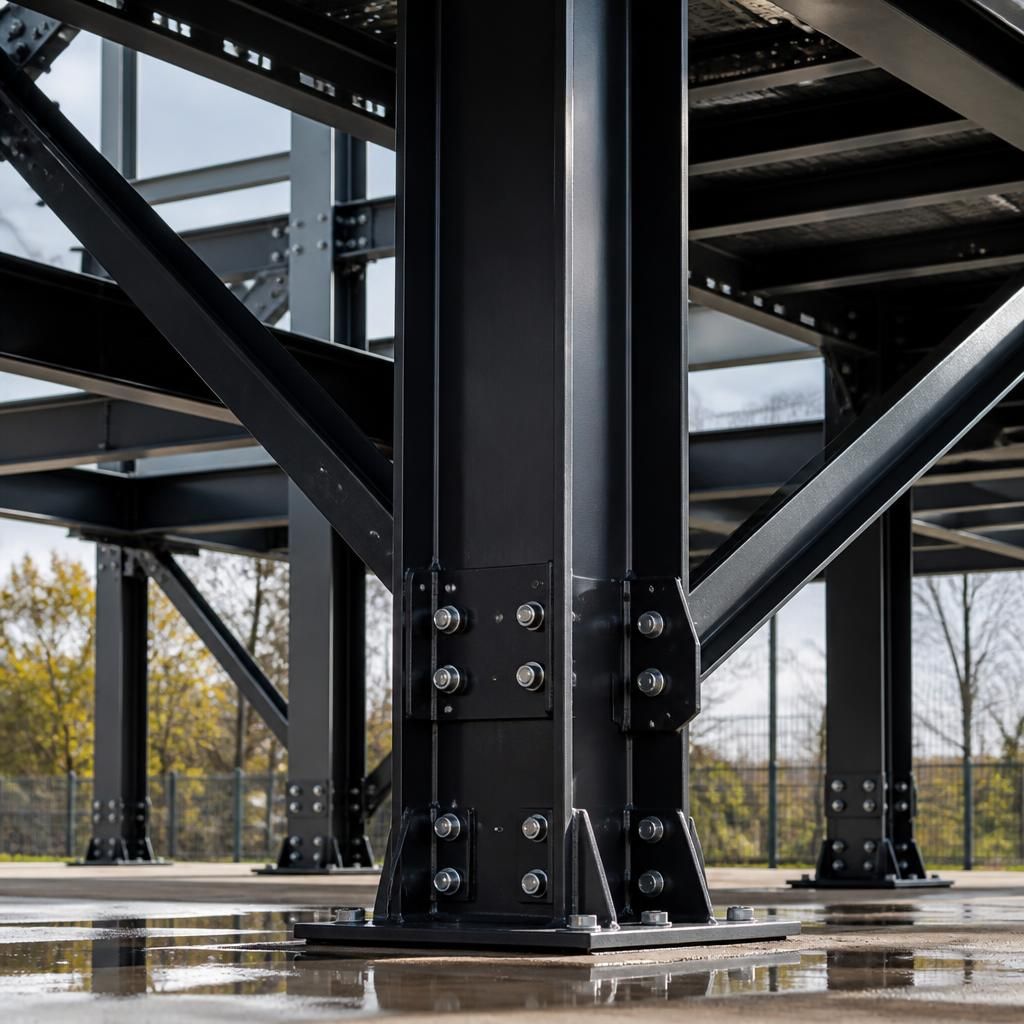
Black protective primer finishes can support metal structure longevity by helping the coating system tolerate changes in temperature. Steel and its surrounding finish expand and contract as conditions change, which can place stress on the bond between the substrate, primer and topcoat. A primer selected for the specified coating system helps maintain adhesion as these movements occur, reducing the risk of cracking or loss of protection caused by thermal cycling.
This is particularly relevant to external frameworks, fabricated assemblies and components that move between different temperatures during storage, transport or operation. The primer must be compatible with the substrate and finishing coat, with the complete system assessed for the expected exposure. Colour alone does not determine thermal performance; formulation, film properties, preparation and curing all influence how well the finished coating continues to protect the metal.
Discuss Black Protective Primer Finishes for Your Metal Structures
If you are specifying a black protective primer finish for a metal structure, discuss the substrate, exposure conditions and intended topcoat with a specialist before finalising the coating specification. Powder-coatings.co.uk can help Midlands businesses assess suitable coating requirements for fabricated and industrial components.