

What is the electrostatic coating process for aluminium?
The electrostatic coating process for aluminium uses an electrically charged powder, which is attracted to and held on the earthed aluminium surface. The coated component is then heated so the powder melts, flows and cures into a continuous, durable finish.
For aluminium, electrostatic coating is a controlled dry-finishing method in which charged powder is directed onto a prepared, electrically connected component. The process is more than simply spraying powder: surface preparation, grounding, application control and curing all affect whether the finished coating bonds correctly and performs as intended.
1. Component assessment and preparation
Before coating, the aluminium component is assessed for its alloy, profile, condition, intended use and any areas that must remain uncoated. Oil, grease, oxide, dirt and handling residues can interfere with adhesion, so they must be removed. Existing coatings, weld residues and sharp contamination may also require mechanical or chemical treatment.
Pretreatment is selected according to the aluminium substrate and the required level of corrosion protection. It can include cleaning, rinsing and a conversion treatment that creates a more suitable surface for the powder film. Thorough drying is essential because trapped moisture can cause defects or adhesion problems during heating.
2. Electrical connection and masking
The aluminium must make a reliable electrical connection to earth during application. This allows the charged powder particles to be attracted to the component and helps the deposited material remain in place before curing. Poor contact, contamination on the hanging points or an insulated area can lead to uneven coverage and powder loss.
Specified faces, threads, bores, contact points and other areas may be masked before spraying. Masking materials must tolerate the curing conditions and be positioned accurately so that the coating edge is clean without restricting the coating on adjacent surfaces.
3. Charging and powder application
A spray gun uses an electrostatic charging system to give the powder particles an electrical charge as they leave the gun. The operator controls the powder flow, air movement, gun distance and spray pattern to build an even layer on the aluminium. Application settings must suit the component geometry and the selected powder rather than being treated as identical for every job.
The electrical attraction helps the powder reach and remain on the exposed surfaces, but it does not remove the need for correct gun positioning. Recesses, internal corners and deep channels can be affected by the Faraday cage effect, where the electric field concentrates around outer edges and makes it harder for powder to enter the more enclosed areas. Spray angle, gun movement and powder output are adjusted to improve coverage without creating excessive build-up on edges.
Aluminium sections and fabricated parts may have different wall thicknesses, cavities and heat capacities. These characteristics influence both how the powder is deposited and how the part responds during curing. Components should therefore be presented consistently and supported so that all required faces can be reached without damaging the uncured coating.
4. Film build and appearance control
The target coating thickness is determined by the powder specification, the service conditions and the required appearance. Excessive application can cause runs, orange peel, edge build-up or difficulty achieving the required cure. Insufficient application can reduce coverage, protection and visual consistency.
Colour, gloss and texture can also affect how defects appear. A smooth finish may show substrate marks or handling damage more readily, while textured finishes can mask minor variations but still require consistent deposition. Powder contamination, incorrect reclaim handling or inadequate booth control may produce colour variation or surface defects.
5. Curing in the oven
After spraying, the coated aluminium is transferred to a curing oven. Heat causes the powder to melt and flow across the surface before the resin system chemically cross-links. The important control is the temperature reached by the metal and the time it remains at the required curing condition, not simply the air temperature shown by the oven.
Different aluminium shapes heat at different rates. Thin sections may reach the required condition sooner than heavier fabrications, while large or complex components may need careful process control to ensure the whole part cures consistently. Under-curing can leave the film with inadequate mechanical properties, whereas excessive heat or an unsuitable cycle can affect colour, gloss or the substrate.
6. Inspection after curing
Once cooled, the component is inspected for coverage, colour, gloss, texture, edge definition and visible defects. Depending on the specification, checks may also include coating thickness, adhesion and evidence that the film has cured correctly. Areas around hooks, masking points, recesses, welds and sharp edges deserve particular attention because they are common locations for coating variation.
Any required testing should be agreed with the coating provider before production, particularly where the aluminium parts form part of an engineered assembly. The inspection criteria should reflect the component’s function as well as its appearance.
Why aluminium requires process control
- Its natural oxide layer must be managed through suitable preparation so that the coating can bond consistently.
- Its electrical connection must remain reliable throughout powder application.
- Complex profiles can create areas that are difficult to reach with the electrostatic spray.
- Different section sizes can heat at different rates during curing.
- Threads, mating faces and electrical contact areas may require accurate masking.
The electrostatic process is therefore most effective when the aluminium design, preparation method, powder type, application settings and cure schedule are considered as one system. For B2B production work, providing accurate drawings, quantities, finish requirements and masking details helps establish a repeatable process and reduces uncertainty before coating begins.
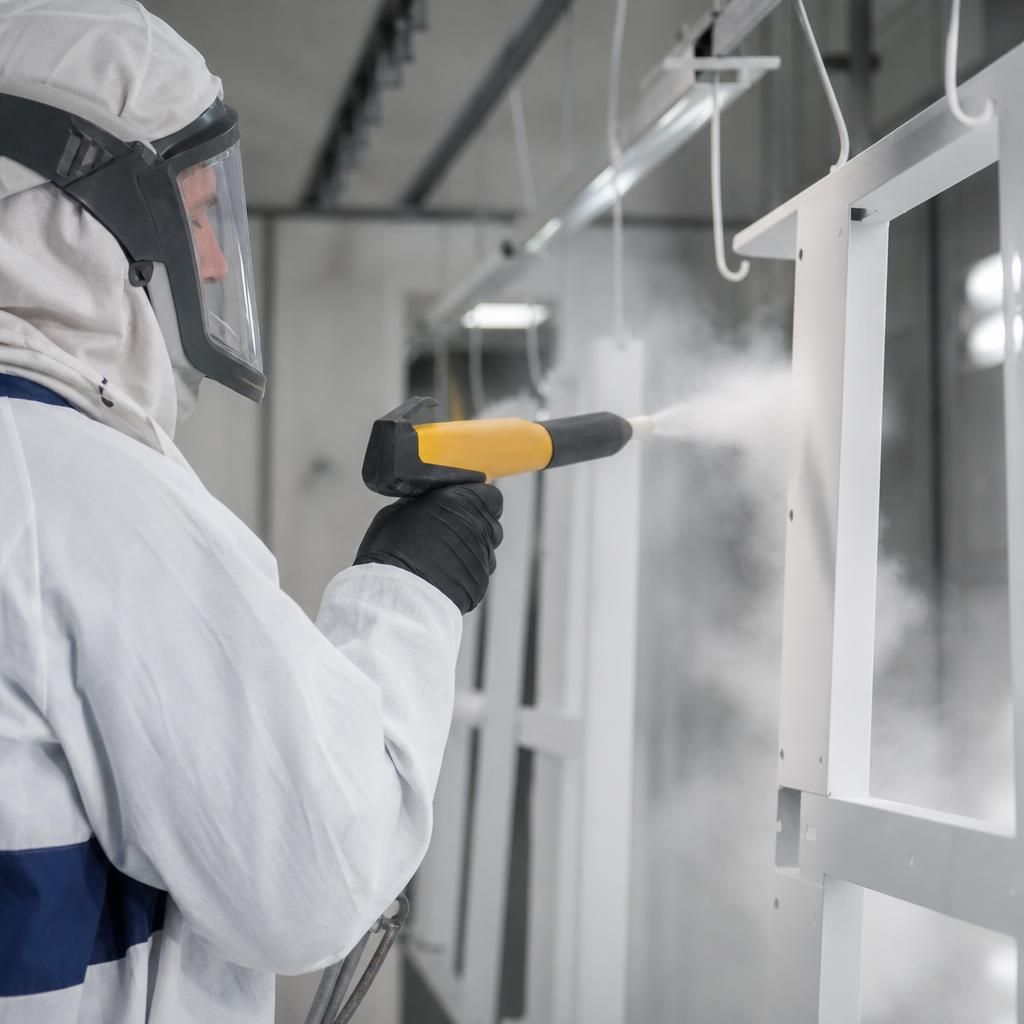
The electrostatic method determines how powder is deposited on the aluminium, but the selected powder determines much of the finished coating’s performance. Thermosetting powders melt during the oven cycle and then chemically cross-link, forming a permanent film that cannot simply be melted back into powder. Thermoplastic powders, such as nylon, melt and solidify without the same cross-linking reaction and may be selected where particular wear, impact or chemical-resistance characteristics are required.
For this reason, powder selection should follow the component’s working environment rather than colour alone. The specification may need to consider exposure to moisture, chemicals, abrasion, ultraviolet light, temperature changes and contact with other materials. It should also identify the required appearance, thickness and any areas that must remain uncoated.
For a production coating project, supplying the end-use conditions alongside drawings and finish requirements helps the coating provider assess whether the proposed powder and electrostatic application method are suitable for the aluminium component.