

What factors influence the price per kg of powder coated aluminium and how can businesses ensure they receive a competitive price?
The price per kg for powder-coated aluminium depends on factors including component size and geometry, surface area, pretreatment, powder specification, batch quantity, preparation, curing and collection or delivery requirements. Businesses can obtain a competitive, meaningful comparison by supplying accurate drawings or sample parts and requesting like-for-like quotes that clearly separate coating, preparation, handling and transport costs.
The quoted price per kg for powder-coated aluminium is a commercial calculation rather than a universal industry rate. A coating provider may use the aluminium’s weight as the quoting basis, while the actual cost is driven by the amount of powder consumed, the processing time required, the handling method and the level of control needed to meet the specification. This means that two aluminium orders with the same total weight can receive different prices per kg.
Why the price per kg can be misleading
Aluminium components are often light in relation to their coated surface area. A large, thin extrusion may require substantial rack space, careful handling and considerable powder coverage without adding much weight. Conversely, a compact, heavier component may be simpler to process. For this reason, a kg-based figure should be considered alongside the price per component, coated area or production run where appropriate.
Some coaters also apply a minimum processing charge or calculate the work according to machine time. This can have a noticeable effect on small or unusually arranged orders. The quoted rate may therefore not reduce in direct proportion to the weight of aluminium supplied.
Technical factors that can increase processing cost
- Alloy and condition: Different aluminium alloys and surface conditions can respond differently during preparation and curing. Castings, machined parts, welded assemblies and extrusions may each require different checks before coating.
- Existing surface treatments: Anodising, paint, adhesive residue, oxidation or embedded dirt may need to be assessed before a suitable coating system can be applied. The more uncertain the existing surface, the more important it is to agree the preparation requirements in advance.
- Coating specification: Colour, gloss level, texture, film thickness, corrosion protection and resistance to chemicals or abrasion all affect the materials and controls required. A basic decorative finish should not be compared directly with a specification requiring enhanced functional performance.
- Masking and uncoated areas: Threads, bores, contact faces, machined tolerances and electrical earth points may need to remain free of powder. Masking, removal and inspection add handling operations and may be charged separately.
- Racking and loading: Components must be supported so that all required faces can be coated without unacceptable contact marks. Parts that need individual hanging, special fixtures or additional inspection can take longer to process than standard items.
- Colour and finish changes: Changing between powders requires equipment cleaning and production controls to prevent contamination. A job requiring several colours or finishes may therefore involve more setup than a single-finish order.
Material usage is not the same as aluminium weight
The powder applied to a component does not correspond directly to the weight of the aluminium. Consumption depends on the specified film thickness, the geometry of the parts, transfer efficiency and the amount of powder that cannot be recovered or reused. Powder colour and formulation can also affect material cost. A quote based only on the aluminium weight may conceal these differences, so the coating specification should be recorded clearly.
Quality requirements and documentation
Inspection and documentation requirements can also influence the price. A straightforward visual check is different from a contract requiring recorded film-thickness readings, colour verification, adhesion testing, batch traceability or formal reports. These controls may be essential for construction, automotive or manufactured components, but they should be identified before quotations are compared.
Packaging and protection after coating should be included in the discussion where finished surfaces could be marked during storage or onward assembly. Delicate edges, long sections and visible architectural surfaces may require separators, wrapping or a defined handling method. Omitting these requirements from the initial enquiry can lead to an apparently low price followed by additional charges.
How to obtain a genuinely competitive comparison
- Provide the total aluminium weight together with drawings, dimensions, quantities and representative sample parts where possible.
- State the alloy, existing surface condition, required colour, gloss, texture, film thickness and performance requirements.
- Mark areas that must remain uncoated and identify threads, tolerance-critical faces, masking points and inspection surfaces.
- Explain the intended use of the coated parts, including exposure to weather, chemicals, abrasion, heat or electrical contact requirements.
- Ask each provider to identify minimum charges, setup costs, masking, testing, packaging and any other items not included in the quoted kg rate.
- Check whether the price is based on supplied weight, finished weight, coated area, individual components or processing time.
The most competitive quote is the one that meets the required technical standard with no hidden assumptions. Comparing the total delivered cost, stated inclusions, inspection provisions and expected finish is more reliable than selecting the lowest headline price per kg. A clear written specification also reduces the risk of rework caused by unsuitable masking, incorrect film thickness, unapproved colour or an incompatible surface condition.
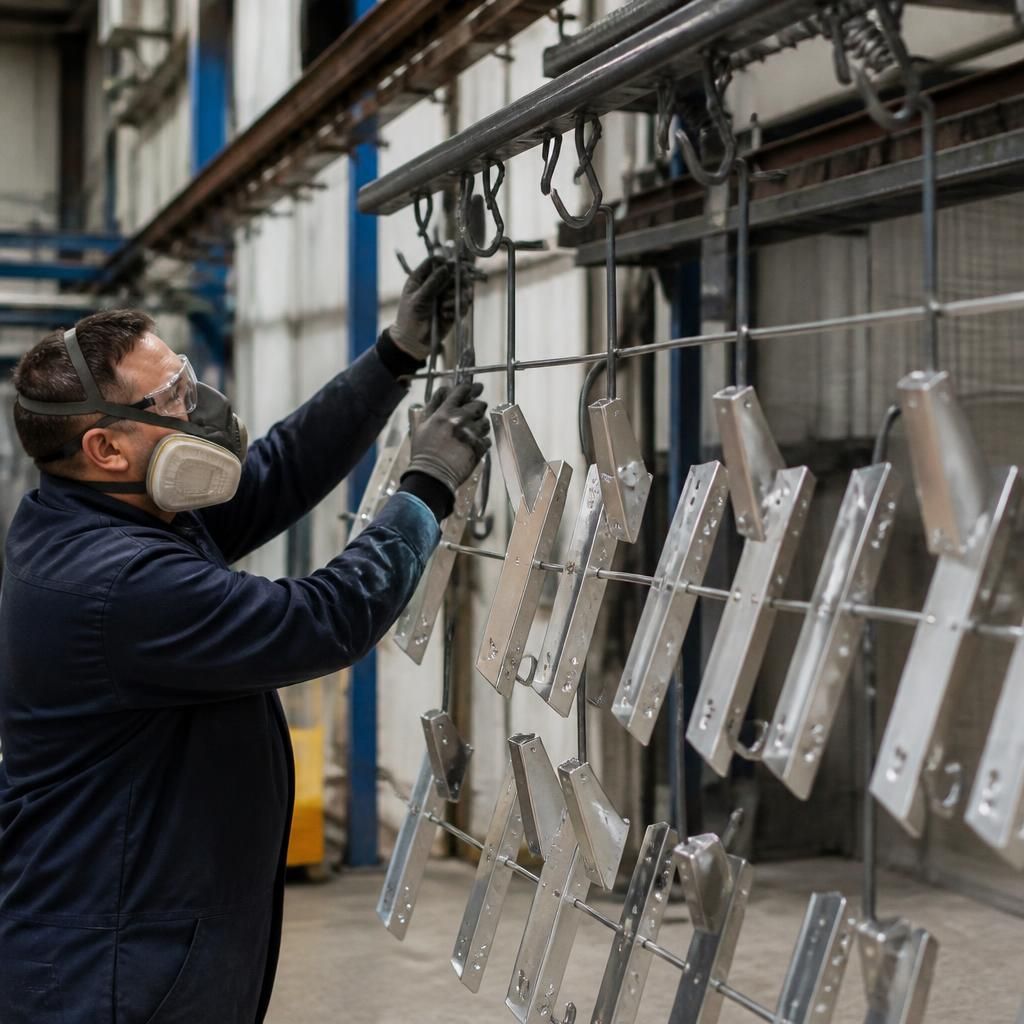
Special racking or hanging fixtures can affect the effective price per kg, particularly where components cannot be processed using standard supports. Ask whether fixture design or manufacture is included as a one-off charge, and whether the fixture can be retained for repeat production. Separating this initial cost from the recurring coating rate makes comparisons between an initial order and later batches more meaningful.
A clear quotation should also state which assumptions the price depends on, such as the agreed loading arrangement, component orientation and acceptable contact marks. If the parts or quantities change, the provider can then identify which cost has changed instead of applying an unexplained revised kg rate.