

What are the benefits of using an electrostatic epoxy powder coating on aluminium?
Electrostatic epoxy powder coating applies a charged epoxy powder to grounded aluminium, creating an even film that is then cured to form a tough protective surface. Its key benefits include strong adhesion, good resistance to corrosion, chemicals and wear, and reliable electrical insulation, although epoxy is generally better suited to indoor or protected applications than prolonged direct sunlight.
Electrostatic epoxy powder coating is particularly beneficial on aluminium when the component needs a controlled, electrically insulating and mechanically durable finish for an indoor or sheltered application. The process combines the application advantages of electrostatic powder spraying with the film-forming properties of epoxy resin, allowing the coating specification to be matched to the component’s service conditions.
Controlled powder application: Aluminium is electrically conductive, so it can be properly grounded during spraying. The charged powder is attracted to the component and held on its surface before curing. This helps the coater direct material onto the intended areas and supports a consistent coating build across repeated batches. It can also be useful for components with profiles, returns and other accessible changes in shape, provided the part is correctly presented and grounded.
A clean, consistent appearance: Epoxy powders can produce a smooth, uniform finish in a range of colours, gloss levels and textures. Electrostatic application helps reduce visible variation between parts when the same preparation, powder specification and curing conditions are maintained. This is valuable where aluminium sections, covers, enclosures or fabricated assemblies need to have a consistent appearance across a production run.
Useful performance for internal components: Epoxy is often selected for aluminium parts used inside equipment, machinery, electrical enclosures and fabricated assemblies. The cured film provides a stable barrier between the aluminium and its surrounding environment, while the resin system is suited to applications where the coating must withstand routine handling and contact with process materials. The correct powder still depends on the actual chemicals, temperatures, cleaning agents and mechanical conditions involved.
Efficient repeat production: Once the preparation, spraying and curing parameters have been established, electrostatic powder coating can be applied consistently to batches of similar components. This supports repeatable production work and avoids the need to manage liquid coating solvents during application. Powder overspray may also be collected in suitable systems, although transfer efficiency and material usage depend on the equipment, component geometry and operating controls.
Good design flexibility: The process is suitable for many aluminium forms, including sheet components, extrusions, brackets, panels and fabricated parts. Parts can be masked where coating is not required, and hanging or racking arrangements can be planned around the finished component. Clear specification is important where contact faces, threads, earth points, sliding surfaces or tight tolerances must remain free from powder.
The benefits depend heavily on preparation and process control. Aluminium should be degreased and pretreated to remove contamination and create a suitable surface for the powder system. Any oils, oxide residues, moisture or fabrication debris left on the part can affect the final result. The coating must also be cured according to the powder manufacturer’s specified time and metal temperature; an oven air temperature alone does not confirm that the aluminium has reached the required cure condition.
Component design and handling should be considered before coating. Sharp edges, deep recesses, Faraday areas and enclosed sections can receive a different powder deposition from broad, exposed faces. Drainage and venting may be required for hollow fabrications, while masking can protect threads, machined interfaces and electrical contact points. These details help avoid problems that are unrelated to the basic suitability of epoxy powder.
Epoxy is not normally the first choice for aluminium that will remain exposed to strong, direct sunlight for long periods, because its appearance can deteriorate under ultraviolet exposure. For external applications, a polyester-based system, a suitable epoxy-polyester hybrid or a specified topcoat may be more appropriate, depending on the required appearance and environmental resistance. The selection should therefore consider the complete service environment rather than choosing epoxy solely because the substrate is aluminium.
In practical terms, electrostatic epoxy powder coating is most suitable where an aluminium component needs a repeatable, well-controlled finish with the functional characteristics of an epoxy film and will be used indoors or in a protected setting. A coater should be given the component material, dimensions, intended environment, masking requirements, colour and finish requirements, and any areas that must remain uncoated. Those details allow the preparation method, powder type, application settings and curing cycle to be assessed together.
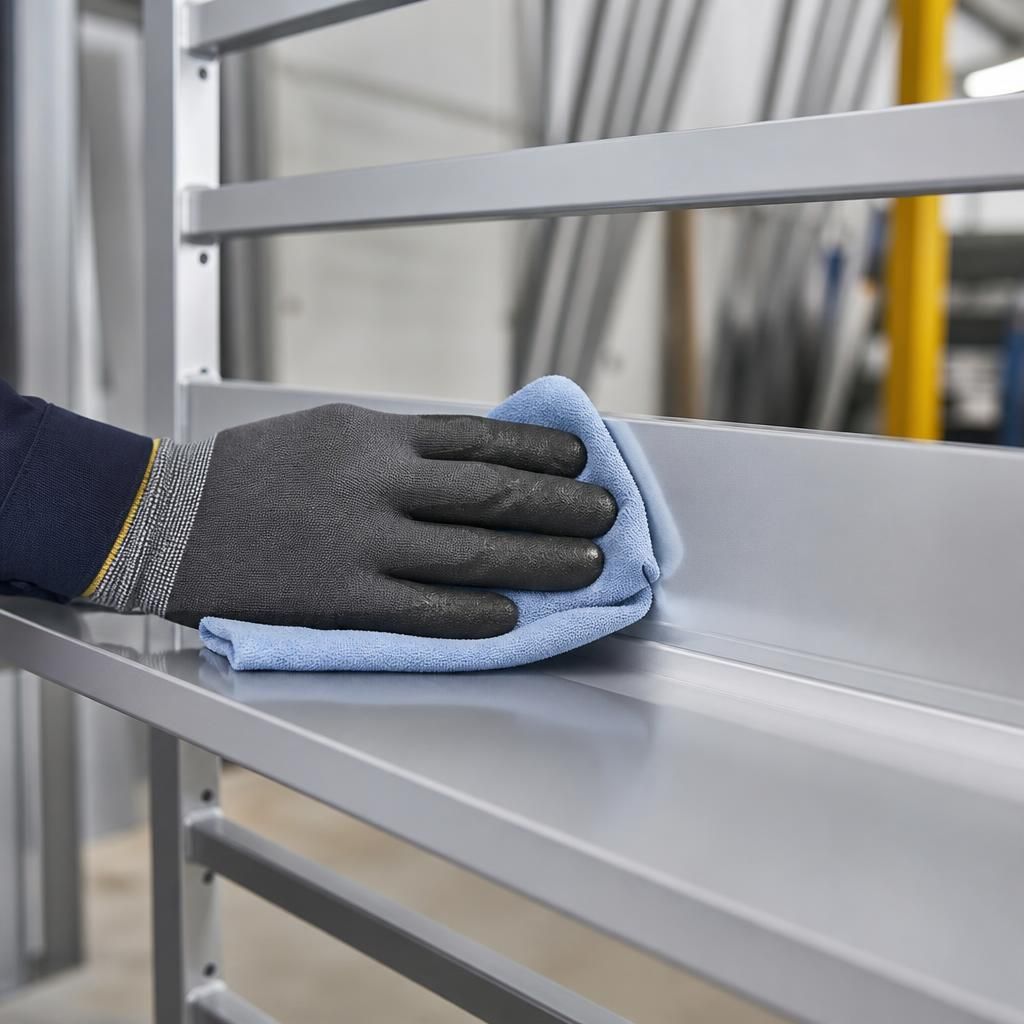
A further benefit of an electrostatic epoxy powder coating on aluminium is that the cured film can support straightforward routine cleaning. Where the coating specification is compatible with the cleaning agents used, its continuous surface helps dirt, dust and light process residues be removed by wiping or washing rather than becoming embedded in the metal surface.
This can be useful for internal equipment, enclosures and fabricated components that are handled regularly or inspected as part of planned maintenance. Cleanability depends on the powder formulation, surface texture, contamination involved and cleaning method, so aggressive chemicals and abrasive cleaning should be checked against the coating specification before use.
Discuss your electrostatic epoxy powder coating requirements
If you are assessing an aluminium component for this finish, discuss its operating environment and performance requirements with the powder-coating team. They can help determine whether an electrostatic epoxy powder coating is appropriate before the specification is confirmed.