

What are the advantages of using electrostatic epoxy powder coating on aluminium components?
Electrostatic epoxy powder coating gives aluminium components a tough, uniform finish that helps protect the surface from corrosion, abrasion and chemical exposure. The electrostatic application promotes efficient powder coverage and strong adhesion, while curing forms a continuous coating suited to components requiring durable protection and a consistent appearance.
Electrostatic epoxy powder coating is advantageous for aluminium components because it creates a chemically resistant, electrically insulating and mechanically resilient surface without adding the volume associated with many liquid coating systems. The process is particularly suitable where the component needs dependable protection in an indoor, industrial or sheltered environment and where a controlled, repeatable finish is important.
- Strong barrier protection: Once cured, epoxy forms a dense film that separates the aluminium from moisture, process contaminants and many common industrial substances. This helps limit surface deterioration where components may be exposed to handling, condensation or incidental chemical contact.
- Useful electrical insulation: Epoxy powder is non-conductive when correctly applied and cured. It can therefore help isolate an aluminium part from adjacent conductive components or reduce the risk of unintended electrical contact. The required coating specification must still take account of voltage, temperature, thickness and the design of the finished assembly.
- Good resistance to handling and service conditions: The cured film can withstand routine handling, impact from assembly and general industrial use better than an untreated aluminium surface. This is useful for brackets, housings, frames, enclosures and other fabricated parts that are moved, installed or maintained during their service life.
- Consistent appearance across batches: Powder is available in a broad range of colours, gloss levels and textures. When the same preparation, powder specification and curing conditions are maintained, repeat production can achieve a more consistent appearance between components and separate batches.
- Efficient material application: The charged particles are attracted to the earthed aluminium component, allowing powder to be placed on the intended surface before curing. This can make the process well suited to repeatable production work, although the practical result depends on part geometry, racking, gun settings and the ability to control overspray.
- No solvent evaporation stage: Powder coating is applied as a dry material, so the coating does not rely on liquid solvents evaporating from the deposited film. This supports a clean production process and avoids the handling issues associated with solvent-based wet paints, while still requiring suitable extraction, housekeeping and powder-handling controls.
- Protection of detailed components: Electrostatic deposition can coat profiles, faces and recesses that would be awkward to cover consistently by manual painting. It is not, however, a guarantee of equal coverage in every corner: deep recesses, narrow slots and shielded areas require appropriate application settings and part orientation.
Aluminium’s low weight and resistance to natural atmospheric oxidation make it useful for fabricated sections, housings and industrial components, but its surface must be prepared correctly before powder is applied. Oils, handling residues, oxide layers and other contamination can interfere with the coating system. The chosen preparation should match the alloy, the component’s intended environment and the performance required from the finished part. This is why coating selection cannot be separated from cleaning, pretreatment, drying and handling controls.
Epoxy is not the best choice for every aluminium application. Its main limitation is reduced resistance to prolonged direct ultraviolet exposure compared with exterior-grade polyester systems. Extended sunlight can cause chalking, colour change or loss of appearance even where the coating continues to provide a degree of underlying protection. For outdoor architectural or highly exposed components, a polyester or suitably specified epoxy-polyester system may be more appropriate. Epoxy remains a logical option where chemical resistance, insulation and indoor durability are more important than long-term colour retention in direct sunlight.
The design of the component also affects the result. Sharp edges can receive less coating than broad faces, while enclosed areas may create access and curing challenges. Parts should be suitable for hanging, grounding and movement through the preparation and curing stages. Any threaded holes, bearing surfaces, sliding fits or bonding points that must remain free of coating should be identified before production, as powder on these areas can affect assembly tolerances or electrical contact.
For a fair comparison with liquid paint or another powder type, assess the complete specification rather than the material name alone. Consider the operating environment, expected chemical exposure, sunlight, temperature, electrical requirements, appearance, substrate alloy, component geometry and cleaning regime. The powder grade, pretreatment and cure schedule must work together; a technically suitable epoxy can underperform if the aluminium is contaminated, the coating is uneven or the cure is incomplete.
In practical terms, electrostatic epoxy powder coating is most beneficial when aluminium components need a controlled industrial finish with insulation, chemical resistance and protection against routine service wear. It is particularly relevant to manufactured and fabricated parts used indoors or in sheltered locations, provided the coating system is matched to the component’s environment and production requirements.
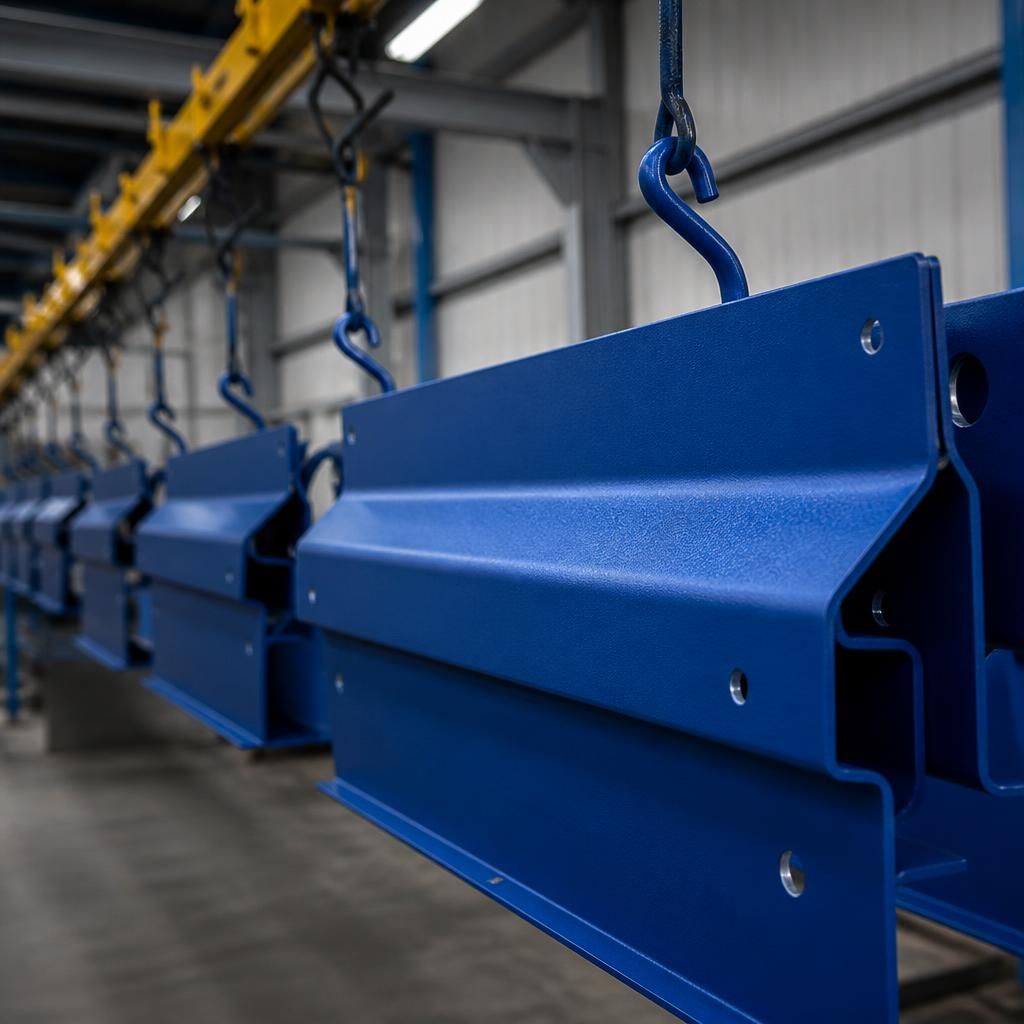
A further advantage of electrostatic epoxy powder coating is that it can provide a clearly specified surface finish for components that need consistent identification or visual differentiation. Colour, gloss and texture can be selected to distinguish parts, indicate function or match an assembly requirement, while the cured film protects the aluminium beneath. This is useful for fabricated housings, brackets and industrial assemblies where appearance is part of the finished specification rather than an incidental detail.
The selected finish should still be assessed against the component’s service environment. Epoxy is generally better suited to indoor or sheltered use than prolonged direct sunlight, where a polyester-based system may retain its appearance more effectively. Matching the finish to the exposure conditions prevents an attractive coating choice from becoming a performance limitation.