

What is the impact of using different types of powder coatings on the properties and performance of aluminium sections?
Different powder coating types alter aluminium sections’ resistance to corrosion, UV exposure, chemicals, abrasion and impact, as well as their appearance and suitability for particular environments. Polyester coatings generally provide stronger outdoor durability and colour retention, while epoxy coatings offer strong chemical and corrosion resistance but are better suited to interior or protected applications.
Different powder coating chemistries change the surface properties of aluminium sections rather than their underlying structural strength. The main effects are seen in adhesion, hardness, flexibility, friction, electrical insulation, film appearance, resistance to wear and the coating’s ability to accommodate movement in the metal. The most suitable type therefore depends on how the section will be handled, installed and used, not simply on the colour required.
Polyester powder coatings are widely used where aluminium sections need a balance of flexibility, finish quality and external durability. They can accommodate limited movement and handling without becoming excessively brittle, which is useful for fabricated frames, architectural sections and components that may be subject to minor impacts during installation. Their formulation can also be selected to provide different levels of gloss, texture and colour retention. The final performance still depends on correct pretreatment, application and curing.
Epoxy-polyester hybrid coatings combine properties from both resin families. Compared with a coating based solely on polyester, a hybrid can provide a harder and more chemically resistant surface, while retaining a practical level of finish quality and application flexibility. These coatings are commonly considered for interior components, equipment and fabricated parts where the coating must tolerate handling, cleaning or contact with mild contaminants but does not need the full external performance of a dedicated exterior-grade system.
Epoxy coatings can produce a firm, well-adhered film with useful resistance to many industrial substances. On aluminium sections, this may help protect the surface in interior plant, machinery, storage and processing environments. However, the resin can become less suitable where the section is exposed to prolonged direct sunlight or where repeated flexing is expected. A coating that is hard but insufficiently flexible may crack or lose adhesion if the component is bent, impacted or subjected to movement at joints.
Polyurethane powder coatings are selected where a smooth, hard-wearing and visually consistent surface is required. They can offer a useful combination of surface hardness and flexibility, making them appropriate for sections that are handled regularly or need a refined decorative finish. Their performance is influenced by the specific formulation and cure schedule, so the coating supplier and applicator should confirm suitability for the intended environment rather than relying on the resin name alone.
Acrylic powder coatings are generally chosen for decorative applications where a clean, smooth appearance and controlled gloss are important. They may be suitable for aluminium trims, display components and other sections where visual uniformity is a priority. Their practical performance varies between formulations, particularly in relation to hardness, film integrity and resistance to cleaning agents, so the technical specification should be checked against the operating conditions.
Nylon powder coatings provide a different performance profile from conventional decorative systems. They are valued for a tough surface with low friction and good resistance to repeated rubbing and mechanical wear. This can make them relevant to guides, rollers, chutes, sliding components and parts that require a protective, non-metallic surface. Nylon coatings may also provide electrical insulation, but their suitability can be affected by moisture, operating temperature, required film thickness and the geometry of the aluminium section.
The coating type also affects how the finished section behaves during fabrication and installation. A more flexible film is generally better able to tolerate cutting, handling and limited forming after coating, although post-coating fabrication should be minimised because it exposes uncoated aluminium. A harder formulation may resist scratching more effectively but can be less forgiving if the section is sharply bent or if edges are damaged. Coating build at corners, recesses and edges can differ from the build on broad faces, which makes section design and racking important to the final result.
Powder coating can add electrical insulation to an aluminium section because the cured film separates the metal from direct contact. The level of insulation depends on resin type, film continuity, thickness and the presence of scratches or exposed edges. It should not be treated as a substitute for a specifically engineered electrical insulation system unless the coating has been tested for that application.
Heat during curing is another consideration. Aluminium conducts heat efficiently, but sections with different wall thicknesses, enclosed areas or complex profiles may not reach the same temperature at the same rate. Inadequate curing can leave the film softer, less firmly bonded or more vulnerable to marking, while excessive curing may affect colour and finish. A suitable specification should therefore consider the alloy, section geometry, pretreatment, powder chemistry and curing schedule together.
For a reliable comparison, assess the complete performance requirement: expected handling, cleaning chemicals, friction, temperature, flexibility, electrical separation, finish level and exposure conditions. The powder type is only one part of the result. Degreasing and pretreatment determine how well the film bonds to the aluminium, while application settings and curing determine whether the coating develops its intended properties. For manufactured batches of aluminium sections, confirming these requirements before production helps avoid selecting a coating that performs well in one respect but is unsuitable for the component’s actual use.
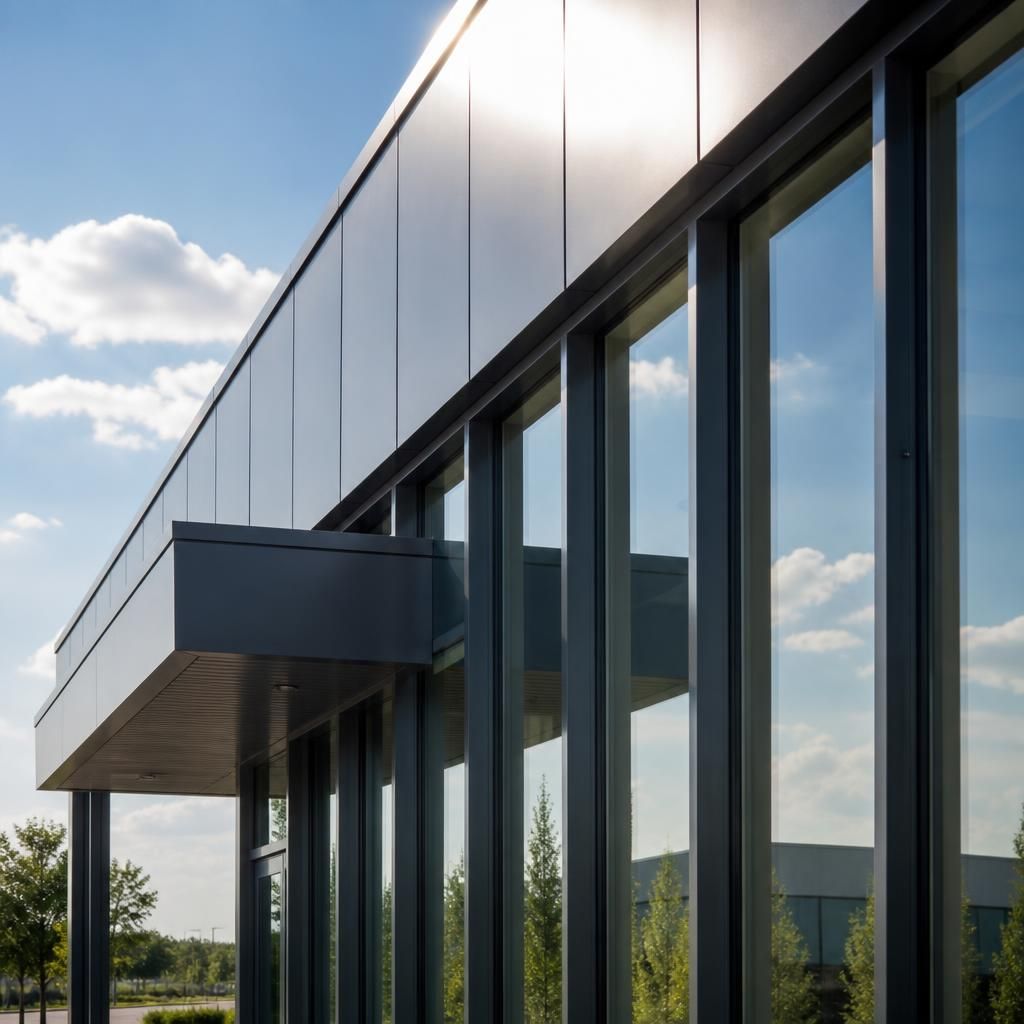
Different powder coatings can affect how aluminium sections respond to solar heating, particularly through their colour, gloss and resistance to repeated temperature changes. Darker or higher-absorption finishes can reach higher surface temperatures in direct sunlight than lighter finishes, increasing thermal expansion and contraction in long sections or exposed assemblies. The coating must remain firmly bonded as the aluminium and cured film undergo these repeated cycles.
This is relevant to architectural frames, façade components and other sections installed in strong or changing sunlight. Coating selection should therefore consider the colour and finish alongside the exposure, section length, joint design and allowance for thermal movement. A coating that retains its appearance but is unsuitable for the component’s temperature range may develop defects at edges, joints or areas of weak adhesion over time.
Discuss the right powder coating for your aluminium sections
Discuss your aluminium sections’ operating environment, finish requirements and expected use with our powder coating team before selecting a coating system. We can help identify the relevant specification for your components and prepare a suitable quotation.