

What types of powder coatings are best suited for electrical insulation?
Epoxy powder coatings are generally best suited to electrical insulation because they provide strong dielectric performance, adhesion and protection for metal components. Epoxy-polyester hybrids or specialist nylon coatings may be considered where the component also requires greater flexibility, mechanical durability or resistance to specific environmental conditions.
The most suitable powder coatings for electrical insulation are electrically non-conductive thermosetting systems selected according to the component’s voltage, operating temperature, required coating thickness and service environment. Epoxy-based formulations are commonly considered first, but the correct choice depends on whether the priority is dielectric performance, outdoor durability, mechanical resistance, flexibility or resistance to chemicals and moisture.
Epoxy powder coatings are widely used where the coating forms part of the insulation system around a metal component. Once cured, the cross-linked film creates a stable electrical barrier with high volume resistivity and good resistance to electrical breakdown when applied at the specified thickness. Epoxy is particularly suited to enclosed or protected components, switchgear parts, busbar supports, electrical housings and other fabricated metalwork where ultraviolet exposure is limited.
The main limitation of standard epoxy is its reduced resistance to prolonged ultraviolet exposure compared with powders formulated specifically for external use. It can also become less suitable where the component is repeatedly flexed or exposed to sustained high temperatures. These factors should be assessed before specifying the material rather than choosing solely by resin type.
Polyester powder coatings may be appropriate when electrical insulation is required alongside better resistance to sunlight and weathering. They are often considered for components used outdoors or in areas exposed to changing environmental conditions. The precise electrical properties vary between formulations, so the technical data for the proposed powder should confirm dielectric strength, insulation resistance and any relevant temperature limitations.
Epoxy-polyester hybrid powders can be considered where a balance is needed between the insulation requirements of an internal component and broader mechanical or appearance-related demands. Hybrids are not automatically interchangeable with a dedicated electrical-grade epoxy. Their suitability depends on the formulation, cured film properties and the level of electrical separation required in the finished assembly.
Nylon and other specialist insulating powders may be selected for components requiring a tougher or more impact-resistant surface, particularly where the coating may experience abrasion, handling or contact with other parts. These materials can be useful in specialist applications, but their electrical performance, moisture absorption, temperature resistance and adhesion to the substrate must be checked for the specific design. A mechanically durable coating is not necessarily the best dielectric coating.
When comparing powder types, the following properties are especially important:
- Dielectric strength: the voltage the coating can withstand before electrical breakdown occurs. This is affected by the formulation, film thickness, defects and test conditions.
- Volume and surface resistivity: measures of how strongly the cured coating resists the movement of electrical current through or across its surface.
- Insulation thickness: the specified film build must be achieved consistently. Thin areas, pinholes and damage can create weak points in the insulation system.
- Tracking and arcing resistance: important where contamination, moisture or electrical stress could cause a conductive path to develop across the surface.
- Thermal performance: the coating must retain its insulating characteristics at the component’s normal and abnormal operating temperatures.
- Moisture and chemical resistance: water absorption, condensation, oils, cleaning agents and process chemicals can affect insulation performance over time.
- Adhesion and substrate coverage: sharp edges, recesses, welds and complex geometries require suitable preparation and application control to avoid uncoated or weakly covered areas.
The substrate and component design also influence the result. Metal should be correctly prepared so that contamination, corrosion products and residues do not compromise the coating. Edges may need particular attention because the powder film can be thinner there than on broad, flat faces. Threaded areas, contact points, earthing locations and mating surfaces may need to remain uncoated, so the masking plan should be agreed before production.
Electrical insulation should be verified as part of the complete component or assembly, not judged from the powder name alone. The specification should identify the required electrical tests, coating thickness range, curing conditions and acceptance criteria. Depending on the application, testing may include insulation resistance, dielectric withstand, thickness measurement, visual inspection and checks for pinholes or coating damage.
For B2B metal components, the practical selection process is therefore to define the electrical duty first, then screen suitable powder chemistries against temperature, environment, geometry and handling requirements. A coating specialist can review drawings, substrate preparation, masking and curing requirements before a production batch is processed, helping ensure that the selected material is appropriate for the component’s intended insulating function.
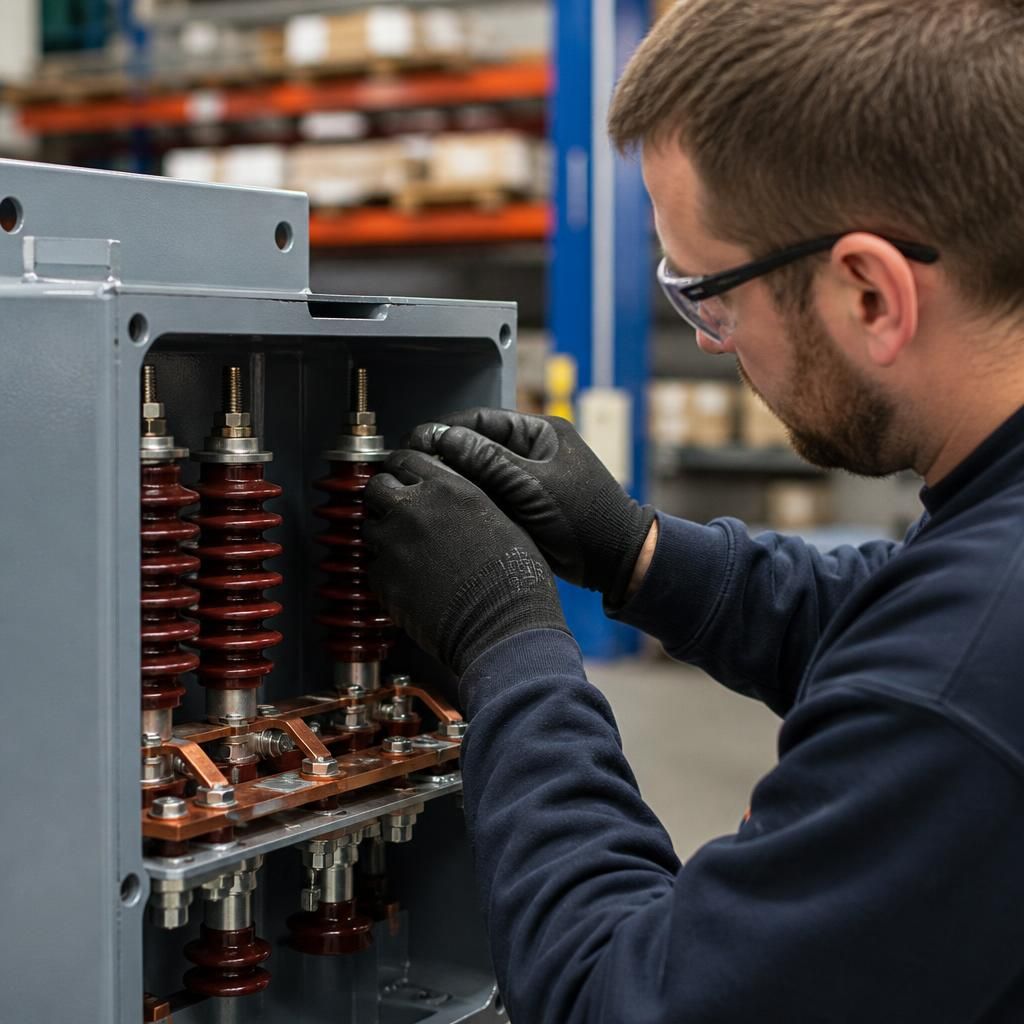
Powder coating for electrical insulation should usually be treated as one part of the component’s insulation system, rather than a substitute for electrical clearances, creepage distances or other designed barriers. The most suitable coating is therefore the one that complements the component’s geometry and operating duty.
Designers should identify areas that must remain conductive, such as earthing points, terminals and contact faces, while ensuring that insulated surfaces have continuous coverage. A suitable coating specification can then support the required separation without interfering with assembly, connections or heat dissipation. This is particularly important for fabricated metal parts where the coating’s insulating role depends on the finished component, not simply the powder category.