

What types of powder are most effective for electrical insulation and how do they accommodate different industry requirements?
Epoxy powder coatings are typically the most effective choice for electrical insulation because they provide strong adhesion, chemical resistance and reliable dielectric performance. Epoxy-polyester hybrids or polyester powders may be selected where the component also requires a different balance of mechanical durability, environmental resistance, appearance or processing requirements, with the formulation and film thickness matched to its operating conditions.
The usual starting point for electrical insulation is a thermosetting epoxy powder, although the most suitable system depends on the component’s voltage, temperature, environment, geometry and required service life. Epoxy, epoxy-polyester hybrid and polyester powders can all be considered, but they accommodate different combinations of insulation performance, physical durability, weathering resistance and appearance.
Epoxy powders for enclosed or protected components
Epoxy is commonly selected for busbars, electrical housings, switchgear parts, transformer components and other metalwork used inside equipment or protected installations. Once cured, the coating forms a continuous insulating layer over the prepared substrate. Its performance is particularly suited to applications where resistance to moisture, oils, solvents and internal heat is more important than long-term exposure to sunlight.
The formulation can be adjusted for the component’s operating conditions. For example, a coating specification may need to consider insulation resistance, dielectric breakdown performance, resistance to tracking and the temperature reached during normal or fault conditions. These requirements should be assessed alongside the required film thickness, because a thicker coating is not automatically suitable if it interferes with clearances, moving parts, threads or assembly tolerances.
Epoxy-polyester hybrids where balance is required
Hybrid powders combine epoxy and polyester resin chemistry. They are useful where an electrical component needs insulating coverage but also requires a different balance of surface finish, processing characteristics and resistance to handling or general service conditions. This can make them appropriate for internal equipment parts that may be touched, assembled, stored or transported before installation.
A hybrid is not a universal replacement for epoxy. The correct choice depends on whether the part will remain indoors, encounter condensation, be exposed to cleaning agents or experience repeated temperature changes. The coating specification should also identify whether the finish is expected to retain its appearance or whether electrical function is the primary consideration.
Polyester powders for more exposed components
Polyester systems are considered when the coated metal will encounter outdoor light, changing weather or greater general exposure. They can suit electrical enclosures, cabinets, support parts and equipment installed where resistance to environmental ageing is an important part of the requirement. Their suitability for insulation still depends on the particular grade, cured film and application conditions rather than on the resin name alone.
For outdoor electrical equipment, the assessment should include water ingress, ultraviolet exposure, condensation, temperature cycling and contamination on the coating surface. Surface contamination can reduce the practical effectiveness of an insulating finish even when the original powder has suitable electrical properties. Design, sealing and maintenance therefore remain relevant alongside the powder selection.
How the choice changes between industries
- Electrical equipment manufacturing: repeatable film build, accurate coverage and controlled curing are important when coated parts must fit into standard assemblies and provide consistent separation between conductive surfaces.
- Power distribution and control equipment: the specification may place greater emphasis on dielectric performance, resistance to tracking, edge coverage and the ability to withstand the equipment’s operating environment.
- Automotive applications: the coating may need to tolerate vibration, handling, oils, cleaning materials and temperature variation while maintaining insulation around brackets, housings or other metal components.
- Industrial machinery: resistance to abrasion, coolants, workshop contaminants and repeated handling may influence the choice, particularly where the coated part is exposed rather than enclosed.
- Construction-related equipment: outdoor exposure, condensation, ultraviolet light and the visual consistency of cabinets or fabricated metalwork can become more significant than they would be for an internal component.
Technical details that should be agreed before coating
The powder type should be selected only after the coater understands the component and its use. Useful information includes the base metal, dimensions, sharp edges, threaded areas, masking points, intended film thickness, operating temperature, exposure to chemicals or weather and the electrical performance required. Drawings can identify areas that must remain uncoated, while samples can help confirm coverage and fit before a larger batch is processed.
Preparation is equally important. Oil, oxide, weld residue and other contaminants can create defects or weak areas in the cured film. The preparation method must suit the substrate and the required finish, and the powder must then be applied and cured according to its technical requirements. Under-curing, excessive heat or uneven application can alter the coating’s performance and may affect dimensional accuracy.
Where the part has a safety-critical insulation function, testing and documentation should be based on the relevant product, assembly and industry requirements. A coating provider can discuss the practical implications of the chosen powder, but the component designer or electrical engineer remains responsible for confirming that the complete assembly meets its required clearances, creepage distances and insulation criteria.
In practice, the best powder is therefore the one that satisfies the electrical requirement without creating problems for manufacture, assembly or service. Epoxy is often the first system assessed for protected electrical parts; hybrids can provide a broader balance of properties, while polyester may be more appropriate where environmental exposure is a major consideration.
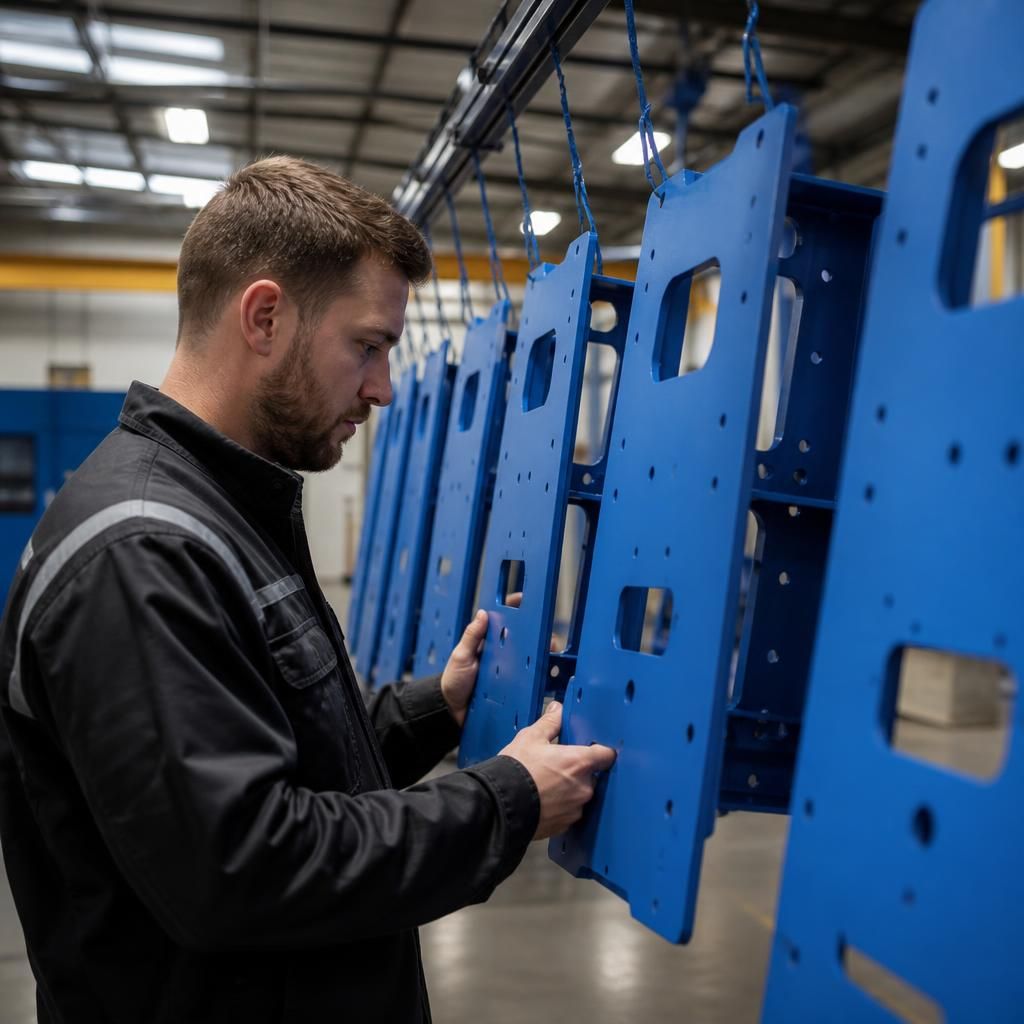
Electrical insulation performance depends on the specific powder formulation, not just whether it is labelled epoxy, hybrid or polyester. Two powders within the same resin family may differ in cure requirements, film characteristics and resistance to electrical or environmental stresses. For that reason, the coating should be selected from technical data for the intended application rather than by colour or general-purpose durability alone.
This approach allows the finish to be matched more closely to each industry’s priorities. A component manufacturer may need a tightly controlled coating specification for repeat production, while an equipment builder may place greater emphasis on chemical, weather or handling resistance. Reviewing the powder’s technical documentation alongside the part design helps identify a system that supports insulation requirements without compromising manufacture or assembly.