

How can powder coating for electrical insulation improve the overall safety and efficiency of metal components in my industry?
Powder coating for electrical insulation forms a durable, non-conductive layer over metal components, helping reduce the risk of accidental contact, short circuits and electrical faults. By combining insulation with resistance to wear, corrosion and environmental exposure, it can help components remain reliable and efficient in demanding industrial applications.
Powder coating for electrical insulation improves metal components by adding a controlled dielectric barrier between conductive surfaces, while also supporting consistent manufacture and component protection. Its safety and efficiency benefits depend on selecting a coating with suitable electrical properties and applying it to the correct specification for the component’s voltage, geometry, operating temperature and environment.
Electrical safety begins with controlled separation. A correctly applied insulating coating helps prevent unintended current paths between a metal part and adjacent conductive parts. This is particularly useful for components such as brackets, housings, supports, covers, enclosures and other fabricated metal items used near energised assemblies. The coating can isolate areas that might otherwise require a separate insulating sleeve, pad or barrier, provided the design and relevant safety requirements allow this approach.
The coating must be continuous across the intended insulated area. Pinholes, thin spots, contamination, poor edge coverage or damage during assembly can compromise dielectric performance. For that reason, the specification should identify:
- which surfaces require insulation and which must remain conductive;
- the required coating thickness and acceptable tolerances;
- the operating voltage and likely electrical stresses;
- the temperature range and exposure to moisture, chemicals or abrasion;
- areas that need masking, earthing, bonding or mechanical contact; and
- the inspection or electrical testing needed before the part is released.
Component design remains important. Powder coating should not be treated as a replacement for adequate creepage distances, clearances, earthing arrangements or other protective measures. Sharp corners, narrow gaps, threaded features and moving interfaces can create areas where coating coverage is inconsistent or where assembly can scrape the insulation. Reviewing these features before production helps prevent interference with fit, fastening, heat dissipation or electrical contact.
Efficiency is improved through repeatable manufacture. Powder is applied as a dry material and cured to form a uniform finish, allowing the insulation to be incorporated into the component’s normal finishing process. This can simplify the part design by reducing the need for separately fitted insulating pieces in suitable applications. It can also support consistent coverage across batches when the preparation, application and curing conditions are controlled. Any proposed design change should still be checked for dimensional effects, particularly where components have tight mating tolerances or small clearances.
Thermal performance must be assessed alongside insulation. An insulating layer can alter the way heat moves from a metal component into the surrounding air or into an adjoining part. If the component carries current, supports a heat-producing assembly or operates in a confined enclosure, the coating specification should be assessed with the expected thermal load. The safest choice is not simply the coating with the highest insulation value; it is the coating and application method that provide the required dielectric separation without creating an unacceptable effect on temperature, fit or function.
Surface preparation and curing affect the result. Oil, rust, scale and other contaminants can interfere with adhesion and leave defects in the finished layer. The metal should therefore be prepared in accordance with the coating system and component material. Curing must also be suitable for the powder and substrate. Insufficient or uneven curing can affect the coating’s mechanical and electrical properties, while excessive heat may be unsuitable for components containing heat-sensitive materials or pre-assembled features.
Quality checks should be proportionate to the risk and use of the part. They may include visual inspection, coating-thickness checks, adhesion assessment and electrical tests designed for the specified application. Where the component forms part of a safety-critical or regulated assembly, the coating requirement should be documented alongside the engineering drawing, test method, acceptance criteria and traceability information. This gives manufacturers and fabricators a clearer basis for checking that the finished part remains suitable throughout production.
In practical terms, powder coating can contribute to safer and more efficient metal components when it is treated as part of the electrical design rather than as a cosmetic finish added afterwards. Define the insulated zones, preserve essential conductive points, account for heat and tolerances, and verify the applied coating against the component’s actual service conditions. A coating provider should be given the relevant drawings, material details and performance requirements so the preparation, masking, application and inspection plan can be matched to the part.
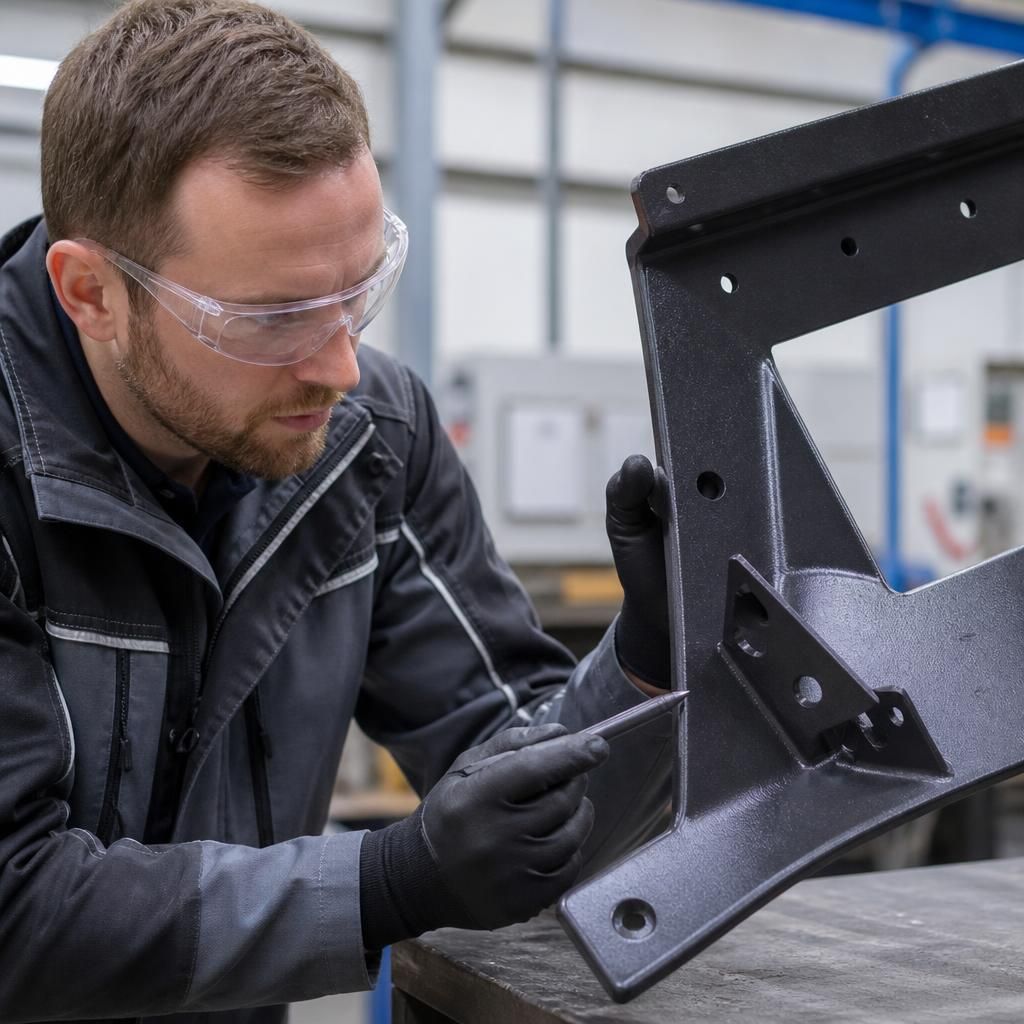
In service, the condition of the insulating layer is part of the component’s electrical safety. Regular inspection can identify chipped, blistered, cracked or discoloured areas, as well as corrosion developing at exposed edges or around fixings. These defects can reduce the separation between conductive surfaces and may indicate that the component needs assessment before continued use.
Maintenance procedures should record the coating specification and define how damage is handled. A repaired or recoated part may require cleaning, removal of compromised material and verification that the finished insulation still meets the original requirements. Treating the coating as a maintainable engineering feature, rather than an untouchable finish, helps organisations detect deterioration earlier and avoid fitting components whose protective layer no longer matches the electrical duty.