

What are the key benefits of using electrostatic epoxy powder coating for metal components?
Electrostatic epoxy powder coating provides metal components with a durable, even finish that offers strong adhesion and protection against corrosion, wear and chemical exposure. It also supports efficient application with minimal overspray, making it suitable for consistent batch production and demanding industrial use.
The key benefits of electrostatic epoxy powder coating are its ability to produce a controlled, high-build film, support repeatable component finishing, reduce solvent-related handling, provide electrical insulation where the formulation is suitable, and coat a wide range of prepared metal substrates. These advantages make it particularly useful for industrial parts that require more than a decorative surface.
1. Controlled film build
Epoxy powder can be applied as a substantial coating layer in a single curing cycle, subject to the specification and the geometry of the component. This can reduce the need for several separate wet-paint coats and helps provide a defined finish across production batches. Film thickness still needs to be checked against the required specification, because excessive build can affect edges, apertures, threads and assembled interfaces.
2. Repeatable production results
The electrostatic process gives coaters a controllable method for applying powder to prepared metal parts. Variables such as powder charge, gun settings, part earthing, coating distance, oven temperature and cure time can be managed as part of a documented process. Once these variables are established, repeat orders can be finished to the same agreed requirements more reliably than processes that depend heavily on manual liquid application.
This is valuable for manufacturers and fabricators supplying components that must remain consistent during assembly. Quality checks may include visual inspection, coating thickness measurements, adhesion testing and confirmation that the specified cure has been achieved.
3. Lower reliance on liquid solvents
Powder coating is supplied as a dry coating material rather than as a liquid system that requires solvent to keep it workable. As a result, the process can reduce solvent storage and handling requirements and avoids the need to manage solvent evaporation during application. It also eliminates wet-paint issues such as runs, sags and solvent entrapment when the powder is correctly applied and cured.
This does not remove the need for suitable extraction, housekeeping and personal protective equipment. Fine powder must still be controlled during handling and application, and the coating specification should consider the working environment as well as the finished component.
4. Electrical insulation potential
Cured epoxy is a non-conductive polymer, so an appropriate epoxy powder formulation can provide electrical insulation over a metal component. This may be useful for enclosures, brackets, housings and other parts where the coating is intended to separate the metal surface from adjacent components. The required dielectric performance depends on the product formulation, coating thickness, substrate preparation and curing conditions.
Where insulation is a design requirement, it should be defined in the technical specification rather than assumed from the word “epoxy” alone. Areas that must remain electrically conductive, such as earthing points or contact faces, may need masking or post-coating treatment.
5. Versatility across industrial components
Electrostatic epoxy powder coating can be used on many steel and aluminium components when the surface has been correctly cleaned, prepared and earthed. It is suitable for fabricated parts, formed sections, panels, brackets and other components that can tolerate the curing schedule. The process can also accommodate different component sizes and batch requirements, provided the coating equipment and curing oven are appropriate for the work.
Component design remains important. Deep recesses, Faraday cage areas, sharp edges, concealed faces and closely packed parts can affect powder deposition and curing. These features should be reviewed before production so that masking, racking or application adjustments can be planned.
Important limitation
Epoxy powder is generally selected for its internal performance rather than long-term direct exposure to sunlight. Prolonged ultraviolet exposure can cause surface chalking or colour change, even when the coating remains functional. For outdoor components, a polyester or epoxy-polyester system may be more appropriate, depending on the required protection and appearance. The correct choice therefore depends on the component’s location, temperature, chemical exposure, electrical requirements and expected service conditions.
For industrial projects, the coating specification should state the substrate, preparation standard, powder type, colour or finish, target film thickness, cure requirements, masked areas and inspection criteria. This turns the general benefits of electrostatic epoxy powder coating into measurable requirements for the finished metal component.
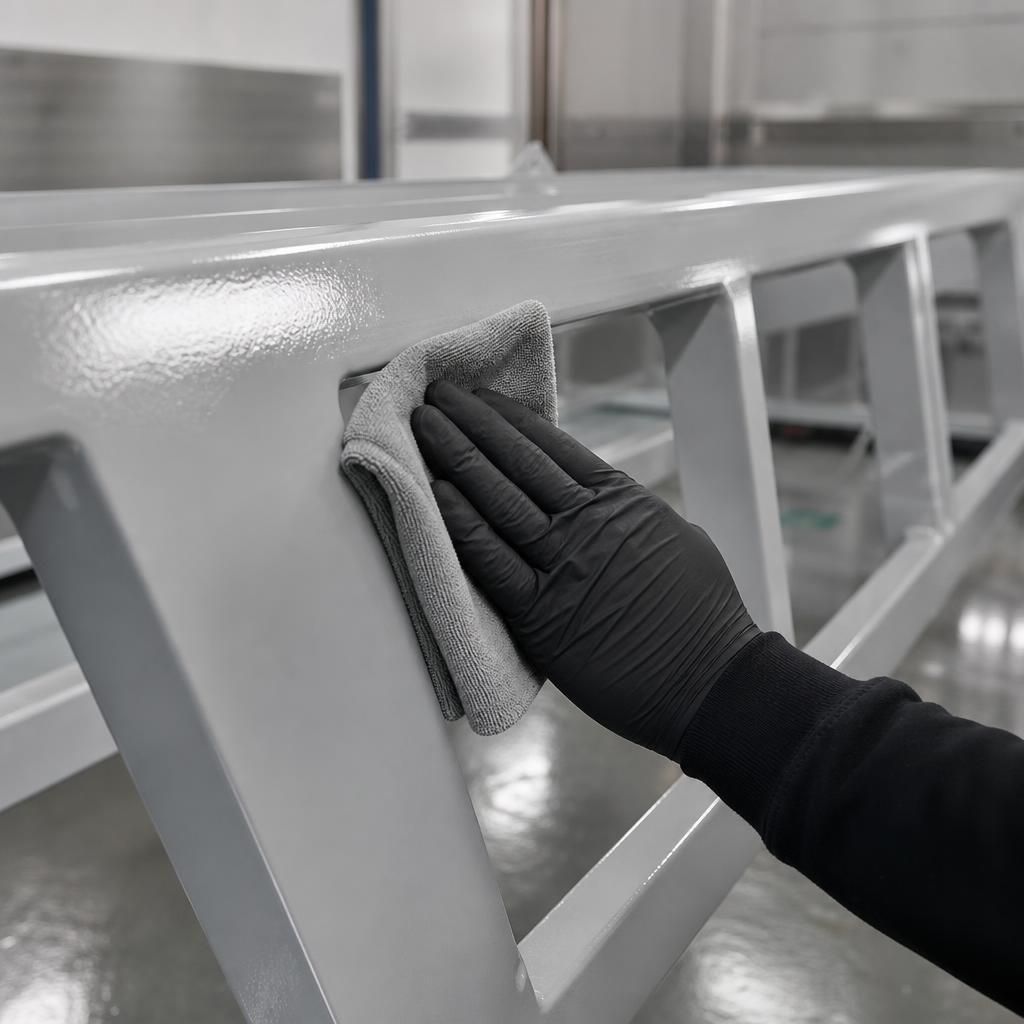
One practical benefit of electrostatic epoxy powder coating is that its cured surface can simplify routine cleaning. The continuous polymer film leaves fewer exposed areas where dust, oil or process residue can become embedded, which can be useful for housings, guards, brackets and other industrial components handled in controlled working environments.
Cleanability still depends on the specified gloss, texture, component geometry and the substances encountered in service. Recesses, joints and masked areas may require separate attention, so the coating specification should consider both the required finish and the cleaning method used after installation.
Discuss Your Electrostatic Epoxy Powder Coating Requirements
Discuss your metal components with the powder-coating.co.uk team to assess whether electrostatic epoxy powder coating suits the substrate, service conditions and required performance. They can help define the appropriate coating specification before production begins.