

What factors should be considered to ensure optimal curing times and temperatures in the electrostatic powder coating process?
Optimal curing depends on the powder chemistry, substrate, part thickness and geometry, oven temperature, and the time the metal itself remains at the required curing temperature. Follow the powder manufacturer’s technical data, allow for the part to heat through—not just the oven air temperature—and verify the process with suitable temperature monitoring to achieve a complete, even cure without over-curing.
Optimal curing is achieved when the coating receives a controlled, repeatable heat cycle that allows the powder film to develop its specified mechanical and chemical properties without thermal damage. In practice, this requires more than setting an oven to a nominal temperature: the complete process must account for heat transfer, component loading, equipment condition, powder requirements and the way the finished coating will be used.
Interpret the powder supplier’s cure schedule correctly. Technical data commonly presents curing as a relationship between temperature and time rather than as one universal setting. The relevant time is generally associated with the coating reaching the required condition, so a heavier component may need a different conveyor speed or heating profile from a light pressing. The stated schedule should also be checked for its tolerance range, recommended film thickness and any restrictions relating to application or recoat work.
Measure the workpiece temperature. An oven controller records the air temperature at one location, which may not represent the temperature of every coated part. Temperature probes or data loggers can be attached to representative areas, including the slowest-heating section, to establish when the metal reaches the required curing condition. Validation should consider the coldest and hottest practical positions in the load, rather than relying on a single reading from an easily heated surface.
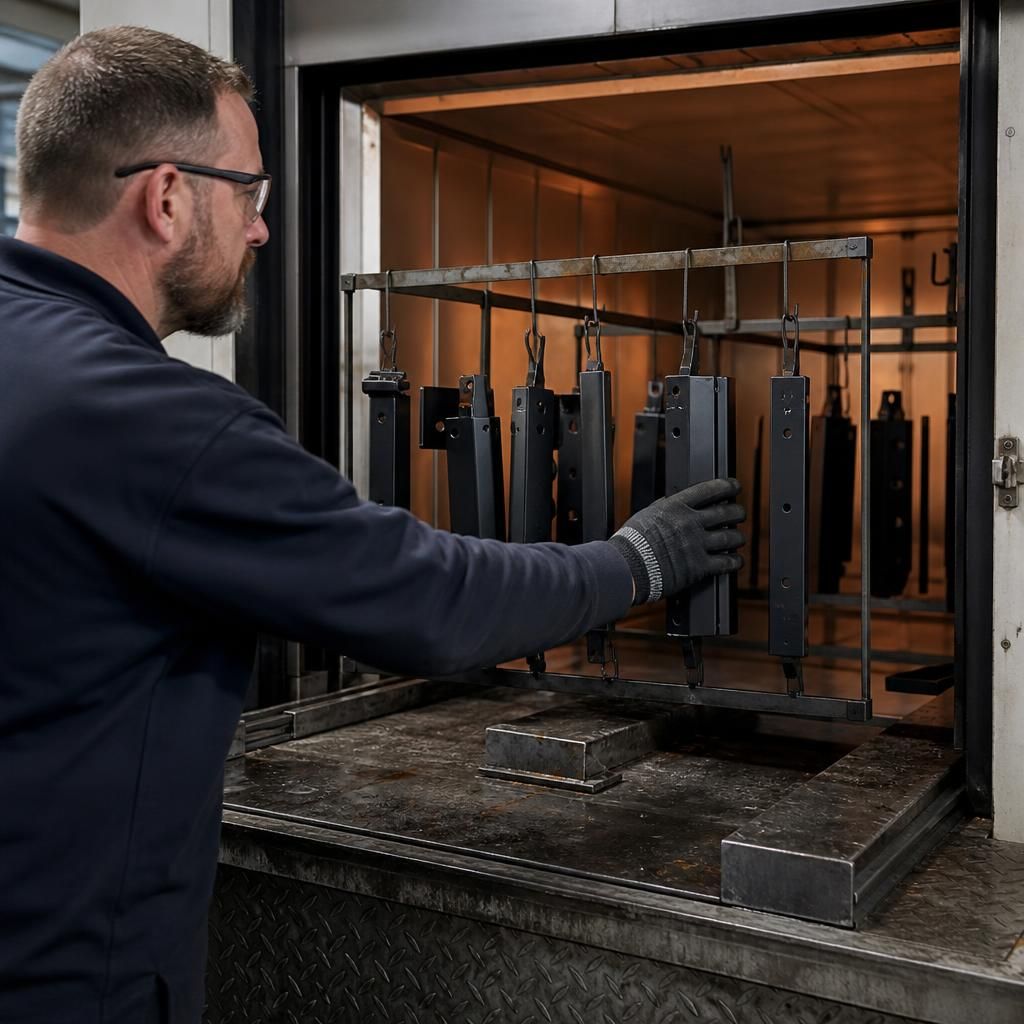
Consider component design and loading. Hollow sections, boxed fabrications, dense assemblies and parts with overlapping surfaces can heat at different rates. Closely packed racks may restrict airflow and create shaded areas, while excessive spacing can reduce production efficiency without improving the cure. Parts should be suspended securely, with contact points positioned to reduce thermal interference and avoid damage to the uncured film.
Control the oven environment. Air circulation must be sufficiently uniform to prevent cold spots and localised overheating. The oven should be checked for temperature variation across its working zone, and the controller, sensors and recording equipment should be calibrated and maintained. Door openings, poor seals, obstructed airflow and a contaminated heating system can all produce an inconsistent thermal profile even when the displayed set point appears correct.
Match line speed to the actual heat-up profile. Conveyor speed should be selected only after confirming how quickly representative parts absorb heat and how long they remain within the required curing range. Changing the line speed, rack arrangement, component mix or production batch can alter the result. Any process change should therefore be treated as a potential revalidation point rather than assuming that the previous setting will remain suitable.
Maintain a consistent applied film. Cure performance and appearance can be affected by excessive or uneven powder deposition. Heavy areas may require more energy to cure consistently and can show defects such as sagging, while thin areas may lack the intended protection or appearance. Application equipment should be checked for stable powder delivery, suitable electrostatic settings and effective earthing, with film thickness verified using an appropriate gauge.
Account for masking and fixtures. Silicone plugs, caps, hooks and other masking materials can affect local heat transfer or leave areas shielded from the powder. Fixtures should be designed to support the part without creating large uncoated contact areas or disrupting airflow. Masking products must also be suitable for the selected process, since unsuitable materials may deform, contaminate the finish or become difficult to remove after curing.
Use practical checks alongside recorded data. A validated process should include documented oven readings, workpiece temperature profiles, batch details, powder identification, film-thickness results and any relevant visual observations. Physical tests may be used where appropriate to assess adhesion, hardness or resistance to the conditions expected in service. These checks help distinguish a genuine curing problem from defects caused by contamination, poor preparation, excessive film build or application instability.
Under-curing can leave the coating with inadequate hardness, adhesion or resistance to chemicals and impact. Over-curing may cause colour change, loss of gloss, brittleness or other appearance defects, particularly where parts remain exposed to heat for longer than intended. If results are inconsistent, changing the oven setting immediately may conceal the cause. The more reliable approach is to review the thermal profile, loading arrangement, film thickness, powder requirements and equipment condition before adjusting the process.
For batch work or complex fabrications, a coating specialist can establish a repeatable profile for the component rather than applying a generic oven setting. This is particularly important where different sizes, wall sections or assemblies are processed on the same equipment. A documented, monitored curing procedure provides a sound basis for consistent finishes across future production runs and helps manufacturers and fabricators identify process drift before it affects a larger batch.
Optimal curing also depends on how the substrate behaves when heated. Porous castings, zinc-coated steel and fabrications with enclosed sections can release moisture, air or other gases during the oven cycle. If these gases escape through the powder film, they may produce pinholes, blistering or surface defects that can be mistaken for an incorrect curing temperature.
Where the component presents an outgassing risk, the preparation and heating sequence should be assessed before production coating begins. A suitable preheating or degassing stage may be considered, but it must be compatible with the substrate, pretreatment and selected powder system. Test pieces or an initial trial batch can help establish whether the proposed cycle affects adhesion, appearance or protection. The resulting procedure should record any required pre-treatment, drying and cooling stages so that the same conditions can be reproduced for later batches.