

What are the benefits of using electrostatic powder coating on tubular steel?
Electrostatic powder coating gives tubular steel a uniform, durable finish by electrically charging the powder so it is attracted to the grounded metal surface. It provides effective protection against corrosion, impact and weathering, while offering consistent coverage and a wide choice of colours and textures.
Electrostatic powder coating is particularly effective for the exposed surfaces of tubular steel because it can create a hard, continuous finish around rounded profiles, welded frames and repeated sections. For manufacturers and fabricators, its main advantages are repeatable coverage, resistance to everyday wear, efficient batch processing and a broad choice of functional and decorative finishes.
It suits complex tubular assemblies. Tubular steel is commonly used for frames, guards, railings, racking, furniture, machinery components and structural fabrications. Unlike a simple flat panel, a tube may have curves, bends, joints and multiple faces that must be coated as one assembly. The charged powder is attracted to the accessible steel surfaces, helping the coating follow the outer profile without the runs or sags associated with applying excessive wet paint.
The finish can improve handling and service life. Once properly cured, powder forms a tough film that can withstand routine handling, contact and general industrial use. This is valuable where tubular components are moved during manufacture, assembled on site or exposed to repeated contact. The precise performance depends on the selected powder, film thickness, preparation method, curing conditions and the environment in which the steel will be used.
It supports consistent production. Tubular components are often manufactured in batches, and a controlled powder-coating process can provide repeatable results across parts of the same specification. Consistency depends on factors such as:
- thorough removal of oil, rust, mill scale and fabrication residues;
- effective electrical grounding of every item;
- correct hanging and spacing on the coating line;
- appropriate gun settings and powder application;
- masking of threads, bores and other areas that must remain uncoated; and
- curing the coating in accordance with the powder manufacturer’s requirements.
This repeatability is useful when coated tubes form part of an assembly and need a consistent appearance from one component to the next. It also makes inspection more straightforward, since defects such as missed areas, contamination, pinholes or uneven texture can be identified against an agreed finish standard.
It can reduce solvent-related issues compared with liquid paint. Powder is applied as a dry coating rather than as a solvent-based liquid film, so the process does not rely on the evaporation of the same volume of liquid carrier. Overspray may also be recoverable in suitably controlled systems, although the practical benefits depend on the equipment, powder type and colour-change procedures. Powder coating still requires appropriate extraction, handling controls and waste management.
It provides flexibility for different specifications. Tubular steel can be finished in different colours, gloss levels, textures and coating chemistries to suit the required appearance and service conditions. A polyester-based powder may be selected for exterior exposure, while other formulations may be more appropriate for indoor industrial use or particular chemical and mechanical demands. The finish should therefore be chosen from the operating environment rather than appearance alone.
There are important limitations with hollow sections. Electrostatic attraction is strongest on surfaces that are directly accessible to the spray, while the inside of a tube, narrow recesses and deep corners can be affected by the Faraday cage effect. Powder may be repelled from these areas or fail to reach them in sufficient quantity. If internal protection is required, the fabricator should discuss access, drainage holes, pre-treatment, specialised application methods and whether the specification actually requires the bore to be coated.
Design and preparation also influence the final result. Tubes should be free from trapped water, oil and fabrication debris, and enclosed sections may need suitable venting and drainage for safe processing. Welds should be clean and free from spatter, while sharp edges, threaded areas and mating faces may need treatment or masking. Planning these details before fabrication or coating helps avoid defects and prevents the finish from interfering with assembly.
Overall, electrostatic powder coating offers tubular steel a practical combination of robust surface performance, repeatable batch quality, efficient application and specification flexibility. Its best results are achieved when the tubular design, surface preparation, powder selection, application method and curing schedule are considered together, particularly where internal surfaces or tightly enclosed sections are part of the requirement.
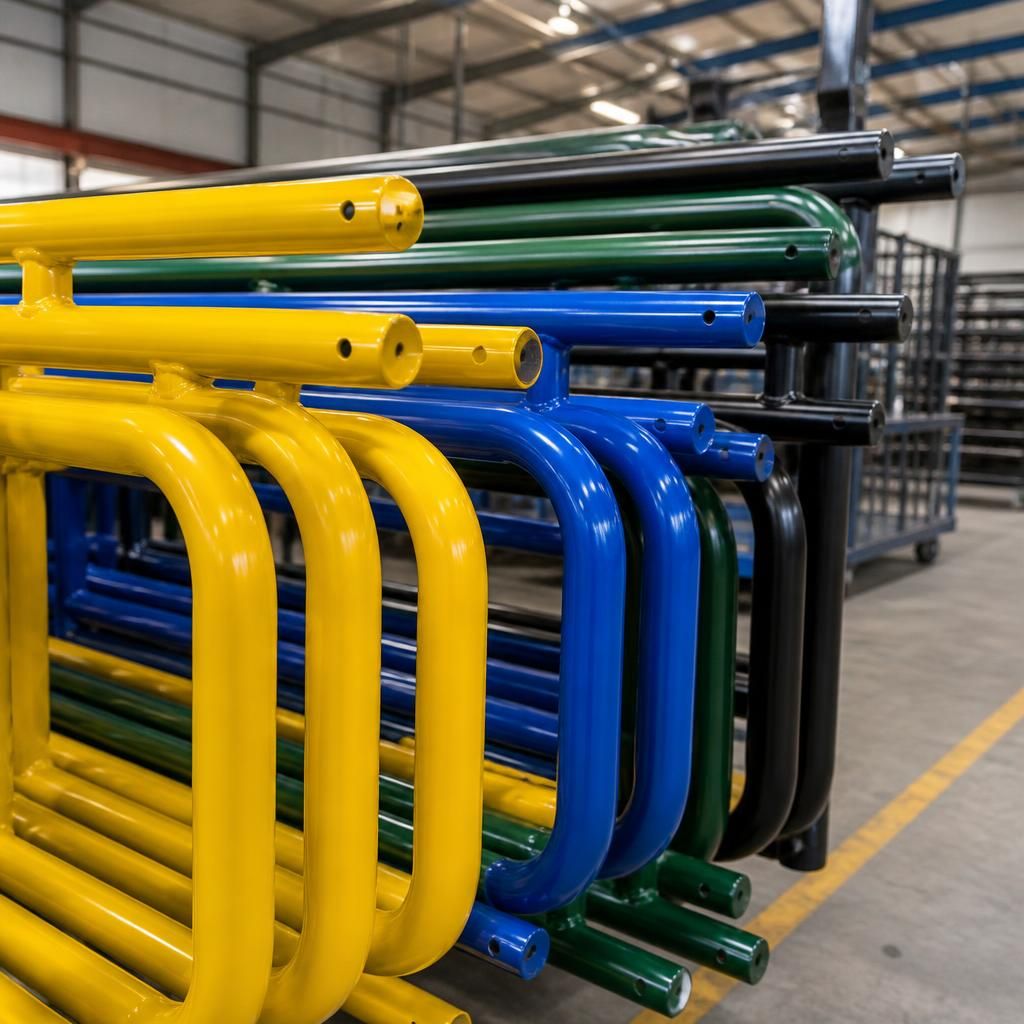
Electrostatic powder coating can also support visual identification of tubular steel components. Different colours or gloss levels may be specified for guards, access frames, racking sections or equipment supports, helping distinguish functions within a fabricated installation. This is useful where components must be recognised during inspection, maintenance or assembly, provided the chosen finish remains suitable for the surrounding operating conditions. The colour specification should be agreed before production so that replacement or additional parts can be matched consistently.
Discuss your tubular steel powder coating requirements
If you are specifying a finish for tubular steel, discuss your component design, operating environment and coating requirements with the powder-coating team before production. This helps establish a suitable preparation, powder and curing specification for the finished parts.