

How does electrostatic powder coating improve corrosion resistance?
Electrostatic powder coating improves corrosion resistance by creating a continuous, cured barrier that separates the metal from moisture, oxygen and other corrosive contaminants. Effective surface preparation and correct curing are essential because they help the coating bond securely and maintain consistent protection across the component.
Electrostatic powder coating improves corrosion resistance by increasing the metal surface’s resistance to the electrochemical reactions that cause rust and other forms of deterioration. A correctly selected and applied powder forms a tough polymeric layer with low permeability, reducing the opportunity for water and dissolved salts to reach the substrate and limiting the spread of corrosion beneath the finish.
How corrosion develops
Corrosion occurs when a metal surface, moisture and an electrically conductive contaminant interact. Small anodic and cathodic areas form on the metal, allowing an electrochemical current to pass through an electrolyte such as damp air, salt water or contaminated surface moisture. The exposed anodic areas gradually lose metal ions, producing rust on ferrous components or other corrosion products on non-ferrous substrates.
Powder coating interrupts this process by adding electrical and physical resistance between the metal and its surroundings. The more complete and coherent the coating, the fewer routes are available for moisture and contaminants to initiate or sustain the reaction.
Why the powder film can provide durable protection
- Low permeability: The crosslinked structure of a cured thermoset powder makes it difficult for moisture and aggressive substances to pass through the film.
- Mechanical toughness: The finish can resist abrasion, handling damage and everyday impact better than many less robust surface treatments. Reducing damage helps preserve the protective layer during service.
- Strong surface coverage: Electrostatic application can distribute charged powder over accessible areas of a grounded component, helping produce an even film on suitable shapes.
- Resistance to particular environments: Powder chemistry can be selected to suit conditions such as indoor use, external exposure, humidity, cleaning regimes or contact with specific chemicals.
The electrostatic process is especially useful for repeat production because application variables can be controlled across batches. Gun voltage, powder flow, component position, grounding and the number of passes all affect how much powder reaches each area. Correct control is important on corners, edges, recesses, perforations and tubular sections, where the electric field may not distribute powder evenly. Deep recesses can create a Faraday cage effect, causing reduced deposition, while sharp edges may receive a thinner film as powder is drawn towards flatter areas.
Film continuity matters more than appearance alone
A visually attractive finish is not automatically a corrosion-resistant one. Protection depends on the coating being sufficiently continuous and suitably thick for its intended environment. Bare spots, pinholes, craters, inclusions and areas damaged during handling can become local entry points for moisture. Once corrosion starts at a defect, it may spread laterally beneath the surrounding film, particularly where the coating has poor adhesion or the component remains wet for extended periods.
For this reason, coating assessment may include visual inspection, film-thickness checks, adhesion testing and, where the specification requires it, tests designed to assess resistance to moisture or salt exposure. The appropriate method depends on the component, coating system, operating environment and relevant customer or industry specification.
Powder selection affects the result
No single powder formulation is suitable for every corrosion risk. Common considerations include:
- External exposure: The formulation must tolerate ultraviolet radiation, rain, temperature changes and condensation without losing its protective properties prematurely.
- Indoor industrial conditions: The coating may need to withstand humidity, oils, cleaning products, abrasion or chemical vapours rather than prolonged sunlight.
- High-risk environments: Components exposed to salt, persistent condensation or aggressive chemicals may need a more robust coating specification, additional protective layers or a primer and topcoat system.
- Substrate compatibility: The powder and any pretreatment or primer must be appropriate for the metal being coated, including steel, galvanised steel or aluminium.
Epoxy-based powders can offer strong resistance to moisture and chemicals but may be less suitable as a final finish where prolonged ultraviolet exposure is expected. Polyester-based systems are commonly considered for exterior durability. Hybrid systems may be selected where a balance of indoor corrosion protection and finish performance is required. These are specification choices rather than universal rules, so the service environment should determine the final system.
Design and handling can preserve corrosion protection
The coating can only protect surfaces that it reaches and remains attached to. Designers and fabricators should therefore consider drainage, ventilation and access for coating equipment. Closed sections that trap water, overlapping joints and unsealed crevices can create corrosion conditions that a surface finish cannot fully resolve. Weld spatter, sharp burrs and rough edges may also interfere with consistent coverage or create points of mechanical weakness.
After coating, components should be protected from impact, abrasion and contact with incompatible materials during storage, transport and assembly. Cuts made after coating, drilled holes and damaged edges may require an approved repair method or additional protection, depending on the specification. Fasteners, joints and interfaces should be assessed as part of the complete corrosion-control strategy rather than treating the coated panel or component in isolation.
In practical terms, electrostatic powder coating provides corrosion resistance through the combined effect of suitable powder chemistry, controlled deposition, a sound cured film and a component design that does not encourage water retention. The most reliable specification considers the metal, geometry, exposure conditions, required appearance, expected handling and any inspection criteria before production begins.
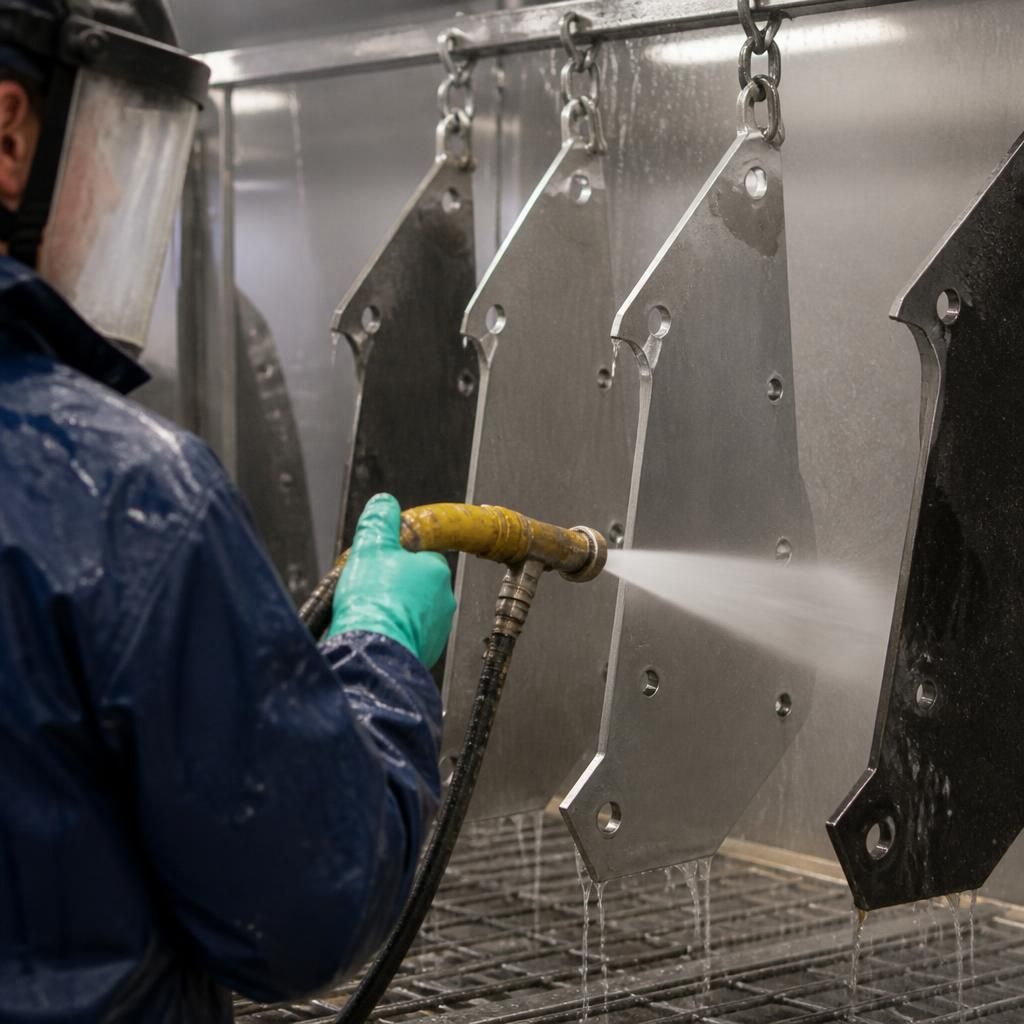
Surface pretreatment improves corrosion resistance by creating a clean, stable interface between the metal and the powder film. Removing oil, dirt, oxide residues and other contaminants helps prevent weak areas where moisture could become trapped beneath the coating.
Pretreatment can also improve adhesion by conditioning the substrate before application. This is particularly important where components may experience humidity, condensation, handling or mechanical stress. The correct preparation method depends on the metal type, existing surface condition and intended environment, so it should be agreed as part of the coating specification rather than treated as a separate finishing step.