

What specific pre-treatment process is essential before applying powder coating to aluminium sections to ensure optimal adhesion and durability?
The essential pre-treatment for aluminium sections is a controlled chemical process of degreasing, rinsing, etching and conversion coating. It removes oil, dirt and the natural oxide layer, then creates a stable surface that helps the powder coating bond securely and resist corrosion and premature failure.
For aluminium sections, effective pre-treatment is a controlled multi-stage surface-conditioning process rather than a single cleaning operation. Its purpose is to produce a chemically active, uniformly prepared surface that gives the powder coating a reliable foundation and reduces the risk of peeling, blistering, filiform corrosion and uneven finish development.
Aluminium reacts rapidly with air and develops a thin oxide film. Although this film protects the metal to some extent, it can interfere with coating adhesion if it is contaminated, excessively thick or inconsistently formed. Sections may also carry extrusion lubricant, machining oil, handling residues, dust, polishing compound or other shop contaminants. These materials must be removed without damaging the profile or leaving residues that could affect the subsequent coating stages.
- Initial cleaning: An alkaline or suitably formulated cleaning stage breaks down oils, grease and general process contamination. The chemistry and contact time must suit the alloy and the condition of the sections; overly aggressive treatment can attack the aluminium or alter its surface appearance.
- Rinsing: Thorough rinsing separates loosened contamination and prevents cleaner carry-over. Rinse quality is important because residual alkaline material can interfere with conversion treatment and contribute to coating defects.
- Controlled surface attack: A light etching or deoxidising stage conditions the surface and removes unstable oxide and embedded residues. This needs to be carefully controlled so the section is activated consistently without excessive material removal, profile distortion or an undesirable change in appearance.
- Further rinsing: Additional rinses remove reaction products and traces of the preceding chemistry. In a properly managed line, the sections should reach the next stage without significant contamination being carried forward.
- Conversion treatment: A conversion coating forms a thin protective and chemically receptive layer on the aluminium. It improves the interface between the metal and the powder film and provides additional resistance at areas where the coating may later be damaged.
- Final rinse and drying: The treated sections must be free from process residues and completely dry before powder is applied. Water trapped in joints, hollows, drilled holes or complex profiles can cause defects during curing and must be allowed to drain or evaporate.
The exact chemical system depends on the aluminium alloy, extrusion condition, intended environment, section geometry and required finish. A treatment suitable for a clean architectural extrusion may not be appropriate for an older, heavily soiled fabricated component. Welded areas, cut ends and machined sections can also respond differently from the surrounding material, so these areas need particular attention during preparation and inspection.
Process control is as important as the individual chemicals. Operators monitor factors such as bath condition, temperature, contact time, concentration, rinse cleanliness and drainage. These controls help maintain a repeatable surface from one batch to the next. If a bath becomes contaminated or the treatment is uneven, the powder may appear sound immediately after curing but fail prematurely when exposed to moisture, handling or outdoor conditions.
Handling between pre-treatment and coating is another important consideration. Prepared sections should not be touched with bare hands or placed on dirty supports, since fingerprints, dust and oil can create local adhesion failures. Racking must provide secure electrical contact for powder application while avoiding excessive contact marks. The arrangement should also allow cleaning solutions, rinse water and air to reach the full surface and drain away effectively.
Inspection before coating can identify visible water marks, staining, unclean areas, powdery residues or incomplete treatment. Where a project has demanding durability requirements, adhesion and corrosion-resistance checks can be used to verify that the complete pre-treatment and coating system is suitable for the application. These checks assess the process as a system rather than treating powder application alone as the determining factor.
In practical terms, the essential requirement is consistency: every aluminium section must enter the powder application stage with a clean, chemically prepared and dry surface. Correct pre-treatment cannot compensate for unsuitable powder selection, poor curing or contamination after preparation, but it provides the necessary starting condition for a durable, well-adhered finish.
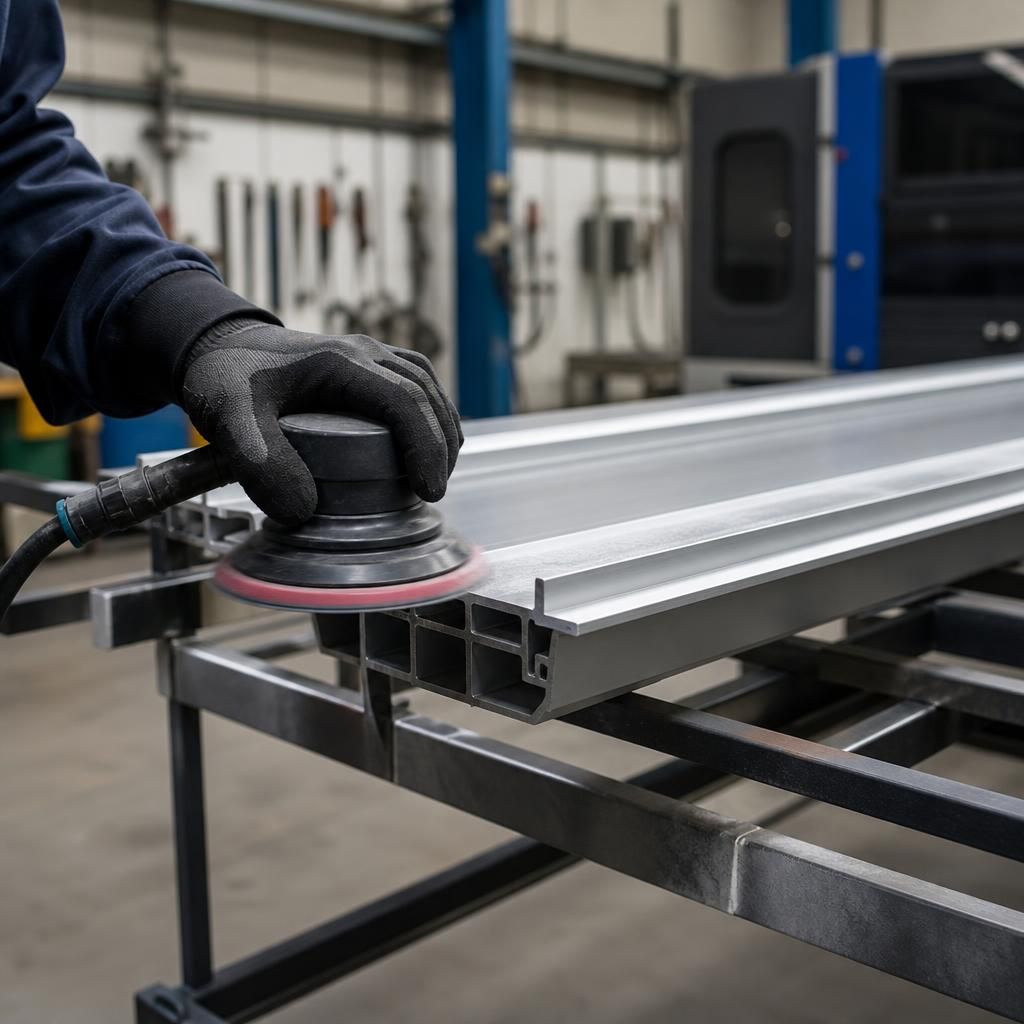
Mechanical abrasion alone is not a substitute for chemical pre-treatment on aluminium sections. Sanding or blasting may remove local oxide and provide a rougher surface, but it can also leave embedded abrasive, create an uneven profile or allow a fresh oxide layer to form before powder application. Degreasing, controlled deoxidising and conversion treatment are still required where consistent adhesion and corrosion protection are important.
Abrasive preparation can have a supporting role on localised marks, weld areas or stubborn surface deposits, provided it is compatible with the alloy and followed by appropriate cleaning. The finished surface should be assessed as a complete pre-treatment system rather than judged by visible roughness alone.
Discuss your aluminium section pre-treatment requirements
Discuss your aluminium section pre-treatment requirements with our team, including the alloy, profile design, surface condition and intended service environment. This helps identify the appropriate preparation and powder coating approach for your components.