

What factors should be considered when selecting the most suitable powder coating for aluminium sections?
The most suitable powder coating for aluminium sections depends on the alloy and profile, intended use, exposure conditions, required appearance, performance requirements and curing limitations. Consider whether the section needs enhanced resistance to corrosion, chemicals, weathering or wear, then match the powder type, colour, texture and film thickness to the application and confirm that the complete section can be pre-treated and cured consistently.
Selecting the most suitable powder coating for aluminium sections means matching the coating specification to the section’s service conditions, design requirements and manufacturing constraints. The choice should cover the powder chemistry, intended performance class, surface appearance, film-build tolerance, masking requirements, curing compatibility and any inspection standard that applies to the finished component.
Start with the required performance specification
A coating should be selected from a defined performance requirement rather than from colour alone. An aluminium section used as an internal trim component may need a different coating system from one exposed to rain, sunlight, de-icing salts, industrial pollutants or frequent handling. For external applications, the specification should identify the expected level of resistance to ultraviolet exposure, moisture and atmospheric corrosion. For industrial components, resistance to abrasion, cleaning agents, oils, solvents or process chemicals may be more important.
Where the section forms part of a critical assembly, the coating specification should also state the required adhesion, hardness, flexibility and impact resistance. These properties affect whether the finish can tolerate cutting, assembly, transport and normal service without cracking, flaking or excessive marking.
Choose the powder chemistry for the exposure
Polyester powders are commonly considered for applications where weathering and colour retention are important. Epoxy-based powders can provide strong adhesion and chemical resistance, but are generally more suited to interior or protected environments where prolonged ultraviolet exposure is not the main concern. Hybrid powders combine characteristics of epoxy and polyester systems and may be appropriate where a balance of interior durability, appearance and chemical resistance is required.
The correct choice depends on the complete duty of the component, not simply whether it is described as industrial or architectural. The powder manufacturer’s technical data should be checked for the relevant exposure conditions, substrate preparation, recommended film thickness and curing window.
Assess the profile design and finished dimensions
Aluminium sections can include hollow chambers, narrow returns, deep channels, sharp internal corners and concealed faces. These features affect how evenly powder can be applied and whether all required surfaces can be reached during spraying. The specification should identify which faces are visible, which require protection and which areas must remain free from coating for electrical contact, welding, bonding, sliding fits or mechanical assembly.
Coating adds thickness to the section, so critical dimensions and tolerances must be considered at the design stage. Threads, slots, holes, mating faces and close-fitting joints may need masking or a defined allowance. Masking materials and hanging points should be selected to avoid uncoated areas appearing on visible surfaces or creating marks that interfere with assembly.
Define the appearance accurately
Colour should be specified using an agreed reference, while gloss level and texture should be stated separately. Two finishes with a similar colour can look substantially different if one is matt and the other is high gloss, or if one has a fine texture. Metallic, textured and special-effect powders can also require tighter control of application and orientation because the visual result may vary with spray conditions and part positioning.
For components installed together, the specification should state whether adjacent sections must match one another and how colour variation will be assessed. A retained sample or approved reference panel can provide a more useful comparison than a digital image, particularly for textured or metallic finishes.
Consider film thickness and edge coverage
Film thickness must be sufficient to provide the required protection without obscuring detail, reducing clearances or causing problems around corners and recesses. Thin edges and sharp profiles can receive less powder than broad faces, while recessed areas may require careful gun positioning to achieve consistent coverage. Excessive build can produce runs, loss of definition, poor fit or curing defects.
The required range should therefore be agreed with reference to the powder data sheet, the profile geometry and the inspection method. If the section has demanding dimensional tolerances, coating thickness should be treated as part of the engineering specification rather than as a purely cosmetic feature.
Check curing and substrate compatibility
The selected powder must be compatible with the aluminium alloy, any pre-treatment system and the available curing process. The curing schedule is based on the metal reaching the required part temperature for the specified time; oven air temperature alone is not a reliable measure of cure. Sections with different wall thicknesses or hollow chambers may heat at different rates, so their geometry should be considered when confirming the process window.
Over-curing and under-curing can both affect the final properties of the coating. The specification should consequently include the powder supplier’s recommended cure conditions and identify any areas where the section must be protected from excessive heat.
Allow for manufacture, handling and future use
Selection should account for how the coated sections will be cut, drilled, fastened, packaged and installed. If further fabrication is required after coating, the effect of cutting or drilling on corrosion protection and appearance should be considered. Contact between aluminium and dissimilar metals may also require an appropriate design detail or barrier to reduce galvanic corrosion risk.
Where the coating may eventually need repair or refurbishment, record the powder type, colour reference, gloss, texture and application requirements. This information helps ensure that replacement sections or local remedial work are specified consistently.
Confirm the specification before production
Before committing to a production batch, review the technical data sheet, approved colour and finish reference, dimensional requirements, masking plan, curing conditions and inspection criteria. A representative sample or trial section is particularly useful for profiles with complex geometry, unusual tolerances or demanding visual requirements. The final purchase specification should describe the acceptable finish and performance requirements clearly enough for the coating plant and the end user to assess the same result.
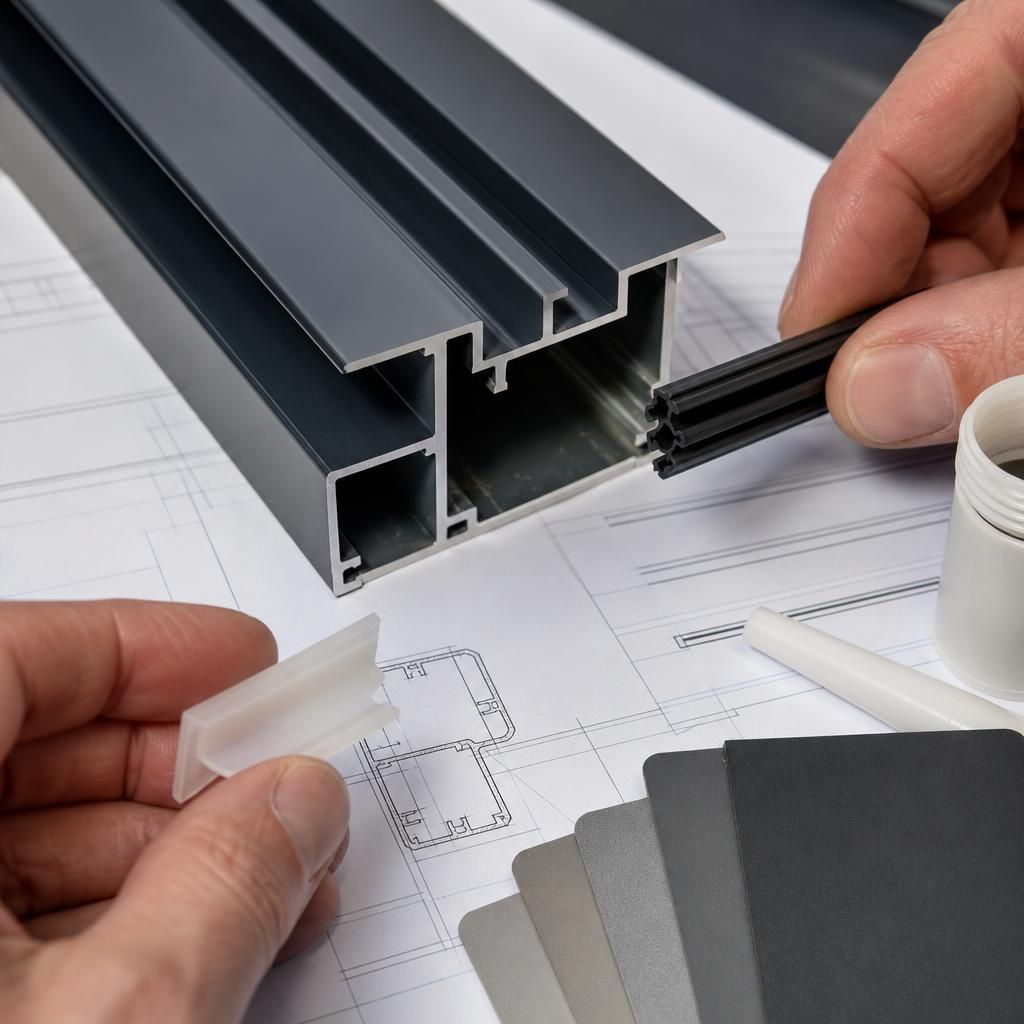
Compatibility with adjoining materials is an important factor when selecting powder coating for aluminium sections. The finish must work with gaskets, sealants, adhesives, protective films and any adjacent coated or uncoated components used in the final assembly.
Check that the selected coating provides a suitable surface for the specified sealant or adhesive, particularly where the joint must remain weather-resistant or bear load. Coating thickness can also affect gasket compression, sliding interfaces and the fit of clips or covers. These requirements should be reviewed alongside the assembly drawing so that the powder specification, masking details and dimensional tolerances support the complete finished product rather than the aluminium section in isolation.
Discuss the right powder coating for your aluminium sections
Discuss your aluminium section drawings, service conditions and finish requirements with the powder coating team to identify a suitable coating specification. Providing details of the profile, intended use and dimensional constraints will help establish any sampling, masking and inspection requirements before production.