

How does the type of curing oven used in the powder coating process affect the quality and consistency of the finish for aluminium sections?
The curing oven determines how evenly aluminium sections receive heat, which directly affects powder flow, cross-linking, colour consistency and finish durability. Convection, infrared and combination ovens each transfer heat differently, so accurate temperature control, suitable airflow and the correct curing profile are essential for consistent results across every section.
The curing oven affects aluminium powder coating quality mainly through the way it heats the metal, manages dwell time and maintains the required cure conditions. The oven must bring the aluminium itself, rather than only the surrounding air or surface powder, to the coating manufacturer’s specified metal temperature for the required time. If this is not achieved consistently, the finish may vary in appearance, hardness, adhesion and resistance to service conditions.
Convection ovens use heated air circulated around the sections. They are generally suitable for aluminium profiles because they can heat complex loads progressively and provide more uniform treatment when the airflow, loading pattern and temperature zones are properly controlled. Their performance depends on the oven being sufficiently heated for the mass and shape of the work. Thick areas, enclosed profiles and tightly packed sections may take longer to reach curing temperature than exposed surfaces.
Infrared ovens transfer energy directly to the coating and metal through radiant heat. They can provide rapid heating and may be useful where a short heating zone or targeted energy input is required. However, radiant energy is affected by the profile’s orientation, surface position and geometry. Exposed faces can receive energy more readily than recessed areas, shadowed sections or joints between closely arranged profiles. For this reason, infrared curing requires careful assessment of section shape and loading rather than relying solely on the air temperature shown in the oven.
Combination ovens use radiant heating alongside circulated hot air. This arrangement can shorten the initial heat-up stage while allowing convection to equalise temperatures through the load. It is particularly useful where aluminium sections vary in wall thickness or where a production line includes different profile arrangements. The two heating methods still need to be balanced: excessive radiant energy at the start can affect the powder surface before the underlying metal has reached the correct condition.
Oven construction and control systems are as important as the heating method. Relevant considerations include the number of heating zones, circulation pattern, insulation, burner or heating-element response, conveyor speed and the position of temperature sensors. A stable system should allow the process to be adjusted to the actual aluminium load. A sensor measuring only the oven atmosphere cannot confirm that the centre of a substantial section has completed the required cure.
Process verification normally involves recording the temperature reached by representative aluminium sections as they travel through the oven. This helps establish whether the selected conveyor speed and temperature settings provide sufficient metal temperature and dwell time. Checks should take account of:
- the profile’s wall thickness, cross-section and internal cavities;
- the number of sections loaded together and the spacing between them;
- the position of each section in relation to heaters and circulating air;
- the powder system’s specified curing schedule; and
- changes in production load, line speed or oven settings.
Under-curing can leave the coating with inadequate chemical conversion, reduced hardness or weaker resistance to scratching, chemicals and weathering. It may also affect adhesion and long-term durability. Over-curing can alter colour and gloss, cause yellowing with some formulations or make the finish more brittle. These defects may not be obvious immediately after coating, which is why oven settings should be controlled against measured process conditions rather than visual inspection alone.
Aluminium sections also need suitable spacing and orientation inside the oven. Poor loading can create shaded areas, restrict air movement or expose one face to more radiant energy than another. Consistent racking and conveyor presentation reduce these variables. Long sections require particular attention because temperature can differ between their leading and trailing areas, especially during loading, oven entry and changes in line speed.
The most suitable oven is therefore determined by more than its nominal temperature range. Its heating method must match the section design, powder chemistry, production volume and loading arrangement, while its control system must support repeatable temperature profiling. For industrial aluminium work, reliable results come from selecting the appropriate oven configuration and then validating the complete cure cycle on representative sections before treating it as the standard production process.
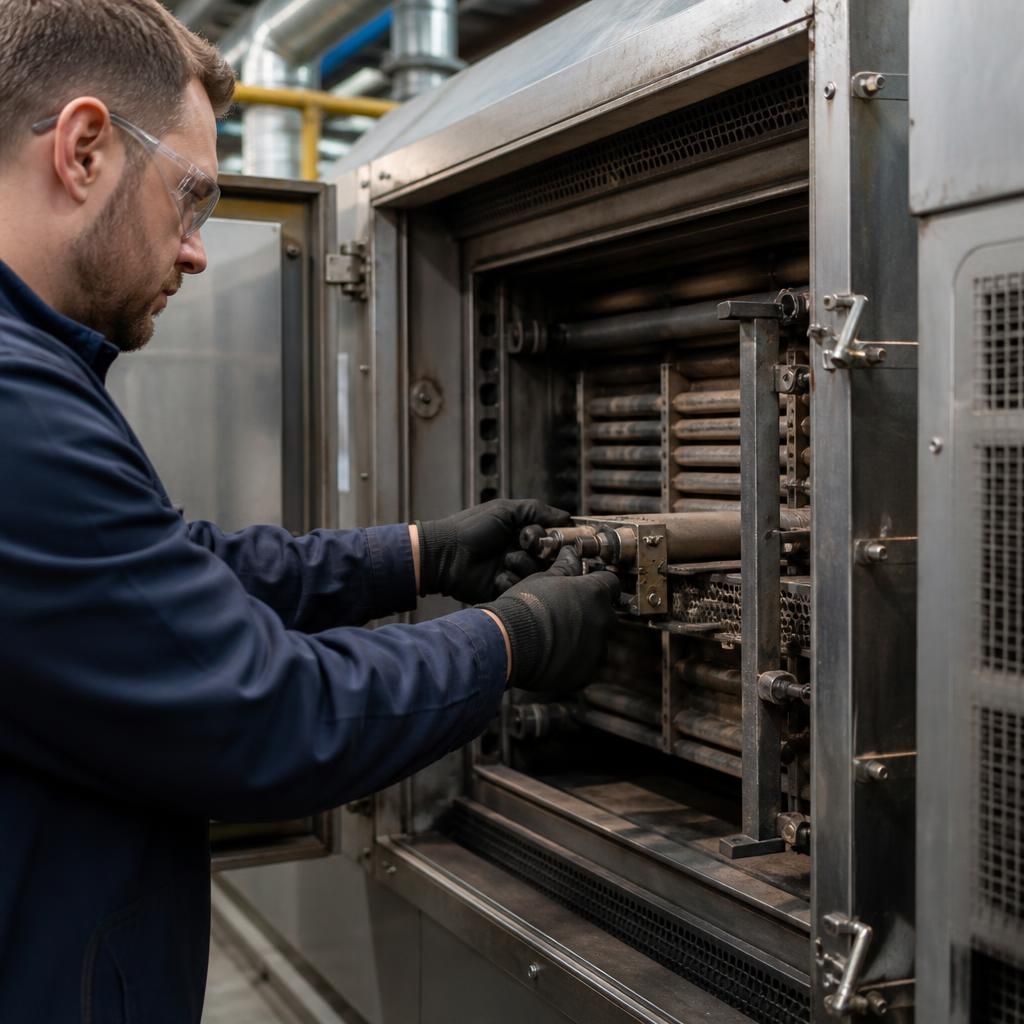
The oven’s heat source can also influence finish cleanliness. Electric and indirectly heated gas ovens keep combustion products separate from the curing chamber, while direct-fired gas ovens introduce heated combustion air into it. A well-maintained direct-fired system can produce sound results, but poor combustion, inadequate filtration or residue within the oven may contribute to surface contamination, discolouration or defects such as pinholing.
Oven design should therefore include suitable ventilation and inspection access, with regular removal of accumulated powder and checking of burners, filters and exhaust paths. This is particularly important when changing colours or coating systems, as residue from a previous process can transfer to subsequent aluminium sections and affect their appearance.
Discuss Your Aluminium Section Curing Requirements
Discuss your aluminium section curing requirements with our powder coating team, including profile geometry, loading arrangements and powder specification. We can assess the process information needed to establish a suitable, repeatable oven profile for your application.