

What innovations or advancements in pretreatment technologies should businesses consider to maximise the effectiveness and efficiency of their aluminium powder coating process?
Businesses should consider chrome-free conversion coatings, nanoceramic pretreatment, automated chemical monitoring and improved rinse-water management to make aluminium powder coating more consistent and resource-efficient. The most suitable option depends on the alloy, component design, required corrosion resistance and production volumes, so trials and controlled process validation should precede adoption.
Recent pretreatment advancements for aluminium powder coating focus on preparing a more uniform, chemically active and contaminant-free surface while reducing handling, rework and resource use. The most relevant options include laser or plasma cleaning, ultrasonic cleaning for complex parts, improved drying systems, more precise application equipment and digital process records. Their suitability depends on the aluminium alloy, surface condition, component geometry, coating specification and production volume.
Laser cleaning for localised contamination and oxide removal
Laser cleaning can remove oxides, residues, previous coatings and other surface contaminants without introducing abrasive media into the component. It is particularly useful for selective preparation, weld areas, repair zones and parts where conventional blasting could alter dimensions or surface texture. However, laser parameters must be matched to the alloy and thickness. Excessive energy can create unwanted heat effects or an irregular surface, so the process requires controlled settings and inspection.
Atmospheric plasma treatment
Plasma treatment uses an ionised gas to increase surface energy and improve the ability of the surface to accept a subsequent coating. It can be valuable where aluminium components have light organic contamination or difficult-to-reach areas that are not easily treated by mechanical methods. Plasma is not a substitute for removing heavy oil, grease or embedded dirt; thorough cleaning remains necessary where contamination is substantial. Its main advantage is that it can provide a dry, targeted treatment with minimal chemical consumption.
Ultrasonic cleaning for intricate components
Ultrasonic systems create microscopic bubbles in a cleaning solution, helping to dislodge contamination from recesses, channels, blind holes and complex profiles. This can give more consistent results than relying solely on spray contact when components have challenging geometries. Parts must still be rinsed and dried correctly after ultrasonic cleaning, because residues left in cavities can interfere with adhesion or cause defects during curing.
More controlled mechanical preparation
Where abrasion is appropriate, modern equipment can improve consistency by controlling media type, pressure, nozzle distance and coverage. Aluminium is relatively soft, so aggressive blasting can produce excessive roughness, embed foreign material or distort thin sections. Dedicated media and carefully controlled parameters are preferable to treating aluminium in the same way as steel. Surface profile checks and visual inspection help confirm that the preparation is suitable for the intended powder coating system.
Improved spray and immersion application
Advances in spray equipment can improve the uniformity of pretreatment coverage on large or irregular components. Adjustable spray patterns, better nozzle arrangement and controlled conveyor movement help reduce untreated areas, particularly around edges, corners and internal faces. Immersion systems can offer more complete contact on complicated shapes, provided that trapped air, drainage and solution carry-over are properly managed. Component orientation and racking should therefore be considered alongside the chemical process.
Low-temperature and lower-impact cleaning chemistry
Newer cleaning formulations may be designed to work at lower operating temperatures or with reduced hazardous content. This can decrease energy demand and simplify handling, but a lower-impact product is not automatically suitable for every alloy or contamination type. The key checks are cleaning performance, compatibility with the aluminium substrate, residue formation, bath stability and the quality of the resulting powder-coated finish. Substitution should be assessed through controlled process checks rather than by changing chemistry in isolation.
Advanced drying and surface protection
Drying is an important area for improvement because residual moisture can dilute subsequent stages, encourage staining or contribute to flash corrosion before powder application. High-efficiency air knives, carefully positioned blow-off systems and controlled warm-air drying can remove water from profiles and recesses more consistently. The objective is complete drying without overheating the substrate or carrying contaminants back onto the prepared surface.
Digital traceability and condition-based control
Digital production records can link each batch to its alloy, cleaning route, pretreatment conditions, rinse checks, drying stage and final inspection. This makes it easier to identify recurring defects and distinguish a pretreatment problem from a powder application or curing problem. Trend analysis is more useful than relying only on an end-of-line visual check, because gradual changes in contamination, bath condition or equipment performance can be investigated before they create widespread rejects.
How to select an innovation
- Assess the alloy, temper, existing oxide condition and likely contaminants before selecting the technology.
- Match the method to the component geometry, including cavities, joints, welds, threaded sections and drainage points.
- Compare capital equipment, consumables, operator skill, waste handling and integration with the existing line.
- Check that the process gives consistent adhesion and corrosion protection after the specified powder cure.
- Define inspection methods for cleanliness, coverage, drying and coating performance before full-scale adoption.
The best result usually comes from combining suitable preparation methods rather than selecting the newest technology on its own. For example, targeted laser or plasma treatment may complement conventional cleaning on localised problem areas, while ultrasonic or immersion equipment may be more appropriate for complex batch components. A powder coating specialist can help assess the component design, pretreatment route and production requirements before the process is changed.
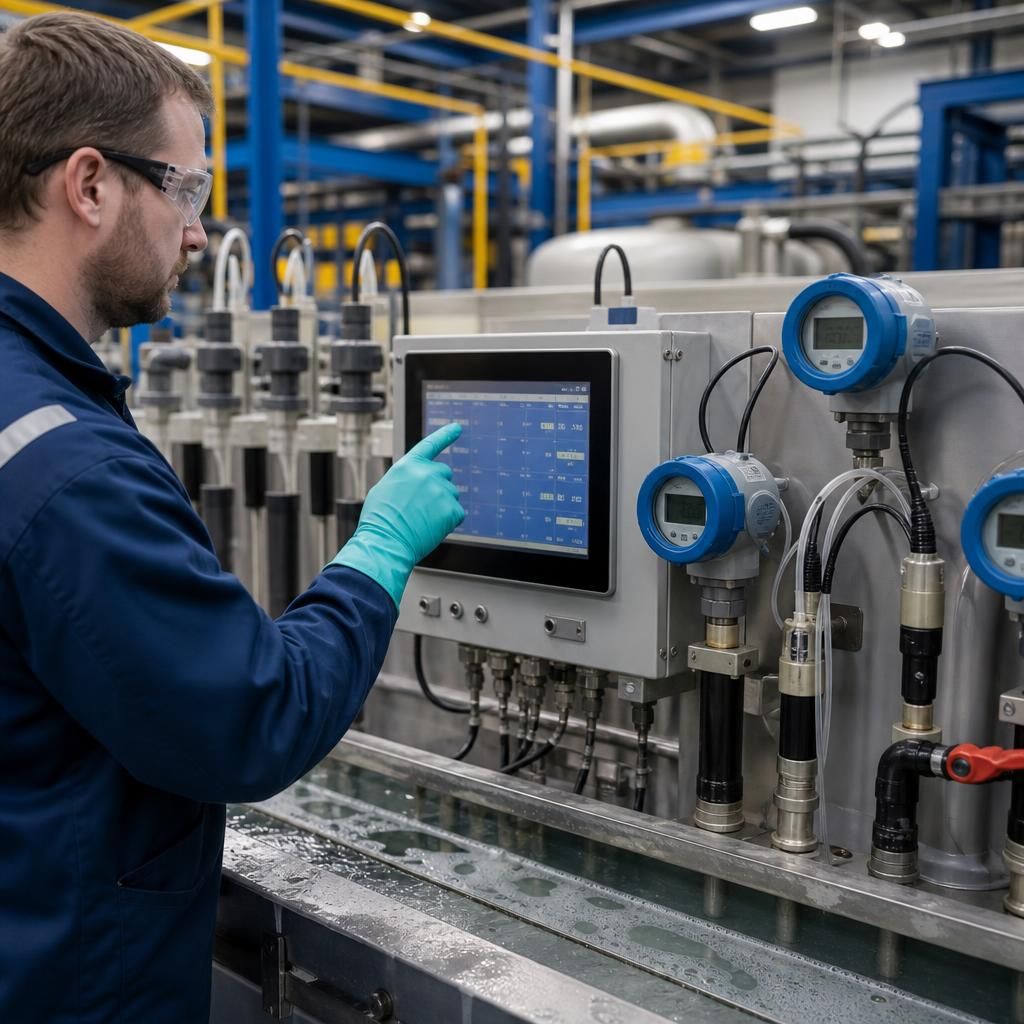
Automated chemical monitoring is an advancement that keeps aluminium pretreatment stages within defined operating conditions by measuring factors such as concentration, pH, temperature and rinse-water conductivity. This reduces reliance on occasional manual checks, which may miss gradual changes during production.
For businesses processing repeat batches, monitored dosing can help maintain more consistent cleaning and conversion-coating conditions. Data from the system should be linked to the relevant batch record so that coating defects can be investigated against actual pretreatment conditions rather than relying only on finished-part inspection.
Before implementation, establish acceptable operating ranges through controlled trials and confirm that sensors remain accurate in the chosen chemistry. Automated control should support, not replace, routine checks, equipment maintenance and testing of adhesion and corrosion resistance on the finished powder-coated aluminium.