

What cleaning and degreasing methods are most effective in aluminium powder coat pretreatment?
The most effective aluminium powder coat pretreatment combines thorough aqueous or alkaline degreasing with controlled mechanical cleaning where necessary, removing oils, grease, dirt and handling residues without damaging the aluminium surface. The selected method should suit the alloy and contamination level, followed by clean rinsing to prevent residues from interfering with subsequent conversion coating and powder adhesion.
The most effective method depends on the type of contamination, the aluminium alloy and the component’s shape, but a controlled water-based cleaning process is usually the preferred approach for powder coat pretreatment. Alkaline or mildly alkaline cleaners remove oils, grease and workshop soils, while neutral cleaners, targeted solvent wipes, deoxidising treatments and carefully controlled mechanical action deal with contamination that a standard wash cannot remove.
Alkaline spray or immersion cleaning is suitable for many fabricated aluminium parts. The cleaner’s surfactants loosen oil and grease, allowing them to be displaced from the surface. Spray systems add impact and help reach exposed faces, whereas immersion allows the solution to contact recessed areas and more complex shapes. Agitation, solution temperature, concentration and contact time must be controlled together. Excessive alkalinity or prolonged exposure can attack aluminium, alter dimensions at critical edges and leave an uneven surface, so a product intended for aluminium should be used in accordance with its technical instructions.
Neutral or mildly alkaline cleaners can be preferable where the alloy, finish or geometry is particularly sensitive. They are useful for removing fingerprints, light oils, dust and general handling contamination without relying on an aggressive chemical reaction. Their performance depends more heavily on adequate contact, agitation and solution cleanliness. They may not be sufficient for heavily carbonised oil, drawing compounds or firmly bonded workshop residues, in which case a staged process is normally more reliable than simply increasing the cleaner’s strength.
Solvent wiping has a useful but limited role. A compatible solvent can remove a localised oil mark, adhesive residue or heavy contamination before the main wash, particularly on a small batch or an isolated area. Wipes must be clean and changed frequently so that contamination is lifted rather than spread. Solvent cleaning should not automatically be treated as a complete pretreatment: it may dissolve grease while leaving fine particles, oxide films or a thin residue behind. The solvent must also be compatible with the aluminium and handled in line with the relevant safety requirements.
Deoxidising and desmutting treatments are used when cleaning alone leaves oxide, corrosion products or dark smut on the metal. These are normally acidic products formulated for aluminium and are applied after the primary removal of oil and grease. Their purpose is to produce a chemically clean, more uniform surface rather than to act as the main degreaser. Incorrect chemistry or excessive contact can cause staining, pitting or an uneven appearance, so treatment selection should reflect the alloy and the required finish.
Mechanical cleaning is appropriate for isolated, stubborn deposits that chemical cleaning cannot remove. Non-contaminating abrasive media, nylon tools or controlled brushing can help with corrosion products, weld-related residues and compacted dirt. The method should be gentle and consistent: aggressive abrasion may score the aluminium, round edges, embed particles or create a surface profile that shows through the powder coating. Steel brushes and contaminated abrasives are particularly unsuitable because they can introduce foreign metal onto the surface and encourage later corrosion.
Components with narrow cavities, complex profiles or difficult-to-reach joints may benefit from additional agitation or an ultrasonic cleaning stage, provided the equipment and chemistry are suitable. These methods can improve access to recesses, but they do not remove the need to select the right cleaner or to control subsequent treatment. Trapped solution, residues in joints and incomplete drainage must be considered when designing the cleaning sequence.
A practical cleaning sequence generally involves:
- removing loose dust, swarf and packaging debris before wet processing;
- pre-wiping or pre-cleaning areas carrying unusually heavy oil or grease;
- applying the selected aluminium-compatible cleaner by spray, immersion or an appropriate combination;
- using controlled agitation to expose all surfaces, including holes, joints and recessed sections;
- checking that the surface is free from visible soil before moving to deoxidising or conversion treatment; and
- preventing recontamination through clean handling, suitable gloves and protected transfer between stages.
Effectiveness should be checked by inspection rather than assumed from the appearance of the component. A clean surface should have no visible oil film, fingerprints, powdery residue, water-break patterns or localised staining. Process monitoring should include the cleaner’s concentration, temperature, contact time and level of contamination in the working solution. If these conditions drift, cleaning quality can vary across a batch even when the same nominal chemical product is being used.
The most common failure is choosing a stronger cleaner when the real problem is poor coverage, inadequate agitation, an overloaded bath or contamination that requires a separate deoxidising stage. Conversely, a mild cleaner may be the right choice for a sensitive alloy if the process provides enough contact and mechanical action. For production work, the best method is therefore established through the component material, soil type, geometry and required coating system, then verified consistently before powder application.
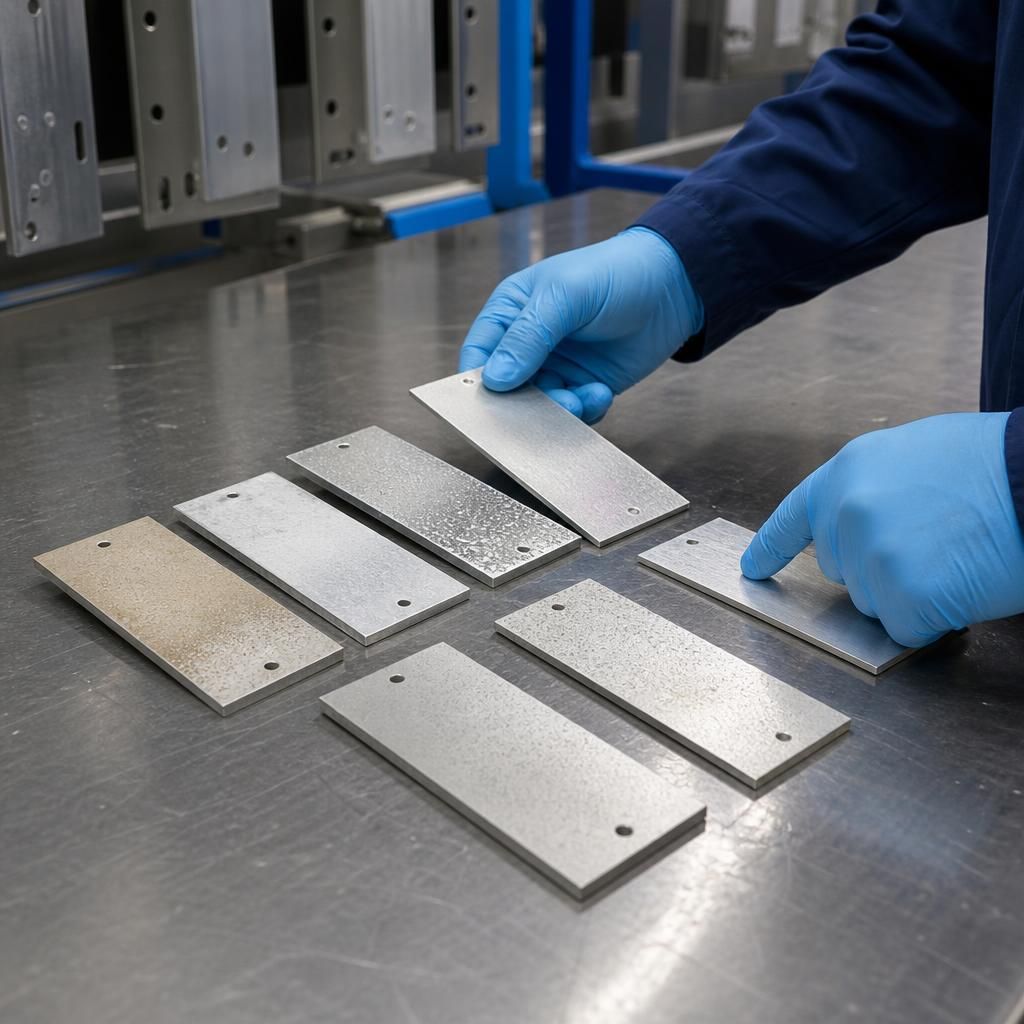
Cleaning and degreasing should be validated on representative aluminium offcuts or trial components before a full production run. This allows the processor to check for staining, etching, edge attack or changes in surface appearance that may not be obvious when selecting a chemical from its technical description alone.
The trial should use the intended alloy, component geometry and contamination type, followed by the planned conversion coating and powder coating stages. Comparing the finished test pieces helps confirm that the cleaning method is compatible with the complete coating system, rather than judging performance from surface appearance immediately after washing.