

What are the key steps involved in the aluminium powder coat pretreatment process?
Aluminium powder coat pretreatment typically involves inspecting the component, cleaning and degreasing it, etching or deoxidising the surface, rinsing thoroughly, applying a chemical conversion coating, then carrying out a final rinse and controlled drying. The prepared aluminium can then receive powder coating, with each stage helping create a clean, chemically active surface for reliable coating adhesion and long-term protection.
An effective aluminium powder coat pretreatment process is a controlled sequence of surface preparation, chemical treatment, rinsing, drying and inspection. Its purpose is not simply to make the component look clean; it must remove contaminants, manage the natural oxide layer and leave a consistent surface that is chemically compatible with the powder coating system.
1. Confirm the aluminium specification and required finish
Different aluminium alloys, castings, extrusions and fabricated assemblies can respond differently to pretreatment chemicals. The process should therefore be selected with the alloy, surface condition, intended service environment and powder coating specification in mind. Items with welds, sharp edges, deep recesses or mixed metal fittings may need particular attention because these areas can retain contamination or receive treatment less evenly.
Any masking, plugs or drainage arrangements should also be decided before processing. Trapped chemicals in hollow sections, folded edges or blind holes can later cause staining, blistering or coating failure. Components should be presented so that treatment fluids can reach the required surfaces and drain away fully.
2. Remove manufacturing residues without damaging the substrate
Aluminium may carry machining oil, drawing lubricant, handling marks, polishing compound, adhesive residue, dust or storage contamination. The cleaning stage must remove these materials without leaving an alkaline or detergent film behind. Excessively aggressive cleaning can alter the profile of the metal, while inadequate cleaning can prevent subsequent chemicals from acting uniformly.
Surface condition is commonly assessed by looking for remaining water-repellent patches, streaking, smears or areas that appear different from the surrounding metal. These signs indicate that contamination may still be present or that the cleaning treatment is not sufficiently consistent.
3. Control oxide removal and surface activation
Aluminium rapidly develops a thin oxide layer in air. A controlled etching or deoxidising treatment removes unwanted oxide and helps produce a suitably active surface for the next chemical stage. The treatment needs to be strong enough to deal with oxidation and alloying residues, but controlled enough to avoid excessive attack, uneven appearance or dimensional change.
Over-treatment may leave a rough or visibly etched surface, particularly on softer alloys. Under-treatment can leave oxide or smut that interferes with conversion coating formation. Alloy composition, immersion or spray conditions, chemical concentration, temperature and contact time all influence the result, so these variables should be managed rather than treated as interchangeable.
4. Prevent carry-over between chemical stages
Rinsing is a process-control step rather than a simple wash. Its job is to remove residues from one operation before the component enters the next bath or spray zone. Poor rinsing can dilute treatment chemicals, contaminate later stages and leave salts that become visible beneath the powder coating.
Rinse effectiveness depends on factors such as water quality, flow, coverage, drainage and the condition of the rinse stage itself. Recesses and joints require particular care because they can retain liquid after the main surface appears clear. Components should be positioned to encourage drainage, and rinse conditions should be monitored so that contamination is not transferred back onto the aluminium.
5. Form a continuous conversion coating
The conversion coating provides an important interface between the aluminium and the powder coating. It changes the surface chemically and creates a more suitable base for adhesion and corrosion resistance than untreated aluminium alone. The film must cover the required areas consistently, including edges and less accessible surfaces, without producing loose deposits or excessive residue.
Whether a chromate-based or chrome-free system is selected depends on the specification, regulatory requirements, environmental considerations and performance needs of the component. The chosen chemistry must be compatible with the aluminium alloy and the powder coating system. Chemical concentration, temperature, contact time and solution condition should be controlled according to the treatment supplier’s technical requirements.
6. Dry the component without recontaminating it
After the final rinse, water must be removed from joints, holes, folded sections and other areas where it can collect. Drying should leave the surface free from visible moisture without introducing dust, oil or handling contamination. Excessive heat can also be undesirable if it affects sealants, inserts, masking materials or the component itself.
Once prepared, aluminium should be handled with clean equipment and suitable gloves where necessary. Fingerprints and workshop residues can compromise an otherwise acceptable surface. Contact with untreated steel dust, dirty racks or contaminated packing should also be avoided.
7. Verify the prepared surface before powder application
Inspection should cover appearance, drainage areas, recesses, edges and any locations that were difficult to expose during treatment. Depending on the specification, checks may include a visual examination, assessment for water-break-free behaviour, review of process records and testing of representative samples or test panels. The appropriate checks depend on the coating system and the required performance level.
Any defect found at this point should be investigated before powder is applied. Common causes include inadequate cleaning, exhausted or contaminated treatment chemistry, poor rinsing, incomplete drying, incorrect component positioning or excessive delay between preparation and coating. Applying powder over a questionable surface can conceal the original problem while leaving the underlying adhesion or durability risk unresolved.
8. Maintain compatibility with the powder coating stage
Pretreatment does not operate independently from powder application. The conversion coating, drying conditions, handling method and powder system should be considered together. The prepared surface must remain clean and dry until coating begins, and the powder application and curing specification must be suitable for the aluminium component and any associated materials.
For production work, documenting the treatment sequence, chemical checks, rinse condition, drying performance and inspection results helps identify variation between batches. This is especially useful where components differ in alloy, geometry or level of contamination. Consistent control at each stage is what turns pretreatment from a visual cleaning exercise into a reliable foundation for a durable aluminium powder-coated finish.
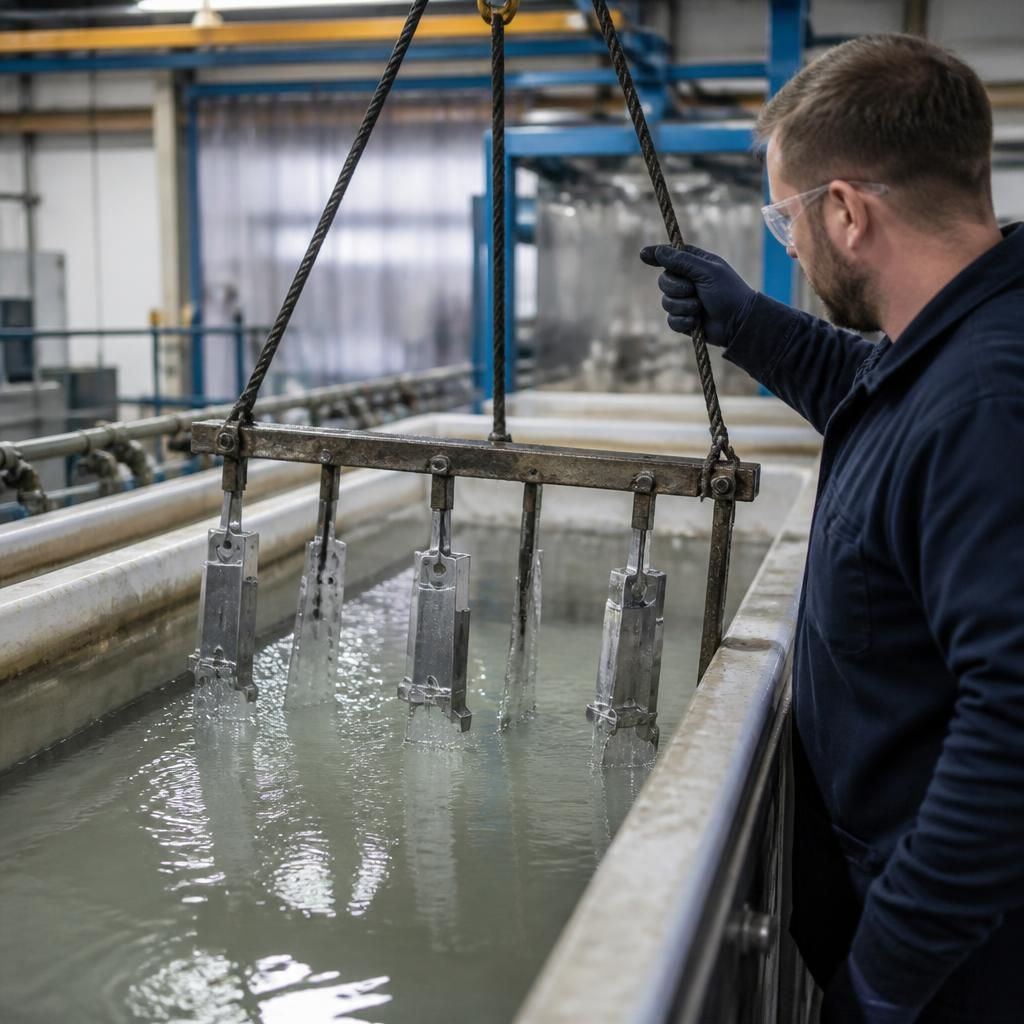
A critical part of aluminium powder coat pretreatment is controlling the transition between surface activation and chemical conversion coating. Once the oxide layer has been removed or reduced, the exposed aluminium can begin reacting with air and moisture again. The conversion stage should therefore follow the activation stage in a controlled sequence, rather than allowing the component to stand or dry unnecessarily between treatments.
This is particularly important on complex fabricated parts, where delays or uneven transfer can produce differences in surface condition across the same component. Keeping the process order consistent helps the conversion coating form on a suitably active surface and reduces variation between batches. The correct interval and handling method should follow the chemical supplier’s technical requirements and the coating specification.