

What are the potential drawbacks or limitations of powder coated aluminium, and how can these be mitigated to ensure optimal results?
Powder coated aluminium can be limited by colour fading, surface scratching or chipping, difficulty repairing local damage, and coating failure where preparation or application is inadequate. These risks can be reduced through suitable powder selection, thorough cleaning and pre-treatment, correct application and curing, careful handling, and prompt maintenance of damaged areas.
Powder coated aluminium is not universally suitable for every component, environment or specification. Its main limitations include process-related dimensional changes, restricted coverage in complex geometries, potential incompatibility with heat-sensitive assemblies or chemicals, and difficulty achieving an identical appearance across different production batches. These risks can be controlled through appropriate component design, a clearly defined coating specification, representative testing and consideration of how the finished part will be assembled and used.
Dimensional tolerance can be affected. Powder coating adds a measurable film to the surface, including around holes, slots, threads, mating faces and press-fit areas. On tightly engineered parts, this may affect assembly or prevent fasteners from seating correctly. Drawings should identify critical dimensions, masking requirements and areas that must remain uncoated. Where necessary, holes and threaded features can be designed with sufficient allowance, while contact faces can be protected during coating.
Complex shapes may not receive completely uniform coverage. Recesses, internal corners, narrow channels and deep cavities can be more difficult to coat consistently because of the electrostatic application process. Sharp internal geometry can also encourage thinner coverage at certain points. Radiused corners, accessible surfaces and suitable drainage or ventilation holes generally support more even results. For a complicated component, a trial piece or agreed inspection sample can help confirm that the intended areas are adequately covered before batch production.
The curing process can restrict what is coated. Aluminium components normally have to pass through an oven at a controlled temperature, so attached seals, bearings, electronics, adhesives, plastics and other heat-sensitive parts may be unsuitable for coating in situ. Thin or unusually shaped sections may also require attention because uneven heating can contribute to distortion. Components should therefore be coated before sensitive items are fitted wherever possible. If that is not practical, the applicator should review the assembly and establish whether masking, an alternative process or a different component arrangement is appropriate.
Porous castings and enclosed sections can present outgassing risks. Air or moisture held within a casting, weld area or enclosed profile may be released during heating, creating small bubbles, pinholes or local blemishes in the film. This is a particular design consideration for cast aluminium and fabricated assemblies. Venting enclosed sections, allowing suitable pre-treatment and using a representative sample can reduce the risk. The part should also be assessed as a complete design rather than treating the visible outer face in isolation.
The coating is a finish, not a method of correcting poor substrate geometry. Dents, sharp burrs, weld irregularities, machining marks and inconsistent joints may remain visible beneath the coating, although texture can alter how noticeable they are. Product drawings and quality requirements should distinguish between acceptable substrate marks and defects that must be rectified before coating. If a decorative result is important, the required surface standard should be agreed before production rather than judged solely after coating.
Exposure to particular chemicals can shorten service life. Powder-coated aluminium may be unsuitable for continuous contact with aggressive solvents, strong acids, alkalis, some cleaners, fuel residues or process chemicals unless the coating has been selected and tested for that environment. Temperature, concentration, contact time and repeated cleaning cycles all affect compatibility. The end user should provide details of chemicals, operating temperatures and cleaning methods so that the proposed finish can be assessed against the actual service conditions.
Colour and gloss consistency can be difficult across separate runs. The same nominal colour may show small differences where parts are coated at different times, with different film thicknesses, textures, substrates or orientations. This matters when panels, trims or replacement parts are expected to sit directly alongside one another. A single production run, an agreed reference sample and defined tolerances for colour, gloss and texture provide better control than relying on a colour name alone. Future replacement parts may still require comparison against the installed item before manufacture.
Powder coating can change the electrical behaviour of a component. The cured film is generally non-conductive, so earthing points, electrical bonding faces and surfaces used for continuity must be identified and masked or treated in accordance with the design. This is particularly important for enclosures, structural assemblies and components that rely on metal-to-metal contact. The finished assembly should be checked for continuity where electrical performance is part of its function.
Optimal results depend on specifying the complete requirement rather than simply requesting a colour. The specification should cover the aluminium alloy or substrate type, visible faces, critical dimensions, masking points, texture, gloss, environmental exposure, chemical contact, electrical contact areas and inspection criteria. For unfamiliar designs or demanding conditions, a sample part or test panel allows appearance, coverage and assembly fit to be reviewed before the full batch is processed.
For manufacturers and fabricators, a coating specialist can review these constraints at quotation or design stage and identify features that may complicate application. Powder-coating services for aluminium components, profiles and fabricated parts can then be planned around the part’s geometry and intended use, with collection and delivery available to businesses across the Midlands and surrounding areas.
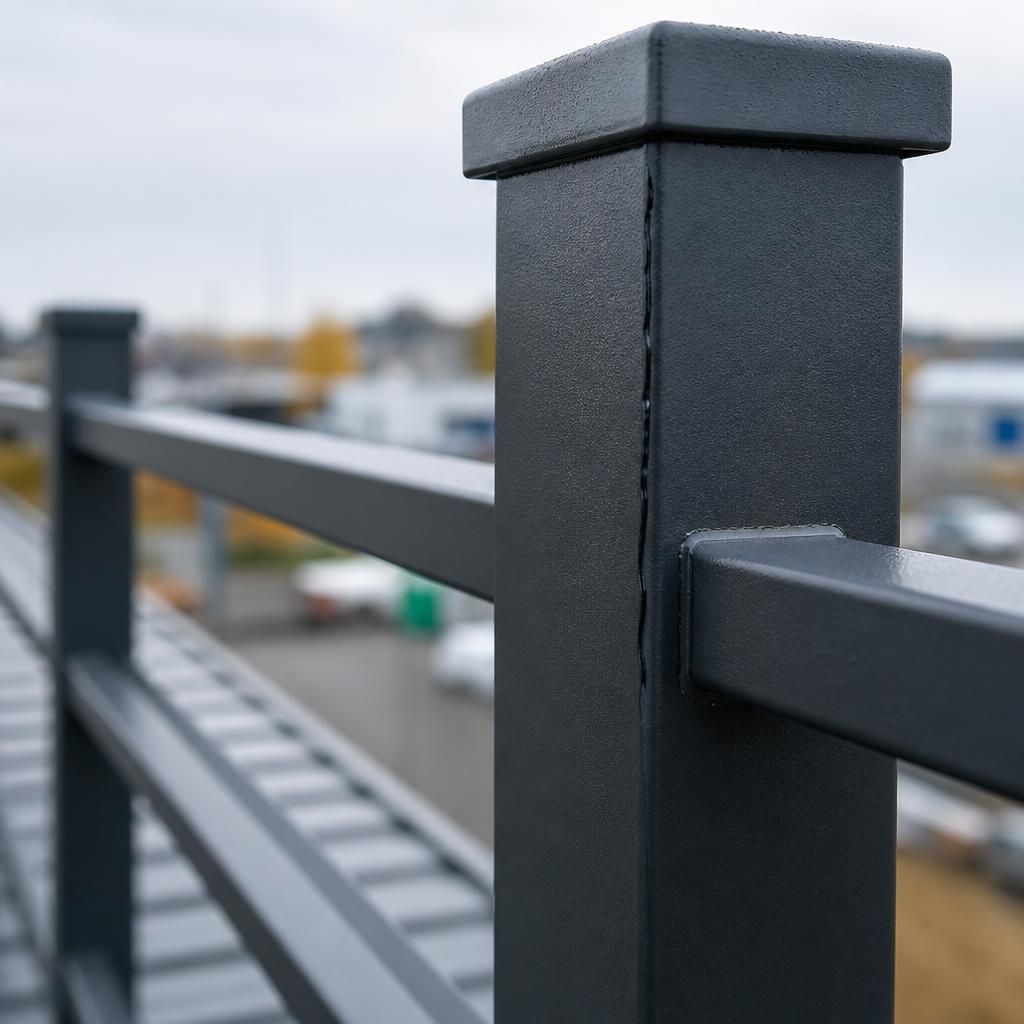
Thermal movement is a potential limitation of powder coated aluminium. Aluminium expands and contracts as its temperature changes, while the cured coating responds differently. Repeated heating and cooling, particularly outdoors or near heat-producing equipment, can place stress at joints, bends, fixings and transitions between aluminium sections.
This risk can be reduced by selecting a coating system with suitable flexibility for the service conditions and avoiding designs that unnecessarily restrain normal movement. Fabricated assemblies should allow for expansion, while coating specifications should identify operating temperatures and repeated thermal cycling where these are relevant. A representative test piece can help confirm that the finish remains intact at critical joints and formed areas before full production.