

What maintenance is required for powder coated perforated aluminium to ensure longevity?
Powder coated perforated aluminium requires regular gentle cleaning, visual inspection and prompt attention to chips, scratches or damaged edges. Use clean water with a mild, non-abrasive detergent and soft cloth or brush, while avoiding harsh chemicals, abrasive tools and prolonged deposits of dirt or contaminants that could damage the coating.
Maintaining powder coated perforated aluminium involves controlling moisture, contaminants, mechanical wear and contact with incompatible materials, as well as carrying out suitable repairs when the coating or substrate is damaged. The perforations and exposed edges need particular attention because they can collect deposits, retain moisture or be affected by contact with fixings and adjacent components.
Good drainage is one of the most important factors in long-term performance. Panels should be positioned so that water can run away rather than remain around lower edges, joints, folds or fixing points. Check that surrounding channels and drainage paths are not obstructed by debris. Where panels form screens, façades or enclosures, make sure changes in the installation have not created pockets where moisture or contaminants can accumulate.
Pay attention to the condition of interfaces between the aluminium and other materials. Dissimilar metals can create galvanic corrosion when moisture is present, particularly around fixings, brackets and support frames. Suitable separators, washers or other compatible components may be needed to isolate the materials. Sealants and protective products should also be checked for compatibility with the powder coating and aluminium before they are applied.
Mechanical damage is more likely at cut-outs, corners, returns, fixing holes and exposed perforation edges. Avoid dragging tools, equipment or replacement parts across the finished surface. During alterations, maintenance work or nearby construction, protect the panels from sparks, wet cement, plaster, solvents and impact. Cement-based residues and some building products can become difficult to remove and may affect the coating if left in contact with it.
Any repair should begin with an assessment of the affected area. A superficial mark, loss of gloss, coating failure and exposed aluminium do not necessarily require the same treatment. Small local defects may be suitable for a compatible repair system, whereas widespread coating breakdown, corrosion at edges or repeated damage may require removal and professional refinishing. The repair product, colour and surface preparation should be confirmed against the original coating specification rather than selected solely by appearance.
For panels exposed to coastal air, industrial emissions, road spray or heavy airborne contamination, the maintenance plan should reflect the site conditions. These environments can increase the amount of residue reaching the coating and can accelerate problems at damaged areas or poorly drained joints. Record the location, coating specification, installation date and any repair materials used so that future work can be carried out consistently.
Maintenance should also include the surrounding structure. Loose fixings, movement, failed seals or damaged support members can place stress on the perforated aluminium and lead to rubbing, distortion or coating failure. Check that panels remain securely supported and that joints allow for the movement anticipated in the design. Do not enlarge holes, alter fixings or modify the panel without considering how the change will affect edge protection and water management.
Where the panels are part of a larger building or industrial system, coordinate their care with the maintenance of adjacent cladding, glazing, ventilation components and access equipment. Work carried out nearby can introduce contaminants or cause impact even when the aluminium itself is not being serviced. A documented inspection and repair history helps distinguish normal surface ageing from a developing installation or environmental problem.
For extensive damage, uncertain coating compatibility or a requirement to restore a large area, consult the original coater or a suitably experienced powder coating specialist. They can advise whether local repair, removal and recoating, or replacement is the most appropriate option for the perforated component.
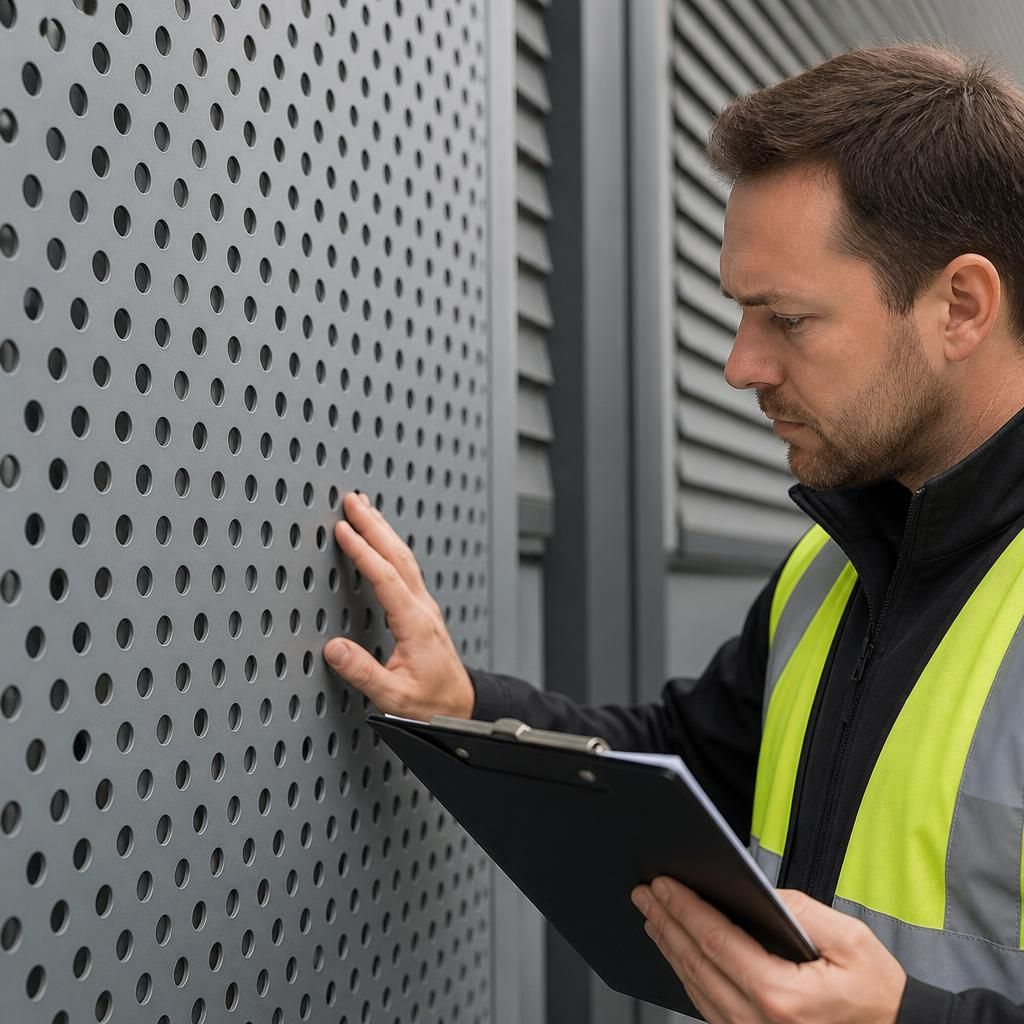
Monitor changes in colour, gloss and surface texture as part of routine maintenance. A gradual loss of gloss or light surface chalking can result from weathering and should be assessed separately from peeling, blistering, cracking or exposed aluminium, which indicate a more serious coating defect.
Inspect the panels after cleaning, when deposits are less likely to disguise the condition of the finish. Compare affected areas with less exposed sections and record any change in location or severity. This helps determine whether the appearance is limited to normal surface ageing or whether specialist advice is needed before the coating deteriorates further.
Ask about maintaining your powder coated perforated aluminium
Contact Powder-coatings.co.uk to discuss the appropriate coating specification and recoating requirements for your perforated aluminium components. Providing details of the operating environment and existing finish will help identify a suitable next step.