

What maintenance measures should be implemented to preserve the quality and appearance of powder coated aluminium sheets and coils over time?
Preserve powder coated aluminium sheets and coils by cleaning them with mild detergent and clean water, inspecting regularly for contamination or coating damage, and avoiding abrasive tools and harsh chemicals. Keep drainage paths clear and arrange prompt repair of scratches, chips or exposed aluminium to prevent corrosion and maintain the finish.
Preserving powder coated aluminium sheets and coils requires more than routine washing. The maintenance plan should also control how the material is stored, handled and installed, prevent moisture and incompatible materials from affecting the aluminium, and keep a record of coating condition so that minor defects receive the correct treatment before they become larger failures.
Protect the finish during storage and handling. Store sheets and coils in a dry, well-ventilated location, supported evenly and protected from standing water, condensation and contact with damp materials. Use clean separators where materials are stacked, and avoid placing heavy objects on coated surfaces. Sheets should be lifted rather than dragged across one another, since friction can mark the coating even when there is no immediately visible dent. Any temporary wrapping or protective film should be managed in accordance with the coating and film supplier’s instructions; leaving adhesive film exposed for too long, particularly in heat or strong sunlight, can make removal more difficult and leave residue.
Use compatible installation materials. Fixings, brackets, sealants, gaskets and backing materials should be suitable for use with both powder coated aluminium and the intended exposure conditions. Dissimilar metals can create galvanic corrosion when moisture is present, so suitable isolation washers, coatings or separators may be required where aluminium contacts another metal. Sealants must not contain components that stain, soften or chemically attack the coating. Compatibility should be confirmed before large-scale installation rather than assumed from the product’s appearance.
Prevent water traps and moisture retention. The installed assembly should allow water to drain and air to circulate. Joints, laps, folded sections and support points need particular attention because trapped moisture can cause staining, under-film corrosion at damaged areas or deterioration of adjacent materials. Keep weep holes, channels and designed drainage routes free from obstruction, and review areas where condensation repeatedly occurs. Where panels or coils form part of an enclosure, maintenance should include checking that seals remain correctly positioned and that water is not being directed behind the coating system.
Control contact with site materials. Cement, mortar, plaster, bitumen, metal swarf, welding residue and other construction products can discolour or damage a finished surface if allowed to remain in contact with it. Powder coated components should be protected during nearby building, fabrication or repair work, while temporary coverings should not trap moisture against the coating. Cutting, drilling or welding close to finished surfaces should be planned to prevent hot particles and sharp debris from embedding in or marking the finish.
Review the coating as part of planned asset maintenance. Condition checks should consider more than visible colour. Look for loss of gloss, chalking, blistering, lifting at edges, staining around fixings, seal failure and changes at joints or bends. Record the location and nature of any change, together with the likely exposure or installation cause. Comparing records over time helps distinguish isolated cosmetic issues from a developing problem with moisture, movement or incompatible materials.
Use the correct remedial method. Touch-up products should be matched as closely as possible to the original coating system, colour, gloss level and exposure requirement. A touch-up may be suitable for a small, localised defect, but extensive fading, widespread coating breakdown or repeated corrosion at joints may require assessment and a broader refurbishment approach. Before recoating, the surface must be properly prepared and the cause of the original failure addressed; applying a new layer over contamination, unstable coating or ongoing moisture will not provide a durable solution.
Where sheets or coils are exposed to coastal air, industrial emissions, de-icing materials or other aggressive conditions, the maintenance regime should be based on the specified coating class and the actual site environment. The coating supplier’s care instructions should take precedence over a generic schedule, particularly for specialist finishes. With controlled handling, compatible installation details, effective moisture management and documented condition reviews, the appearance and protective function of powder coated aluminium can be maintained throughout its intended service life.
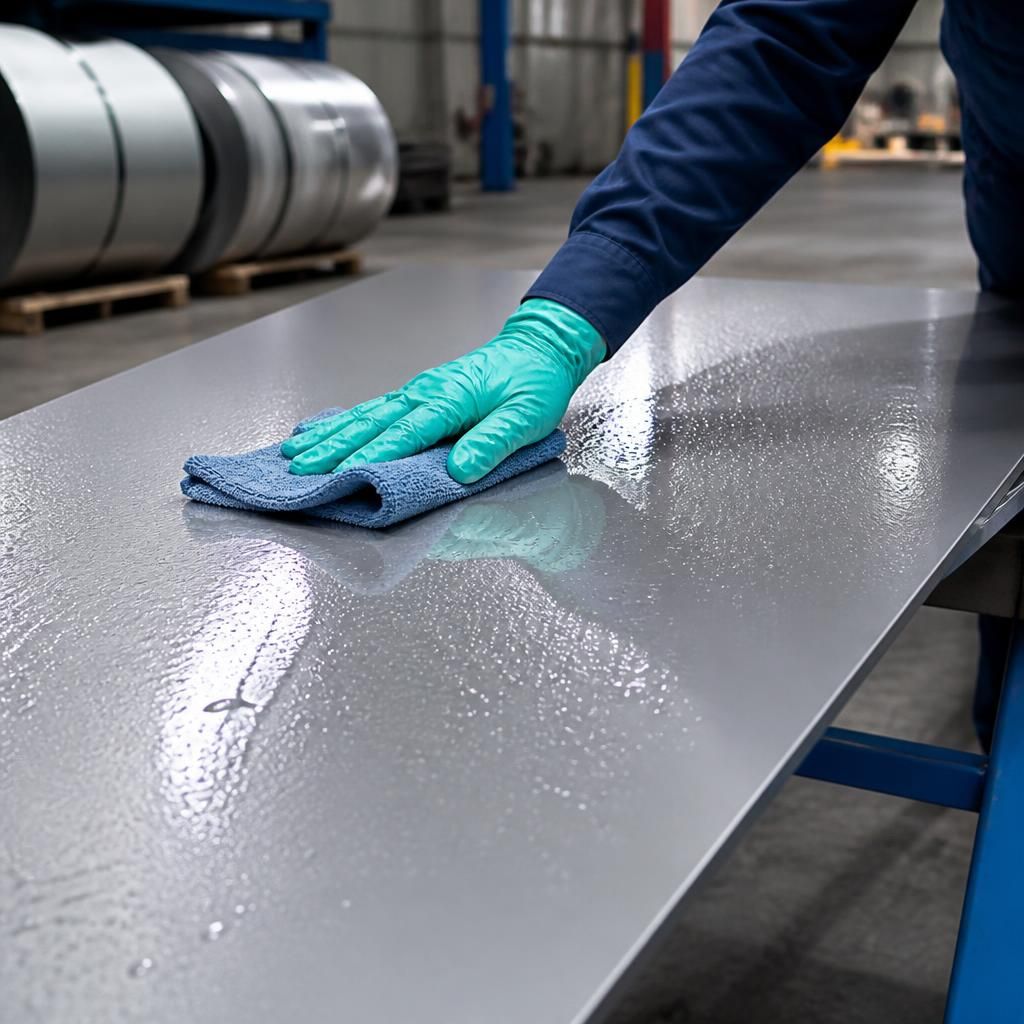
Cleaning powder coated aluminium sheets and coils should be controlled to avoid creating new surface defects. Apply the cleaning solution with a soft, non-metallic cloth or sponge, working in manageable sections rather than allowing deposits to dry on the coating. Rinse thoroughly so detergent residue does not form a film, then allow the surface to dry naturally or use a clean, lint-free cloth.
Before treating a visible or specialist finish, test the proposed cleaning method on an inconspicuous area and check the result after drying. This helps identify unwanted changes to gloss, texture or colour before the process is applied across the whole installation. Keep a record of products used so future maintenance remains consistent with the original coating system.