

What are the specific maintenance requirements for powder coated aluminium sheets and coils to ensure their longevity?
Powder coated aluminium sheets and coils should be maintained with regular inspections, gentle cleaning using mild detergent and water, and prompt attention to scratches, chips or exposed metal. Avoid abrasive tools, harsh chemicals and prolonged contact with contaminants, as these can damage the coating and allow corrosion or staining to develop.
The longevity of powder coated aluminium sheets and coils depends on more than surface cleaning. A suitable maintenance regime should control moisture, prevent mechanical damage, check joints and fixings, protect cut edges, and ensure that any coating defects are repaired before corrosion or delamination can spread.
Assess the exposure conditions first. Maintenance requirements are higher where aluminium is exposed to marine salt, industrial emissions, road spray, construction dust, high humidity or frequent handling. The inspection frequency should reflect the environment, the coating specification and the consequences of failure. Areas around joints, folded edges, cut-outs, fixings, underside drainage paths and locations where dirt can collect deserve particular attention.
Keep water moving away from the coating. Powder coated aluminium should not be installed or maintained in a way that creates concealed water traps. Check that laps, flashings, channels and drainage openings remain clear, and look for staining or deposits that indicate persistent moisture. Sealants and gaskets should remain intact, since failed seals can allow water to reach cut edges or the reverse side of the sheet. Any source of standing water should be corrected rather than treated as a purely cosmetic issue.
Inspect mechanical interfaces and dissimilar materials. Fasteners, brackets and support rails should be checked for loosening, corrosion and damage to the coating around fixing points. Aluminium in contact with incompatible metals or trapped conductive deposits may be vulnerable to galvanic corrosion. Suitable isolation washers, sleeves, coatings or sealants should be retained where specified in the original design. When a fixing is replaced, avoid dragging tools across the finished face and do not enlarge or distort the surrounding hole unnecessarily.
Give special attention to edges and alterations. Drilled holes, sawn edges, notches and areas modified after coating have less protection than the factory-finished face. They should be kept free from swarf and properly treated in accordance with the coating and system specification. Do not use an unapproved touch-up product simply because its colour appears similar; compatibility, gloss, weathering performance and adhesion can all differ. For extensive damage, replacement or a professionally specified repair is generally more reliable than repeatedly covering the defect.
Check the coating condition, not just its colour. During planned inspections, look for blistering, lifting, cracking, powdering, loss of gloss, unusual fading, staining, pinholes and corrosion at edges or fixings. Record the location and apparent cause of each defect, particularly if the same problem is occurring across several sheets or coil-formed components. A recurring defect may indicate water ingress, movement, unsuitable fasteners or inadequate edge treatment rather than a failure that can be solved by surface cleaning alone.
Where a repair is required, the affected area should be assessed for the extent of coating loss and any corrosion beneath the film. Loose material must be removed without damaging sound surrounding coating, and the substrate should be prepared and treated using a repair system approved for the particular powder coating and aluminium application. On visible architectural or externally exposed work, confirm the expected difference in colour and texture before carrying out a local repair, as a repaired patch may weather differently from the original finish.
Storage and handling are also part of maintenance for unused sheets and coils. Keep materials supported, dry and protected from condensation, dirt and contact with incompatible substances. Avoid stacking or wrapping arrangements that trap moisture. Lift rather than drag finished surfaces, use clean supports, and prevent metal swarf or grit from being pressed into the coating. Protective film, where present, should be managed in line with the supplier’s instructions and should not be left in conditions that encourage adhesive residue or moisture retention.
A practical maintenance record should identify the coating specification, installation date, exposure conditions, inspection findings, repairs and any change in appearance. This provides evidence of developing problems and helps ensure that replacement fasteners, sealants and touch-up materials remain compatible with the original system. For large commercial or industrial installations, the maintenance plan should also be coordinated with cleaning, access and building inspection procedures so that coating defects are not missed or inadvertently caused by other work.
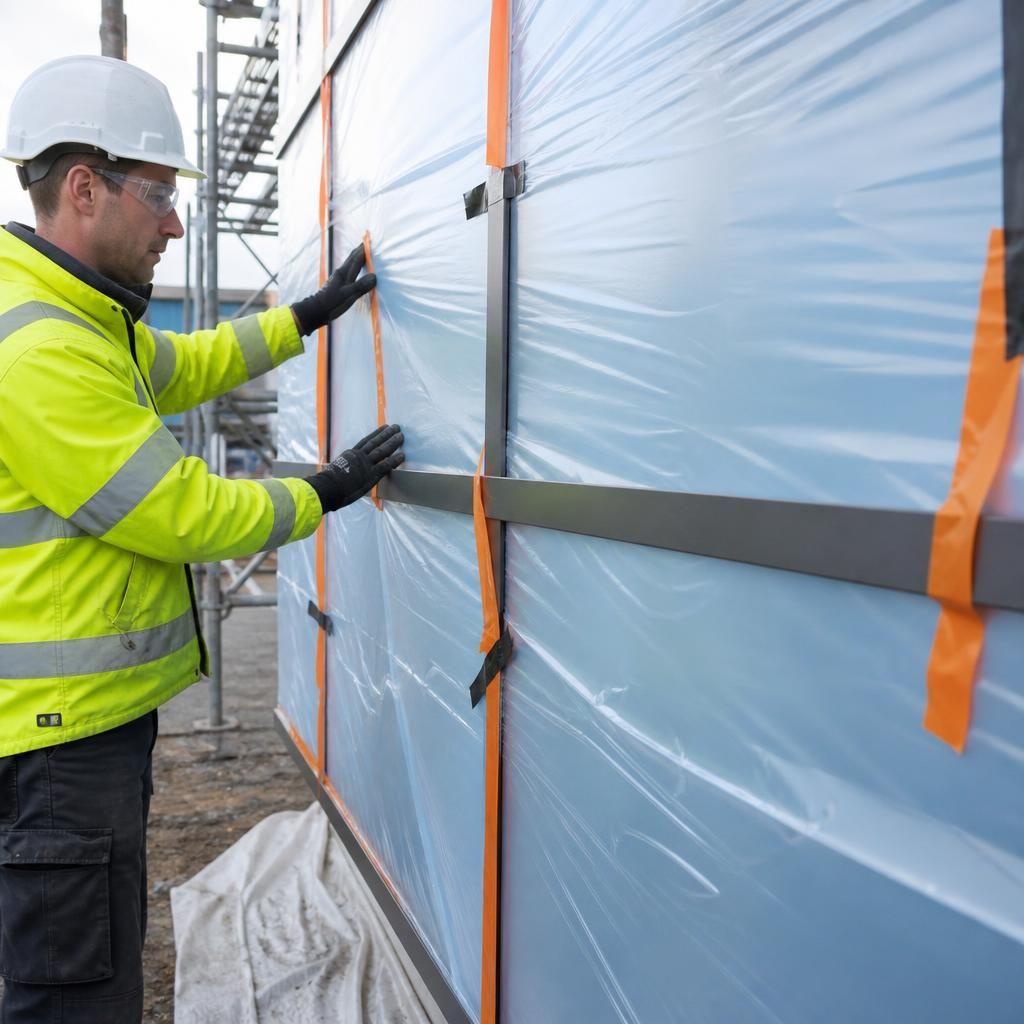
Protecting powder coated aluminium during adjacent construction or fabrication work is an important maintenance requirement. Welding spatter, grinding sparks, wet cement, plaster, bitumen, expanding foam and uncured sealants can permanently mark or chemically attack the coating if they are allowed to remain on the surface.
- Use suitable temporary protection when other trades are working nearby, while ensuring that the covering does not retain moisture against the aluminium.
- Keep abrasive dust and metal particles away from the finished face, particularly during cutting, drilling or grinding of neighbouring components.
- Remove cementitious or sealant residues using a method approved for the coating; do not scrape hardened material with blades or metal tools.
- Inspect the surface after adjoining work is complete, as small impact marks or heat damage may be easier to identify before the area is returned to normal use.
Where contamination has bonded to the coating or heat has altered its appearance, seek advice before attempting removal. Aggressive solvents, abrasive pads and improvised scraping can create a larger defect than the original contamination.