

What are the logistical considerations for transporting and handling powder coated aluminium sheets and coils to ensure their integrity is maintained from supplier to installation?
Maintaining the integrity of powder coated aluminium sheets and coils requires dry, protective packaging, suitable edge protection, stable supports and secure restraint that prevents movement, abrasion, bending and crushing during transport. At each handling stage, use appropriate lifting equipment, avoid dragging or contact between coated surfaces, protect loads from moisture and contamination, and inspect the finish and packaging before installation.
The logistics of powder coated aluminium sheets and coils depend on controlling the entire chain of custody: specification, preparation for dispatch, loading, transport, receipt, storage and installation. The objective is not simply to prevent visible scratches, but also to avoid distortion, contamination, moisture-related problems, coating abrasion and damage that may only become apparent after the material has been fitted.
Plan the movement around the material format. Sheets and coils have different handling requirements, so the dispatch instructions should identify the product type, dimensions, weight, quantity, finish, protective film arrangements and any restrictions supplied with the order. The transport and installation teams should know whether the load contains flat sheets, narrow strips or coils, and whether the material must be presented in a particular orientation for fabrication or installation.
- Sheets: plan supports and access points so the sheets can be removed in the required sequence without disturbing the rest of the load. Long or thin sheets need sufficient support along their length to reduce the risk of deflection.
- Coils: confirm the coil orientation, core size, lifting method and pay-off or decoiling arrangement before dispatch. Coils should be handled using equipment designed for their form and weight, rather than improvised lifting methods that can deform the coil or its edges.
- Mixed loads: avoid placing dissimilar materials or loose metal items where they can contact the coated aluminium. Movement within a mixed load can create localised marks even where the main load is properly secured.
Coordinate transport with the receiving site before the vehicle is loaded. Check vehicle access, turning space, unloading restrictions, available lifting equipment, ground conditions and the route from the unloading point to the storage or installation area. The delivery should be planned around the site’s ability to receive the material safely, rather than leaving coated aluminium on a vehicle while access or labour is arranged. Where the material is required in a defined installation sequence, load identification should make that sequence clear.
Load documentation should be retained from dispatch through to installation. It should record the order or project reference, material description, quantities, dimensions, finish and any visible condition notes made before transport. On arrival, the receiving team should compare the consignment with the delivery information and record any shortage, displaced load component or damaged outer protection. Photographs of the load before unloading and of any suspected damage can help establish when an issue occurred.
Receipt should be treated as a controlled inspection stage. Inspect the outer protection first, then examine accessible edges, corners, faces and coil surfaces as the material is unloaded. Look for dents, buckling, edge deformation, scuffing, coating marks, contamination or evidence that the load has been exposed to water. If damage is found, identify and segregate the affected material, retain its packaging and notify the relevant supplier or project contact before cutting or installing it. Using potentially damaged sheets or coils can make the original condition difficult to assess and may spread the problem through fabrication.
Storage conditions at the installation site are particularly important because a sound delivery can be compromised before it is used. Keep sheets and coils in a designated area away from fabrication dust, weld spatter, cement products, standing water, aggressive chemicals and vehicle traffic. Store sheets on properly supported, level bearers with support distributed to suit their size and weight. Coils should remain on suitable cradles or supports that prevent rolling, impact and contact with the ground. Do not exceed the stacking arrangement or load limits specified for the particular product.
Where protective film has been applied, leave it in place during appropriate fabrication and installation stages, but follow the supplier’s instructions for its use and removal. Film should not be treated as a substitute for careful handling, and it should be checked for lifting, trapped contamination or damage. Remove it using a method that does not mark the coating, and do not apply adhesive labels, tapes or cleaning agents unless their compatibility with the finish has been confirmed.
During installation, establish a clean handling area and keep coated faces away from unfinished steel, sharp tools and abrasive surfaces. Personnel should lift or carry sheets in a way that prevents uncontrolled flexing and should not use the coated face as a workbench. Cutting, drilling and fitting should be organised so that swarf, filings, sealants and other residues do not remain on the finished surface. Metal particles left on a coating can stain or cause localised corrosion when moisture is introduced.
Any cleaning carried out before handover should use a method suitable for the specified powder coating. Avoid abrasive pads, aggressive solvents and unapproved chemical cleaners. Remove construction residue promptly, particularly alkaline deposits or wet contaminants, but obtain confirmation of product compatibility where the finish, protective treatment or contamination is unusual.
For projects involving several deliveries, maintain consistent identification between each load and its installation location. Record where each batch or coil is stored, which items have been inspected and whether any material has been set aside. This traceability helps the project team investigate a finish concern without unnecessarily disturbing unaffected stock.
A practical logistics plan therefore includes accurate material information, suitable transport and unloading arrangements, controlled site storage, documented inspections and clear communication between the supplier, carrier, fabricator and installer. These measures reduce avoidable handling risks and preserve the specified appearance and performance of the powder coated aluminium through to final installation.
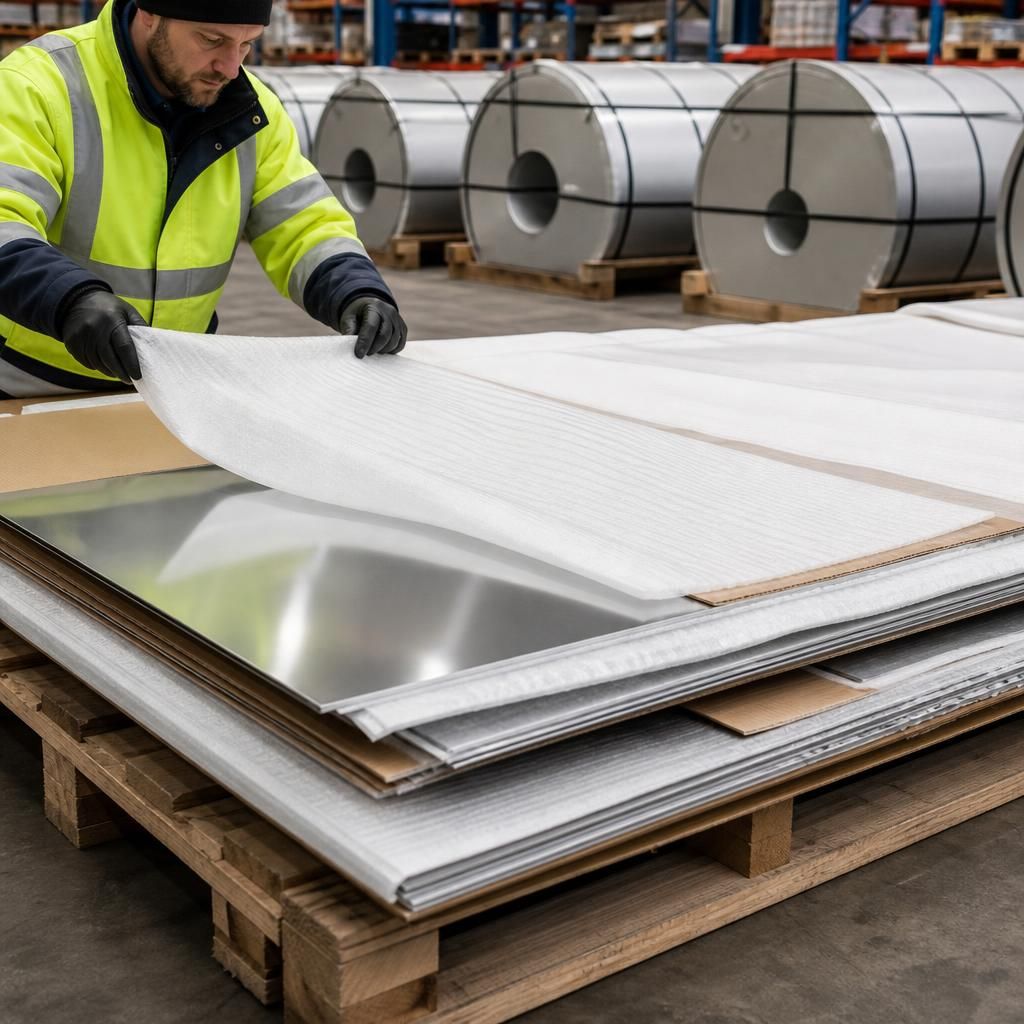
Packaging must protect powder coated aluminium from condensation as well as physical contact. Clean, non-abrasive separators should prevent coated faces from touching, while wrapping materials must not trap moisture against the finish. If material has been exposed to rain, damp air or a sharp temperature change, it should be checked and allowed to dry under controlled conditions before being enclosed. Packaging should also be free from oils, grit, fibres and chemicals that could transfer to the coating during transport.
Discuss Your Powder Coated Aluminium Delivery Requirements
Discuss your powder coated aluminium sheet or coil requirements with Powder-coatings.co.uk, including the finish, format and delivery arrangements needed for your project. Their team can help you identify suitable handling and transport considerations before the material is dispatched.