

How can I ensure proper adhesion of the powder coating on aluminium sheets and coils?
Proper adhesion on aluminium sheets and coils depends on thorough surface preparation, suitable chemical pretreatment, correct powder selection and a controlled curing process. Remove oils, dirt and oxides, maintain a clean, chemically prepared surface, then apply and cure the powder coating in line with the coating manufacturer’s specified conditions.
Strong powder coating adhesion on aluminium sheets and coils depends on controlling the entire coating process, not simply applying more powder. The aluminium must arrive in a suitable condition, be prepared without re-contamination, receive a compatible pretreatment, and be coated and cured under controlled conditions. Adhesion should then be verified on representative material before production quantities are processed.
Assess the aluminium before preparation. Identify the alloy, surface finish and previous processing history. Aluminium may carry rolling lubricants, protective films, polishing compounds, adhesive residue or other substances that affect wetting and bonding. Check for corrosion, ingrained dirt, heavy oxide, scratches and areas of smeared metal. Coils require particular attention because material wound tightly together can retain residues and may have different surface conditions on the two faces.
Protective films should be removed without spreading adhesive across the surface. If the aluminium has been stored for an extended period or exposed to moisture, inspect it for staining or corrosion before coating. Any sharp burrs, loose particles or damaged edges should be addressed because they can interrupt the coating film and create weak points.
Control mechanical preparation carefully. Light abrasion or suitable blasting can provide a more uniform surface where the condition of the aluminium requires it, but the method must be appropriate for the sheet or coil. Excessive abrasion can alter dimensions, leave embedded media or produce an uneven profile. Thin sheet can also distort if subjected to excessive mechanical force. After preparation, remove dust using a method that does not introduce oil, moisture or fibres back onto the surface.
Use an aluminium-compatible pretreatment. A conversion coating or other approved chemical pretreatment can improve the bond between the aluminium and the powder film while also supporting corrosion protection at small imperfections. The chemistry, concentration, contact time, rinsing and drying conditions must be controlled in accordance with the pretreatment supplier’s technical instructions. Inadequate rinsing can leave residues that interfere with adhesion, while poor drying can trap moisture beneath the powder.
The pretreatment should be selected for the intended service environment and the particular aluminium alloy. A process suitable for one substrate or coating system may not be suitable for another. Where a project has specific corrosion, appearance or forming requirements, confirm compatibility between the aluminium, pretreatment and powder system before processing production material.
Prevent re-contamination after preparation. Prepared sheets should be handled with clean gloves or suitable handling equipment, particularly on the faces that will be coated. Avoid contact with bare hands, oily benches, dirty hooks and unclean conveyor components. Do not leave prepared aluminium exposed unnecessarily, as the surface can collect airborne contamination and naturally develop a new oxide layer. Racking and storage arrangements should prevent contact damage, trapped water and rubbing between coated or prepared surfaces.
Make electrical contact reliable. Electrostatic powder application relies on the workpiece being properly grounded. Poor contact caused by oxide, coating residue, dirt, unsuitable hanging points or insufficient contact area can reduce transfer efficiency and create uneven deposition. Contact points should be positioned so that the sheet is held securely without damaging important visible areas. Coils and large sheets may need additional support to prevent movement, bowing or changes in distance from the spray equipment.
Application settings should be adjusted for the shape and size of the aluminium. Excessive charge, unsuitable gun distance or uneven movement can cause back-ionisation, thin areas and inconsistent coverage, particularly around corners and edges. The operator should check that the powder reaches recessed areas without creating excessive build-up on exposed edges. A consistent film thickness is important because very heavy deposits can crack or detach more readily if the coating is disturbed or incorrectly cured.
Control curing by the aluminium’s metal temperature. The oven air temperature alone does not confirm that the powder has cured correctly. Sheet thickness, coil speed, loading pattern, part temperature and the thermal mass of the aluminium all affect the time required for the metal to reach the specified curing condition. Under-cured powder may have poor adhesion and reduced chemical resistance; excessive heat or time can affect colour, gloss and coating performance.
Use the powder system’s technical data to establish the required metal-temperature schedule, then verify that the actual aluminium reaches it consistently. Production trials should represent the thickest and thinnest sections, the leading and trailing areas of a coil where relevant, and any locations that receive different levels of oven exposure. Cure records and process checks help identify variation before it affects a full batch.
Verify adhesion using representative samples. Visual inspection can identify pinholes, craters, fisheyes, bare areas, edge pull-back and uneven coverage, but it cannot confirm bond strength on its own. Adhesion testing may include a cross-hatch assessment or another suitable method specified for the coating system. Where the application involves forming, cutting, bending or substantial outdoor exposure, test the coated aluminium after the relevant operation rather than only testing a flat, untouched panel.
- Use samples prepared from the same alloy, surface condition and coating batch as the intended production work.
- Check visible faces, edges and areas close to hanging or contact points.
- Investigate any flaking, lifting or clean separation back to the preparation, pretreatment, application or curing stage.
- Do not coat over a failed surface without identifying and correcting the original cause.
For a production coating project, agree the preparation route, pretreatment, powder specification, curing schedule, handling method and acceptance checks before processing the main quantity. This documented approach is especially important where aluminium sheets or coils will later be cut, folded, drilled or exposed to demanding industrial conditions.
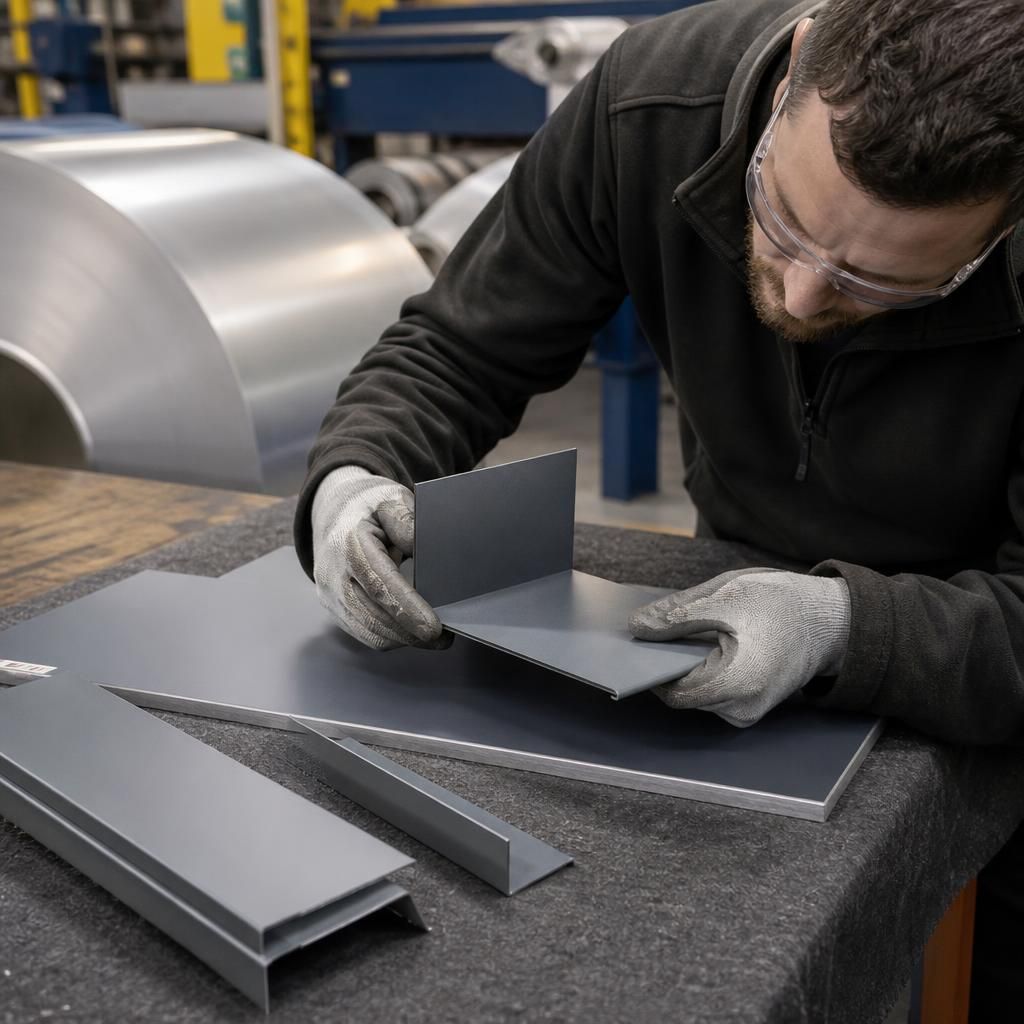
For aluminium sheets and coils that will be folded or formed after coating, adhesion depends on more than the initial bond to the metal. The powder system must also tolerate the planned deformation without cracking, lifting or separating from the substrate. A coating that performs well on a flat panel may be unsuitable for a tight bend or complex folded profile.
Define the forming sequence and minimum bend requirements before selecting the coating system. Use representative trial pieces to assess the actual finished shape, paying particular attention to bends, punched areas and cut edges. If the coating fractures or lifts during forming, review the powder system and fabrication conditions rather than treating the defect as a simple handling issue.
Discuss your aluminium coating adhesion requirements
Discuss your aluminium coating adhesion requirements with our powder coating team before production begins, including the substrate condition, intended finish and any forming or fabrication requirements. We can help establish a suitable preparation and coating specification for your sheets or coils.