

What maintenance practices are recommended to ensure the longevity of powder coated aluminium profiles?
Maintain powder coated aluminium profiles by washing them regularly with clean water and a mild, non-abrasive detergent, using soft cloths or brushes rather than abrasive tools or harsh chemicals. Inspect the coating periodically for chips, scratches, corrosion or seal failure, and repair local damage promptly to prevent moisture and contaminants reaching the aluminium substrate.
The longevity of powder coated aluminium profiles depends on controlling the conditions around the coating, preventing mechanical damage and managing defects before they spread. Alongside routine cleaning, effective maintenance includes good drainage, careful handling, suitable chemical selection, protection from abrasion and a documented inspection and repair process.
Keep profiles dry where possible. Powder coating protects the aluminium effectively when the system is correctly specified and remains intact, but persistent moisture can create problems at joints, end cuts, fixings and concealed interfaces. Profiles should therefore be installed and maintained so that water can drain freely rather than collect in channels, laps or horizontal surfaces. Check that drainage paths remain clear and that sealants, gaskets and end caps continue to direct water away from vulnerable areas.
Manage contact with dissimilar materials. Aluminium profiles may be installed alongside steel, copper, treated timber, masonry or other materials. Moisture trapped between dissimilar metals can contribute to galvanic corrosion, particularly in aggressive environments. Compatible fixings, isolating washers, separators and correctly specified sealants can reduce this risk. Any change to the surrounding construction should be assessed for its effect on water retention, chemical exposure and contact between materials.
Prevent abrasion during use and maintenance. Powder coated surfaces can be damaged by repeated rubbing, impact or contact with sharp edges even when the coating appears visually robust. Protect profiles during transport, assembly and subsequent building work, and avoid dragging equipment, tools or stock across finished surfaces. Where profiles form part of doors, guards, frames or machinery, check that moving parts, catches and adjacent components are correctly aligned and cannot scrape the coating.
Control chemical exposure. Cleaning products, solvents, adhesives, sealants, lubricants and construction chemicals should be checked for compatibility before they are used near the coated surface. Strong acids, alkalis, solvent-based products and unidentified industrial chemicals may soften, stain or degrade the finish. Contaminants such as cement residue, plaster, bitumen, oils and metal swarf should not be allowed to remain on the profile. If a chemical spill occurs, follow the product safety guidance and obtain advice on a suitable remedial procedure rather than applying an untested solvent.
Give extra consideration to demanding environments. Coastal locations, industrial areas, swimming pool buildings, roads exposed to de-icing salts and sites with high levels of airborne pollutants place greater demands on a coating system. Maintenance planning should reflect the actual exposure rather than relying solely on the appearance of the finish. Areas sheltered from rain may retain contaminants for longer, while joints, undersides and recesses can experience more severe local conditions than exposed faces.
Protect cut edges and alterations. Drilling, sawing, grinding and machining after coating can expose the aluminium substrate and create points where moisture enters beneath the finish. Whenever possible, profiles should be fabricated before coating. If modification is unavoidable, remove swarf carefully without dragging it across the surface, protect exposed metal using a compatible repair system and ensure that new holes or cut ends are sealed where the design requires it. Repair materials should be selected for compatibility with the existing powder coating and the environmental exposure.
Deal with damage using a controlled repair method. Minor local defects should be assessed for their cause as well as their appearance. A scratch caused by an ongoing alignment problem, loose fixing or abrasive contact will recur unless the underlying issue is corrected. Larger areas of delamination, extensive fading, exposed substrate or damage around joints may require assessment by a coating specialist. Overcoating an unsound or contaminated surface can trap defects and produce a short-lived repair.
Maintain surrounding components. Powder coated aluminium profiles are part of a wider assembly, so the condition of adjacent seals, drainage components, fixings, hinges, brushes and protective trims affects service life. Deteriorated sealants can allow water behind the profile, while corroding fixings can stain or damage the coating. Include these components in the same planned maintenance schedule and replace them with materials suitable for the application.
Keep maintenance records. A useful record identifies the profile location, coating specification if known, exposure conditions, cleaning or treatment carried out, defects found and repairs completed. Photographs can help track changes in colour, gloss, staining or local damage over time. Records are particularly valuable on industrial sites because they help distinguish normal surface soiling from coating deterioration and support consistent decisions across multiple installations.
For new projects, maintenance requirements should be considered when selecting the powder coating specification, profile design and installation details. A coating that is appropriate for the exposure, combined with sound drainage, compatible materials and careful handling, will generally require less intervention than a finish used outside its intended conditions. Where the existing coating has widespread damage or the service environment has changed, obtain a technical assessment before deciding whether local repair, recoating or replacement is the most suitable approach.
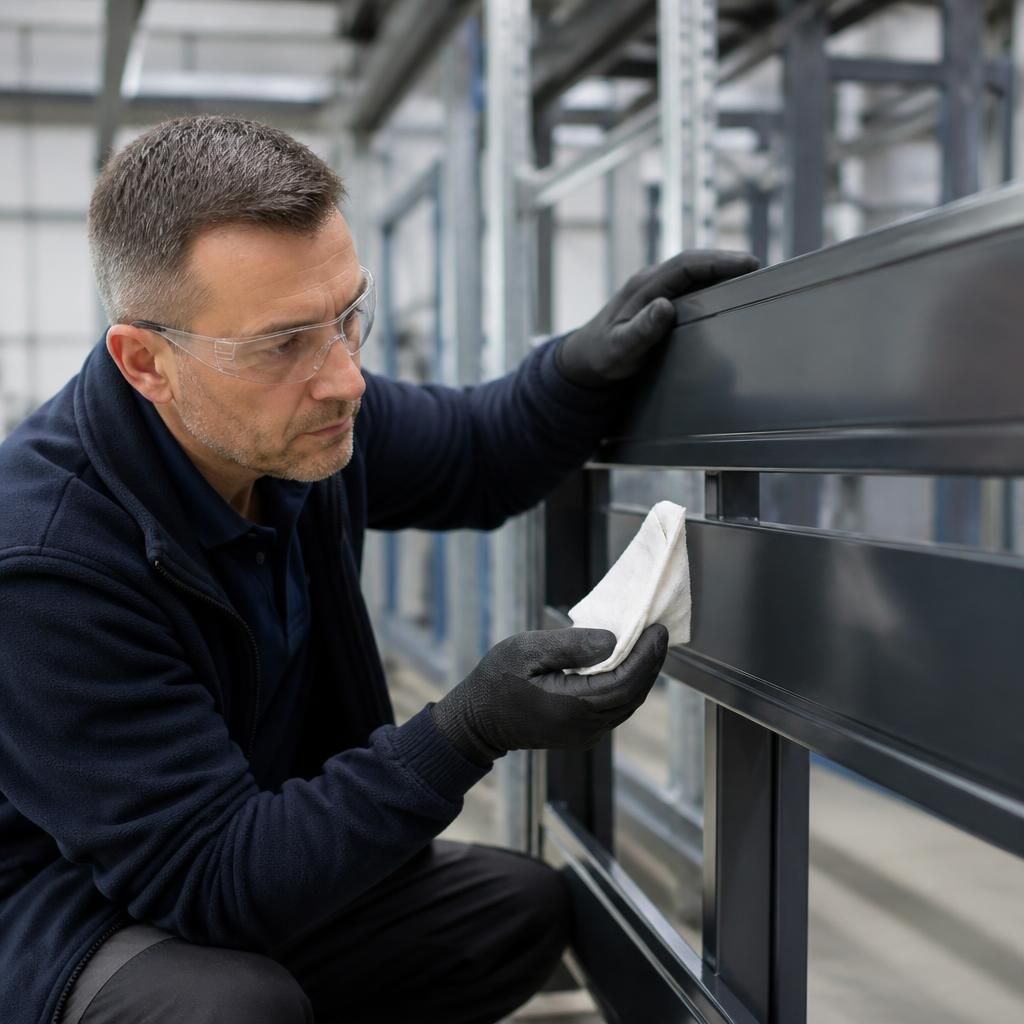
Assess the condition of the coating after cleaning, rather than relying on appearance alone. Persistent chalking, blistering, peeling or powder residue on a cloth can indicate deterioration of the finish, while ordinary dust or surface deposits should be removed before judging the coating. Loss of gloss or colour does not automatically mean that the aluminium substrate is exposed, but progressive chalking or detached coating warrants technical assessment before the defect spreads.
Review Your Powder Coated Aluminium Profile Maintenance Requirements
If you are reviewing the maintenance requirements for powder coated aluminium profiles, discuss the profile design, coating specification and exposure conditions with a powder coating specialist before selecting a repair or recoating approach.