

What are the environmental and maintenance advantages of powder coated aluminium profiles over alternative coatings in industrial applications?
Powder coated aluminium profiles can offer environmental advantages over solvent-based liquid coatings by avoiding the use of coating solvents and allowing overspray to be collected in suitable application systems, while the aluminium substrate remains recyclable. Their cured, uniform finish also resists wear, corrosion and weathering, so routine maintenance typically involves inspection and cleaning rather than frequent repainting or recoating.
Powder coated aluminium profiles generally offer a strong environmental and maintenance profile when the coating is correctly specified for the exposure conditions. Compared with many liquid-painted systems, they can reduce reliance on consumable coating materials during application, while their stable surface finish helps limit the intervention required throughout the profile’s service life. The comparison with anodising is more application-dependent: anodising provides a different type of surface protection, whereas powder coating offers greater flexibility in colour, texture and film specification.
Environmental advantages during manufacture
- Powder coating is applied as a dry powder and cured onto the aluminium. This avoids the solvent content associated with many conventional liquid coating systems, although the complete process still requires suitable pretreatment, curing and controlled waste management.
- Application equipment can recover suitable unused powder, reducing material waste where the recovered material remains compatible with the coating system. This benefit depends on proper segregation, filtration and handling rather than occurring automatically.
- The process can produce a consistent film thickness across batches, helping to reduce rejects caused by runs, sags or uneven coverage that may occur with liquid application. Fewer rejected profiles mean less wasted aluminium, preparation work and coating material.
- Aluminium remains a valuable recyclable substrate. At end of life, the presence and type of coating should be disclosed to the recycling chain, since scrap handling and furnace practice determine how the coated material is processed.
These advantages should be assessed across the whole finishing specification. Powder coating is not impact-free: pretreatment chemicals, rinse water, curing energy, packaging and transport all contribute to the environmental profile. A responsible comparison therefore considers the complete process rather than treating the coating material alone as the deciding factor.
Comparison with liquid paint and anodising
Liquid paint can be useful where on-site application, very thin films or particular repair methods are required, but it may involve more consumable containers, solvent management and application-stage emissions. Powder coating is usually better suited to controlled factory application of repeat aluminium profiles, where collection of suitable overspray and consistent curing can be managed systematically.
Anodising changes the aluminium surface itself and can be highly durable in the right environment. It is not interchangeable with powder coating: anodising may be preferred for a metallic architectural appearance or where the specification calls for an anodised surface, while powder coating is often selected where a broad colour range, textured finish or specific protective film is required. The environmental comparison should include the anodising plant’s electricity use, chemical baths and wastewater controls, as well as the powder coater’s pretreatment and curing arrangements.
Maintenance advantages in industrial use
- The cured film provides a sealed, uniform surface that is easier to keep clean than a damaged or poorly prepared painted surface. Routine care can normally be based on removal of dust, deposited process residue and other contaminants before they accumulate.
- Powder-coated profiles do not normally need the same cycle of sanding, priming and broad-area repainting associated with deterioration of some liquid-painted systems. This can reduce maintenance materials, access equipment, downtime and waste, particularly where profiles are installed in difficult-to-reach locations.
- Consistent coverage around the visible faces and edges helps limit weak areas created by uneven manual application. The result still depends on correct preparation, cure and film specification, so a coating should not be judged by appearance alone.
- Routine inspection can identify local impact damage, abrasion, staining or loss of adhesion before contaminants reach the aluminium. Localised defects may be repairable without stripping an entire assembly, although the repair method should be checked for compatibility and an exact colour or gloss match should not be assumed.
Cleaning should use clean water and a mild, non-abrasive detergent applied with a soft cloth or sponge, followed by thorough rinsing. Abrasive pads, aggressive solvents, strong alkaline or acidic cleaners and concentrated chemicals can mark or attack the finish. In industrial settings, the cleaning method should reflect the contaminants present; oils, cement residue, salt deposits and chemical vapours may require a coating supplier’s specific guidance.
Maintenance requirements are also influenced by design and installation. Profiles should be detailed so that water and contaminants do not remain trapped, and contact with incompatible materials or unprotected cut edges should be considered. Fasteners, joints, drainage paths and areas exposed to abrasion deserve particular attention because coating performance may be reduced by mechanical damage or persistent contamination even when the main profile remains intact.
The most suitable option is therefore determined by the service environment, required appearance, expected cleaning regime, exposure to chemicals or abrasion, and end-of-life objectives. For industrial aluminium profiles, powder coating can provide a practical balance of material efficiency, finish consistency and manageable maintenance, provided the coating chemistry, pretreatment and curing specification are matched to the application.
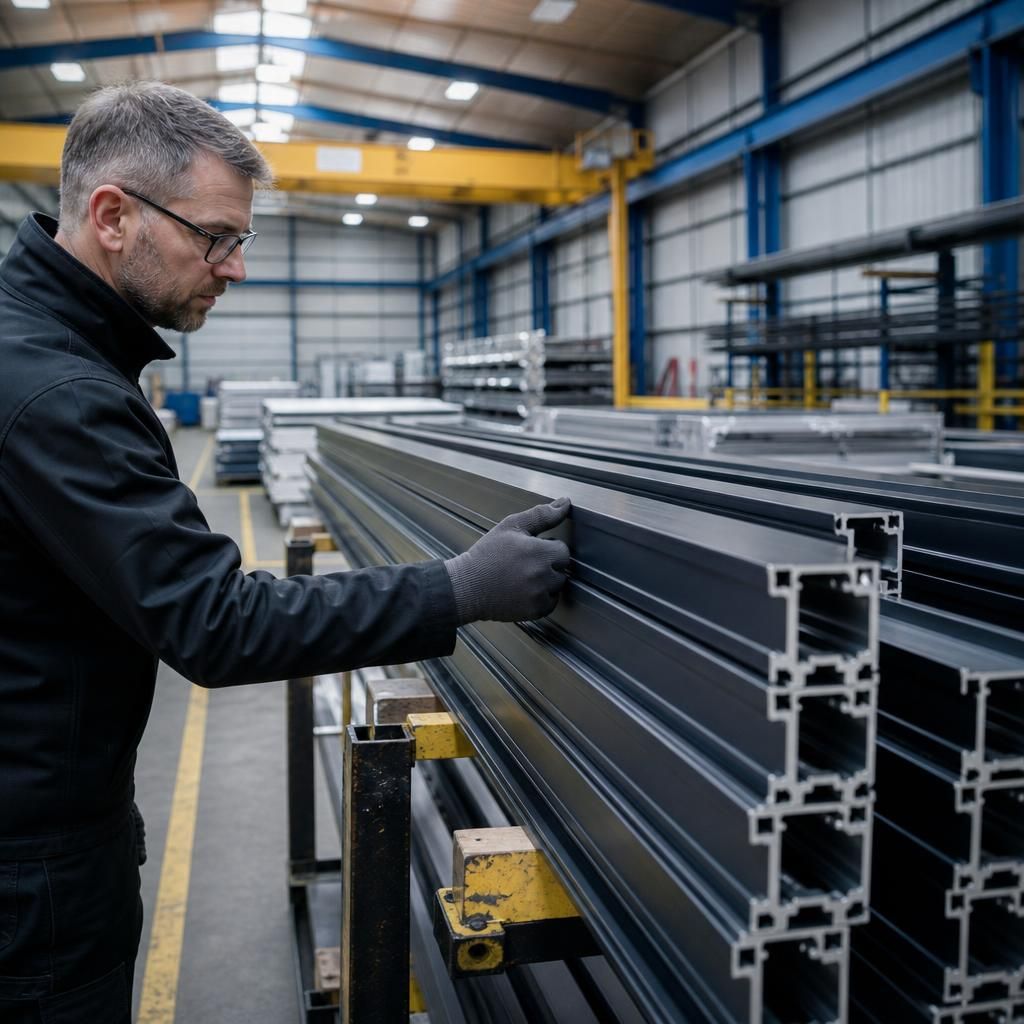
The environmental and maintenance benefits of powder coated aluminium profiles depend on selecting a coating specification that matches the working environment. Exposure to abrasion, chemicals, deposited residue, moisture and cleaning operations should be assessed before choosing the coating chemistry and required film performance.
An under-specified finish may require avoidable remedial work, while an unnecessarily high-performance specification can involve more material or processing than the application requires. Matching the finish to the actual exposure supports a more proportionate whole-life approach, helping the profile remain serviceable without building unnecessary resource use into the original specification.