

How does the powder coating process improve the performance and longevity of aluminium profiles?
Powder coating improves aluminium profile performance by creating a hard, continuous finish that resists abrasion, weathering, UV exposure and corrosion. Proper surface preparation, electrostatic application and controlled curing help the coating bond consistently, protecting the aluminium and preserving its appearance throughout its service life.
The powder coating process improves the longevity of aluminium profiles by creating a carefully controlled coating system that is chemically prepared, evenly deposited and thermally cured for the intended service environment. Its benefit comes not only from the powder itself, but from the interaction between the aluminium substrate, the pre-treatment, the applied film and the final cure.
Surface preparation improves coating adhesion. Aluminium naturally develops an oxide layer, and manufacturing residues such as lubricants, fingerprints, dust or extrusion debris can remain on the surface. Cleaning and chemical pre-treatment remove contaminants and condition the substrate so that the coating forms a more reliable interface with the aluminium. This reduces the risk of peeling, flaking or premature breakdown caused by weak adhesion.
The pre-treatment also helps protect areas where the coating may be damaged during handling or use. This is particularly relevant for profiles that are cut, drilled, assembled or fixed after coating. The specification should make clear how such operations are to be managed, because exposed edges, drilled holes and untreated cut ends can become points of earlier deterioration if they are not suitably protected.
Electrostatic application supports consistent coverage. Powder particles are electrically charged and attracted to the earthed aluminium profile. This allows the coating to reach a broad range of profile surfaces and helps create an even film when the racking, spray settings and part geometry are properly controlled. Consistency is important because thin areas may provide less protection, while excessive build can affect appearance, fit and curing behaviour.
Profile design influences the result. Deep recesses, narrow channels, sharp internal corners, overlapping sections and enclosed areas can be more difficult to coat uniformly than accessible flat faces. Specifying suitable racking and application methods at the design stage helps reduce shadowing and allows the profile to be handled without damaging the finish. Masking can also preserve fixing points, electrical contact areas, threads and other surfaces that must remain free of coating.
Thermal curing develops the coating’s final properties. During curing, the powder melts, flows and chemically cross-links to form its finished film. The oven profile must suit the coating formulation, the aluminium’s mass and the profile’s geometry. Insufficient cure can leave the film with reduced cohesion or chemical resistance, while excessive heat exposure may affect colour and finish. Monitoring the process therefore contributes directly to predictable long-term performance.
Correct curing is also important where aluminium profiles are assembled with seals, adhesives, plastics or other components. The coating specification and manufacturing route should account for the temperatures and handling conditions involved, so that the finished profile remains suitable for the complete assembly rather than being assessed as an isolated piece of metal.
The finished coating helps preserve functional dimensions and appearance. A stable surface finish can reduce damage from routine handling, contact with adjacent components and repeated cleaning. Maintaining the profile’s surface condition is valuable in windows, doors, framing, guards, transport components and fabricated assemblies where appearance and fit are both relevant. Colour and gloss retention also reduce the need for early refinishing, although the result depends on the resin system, pigment selection and exposure conditions.
Longevity is therefore affected by the coating class selected for the application. A profile used indoors in a controlled industrial environment may have different requirements from one exposed to coastal air, road pollutants, industrial chemicals or prolonged sunlight. The specification should consider:
- the location and severity of environmental exposure;
- expected contact with chemicals, cleaners, oils or solvents;
- mechanical handling and the likelihood of impact or abrasion;
- required colour, gloss and appearance retention;
- the profile’s geometry, assembly method and areas that need masking; and
- cleaning and maintenance arrangements after installation.
Quality control links the process to real-world durability. A professional coating specification should define the required finish, coating system, preparation method and inspection criteria. Checks may include visual examination, film coverage, cure verification, adhesion assessment and inspection for inclusions, pinholes, runs or other surface defects. These checks help identify process issues before profiles are installed, when correction is generally more practical.
Powder coating does not make an aluminium profile structurally stronger, and it cannot compensate for unsuitable alloy selection, poor fabrication, trapped moisture or incorrect installation. Its contribution is to preserve the aluminium surface and maintain the profile’s usable condition for longer when the coating system is matched to the application and applied under controlled conditions. For industrial projects, reviewing the complete specification rather than choosing a colour alone provides the most reliable basis for long service life.
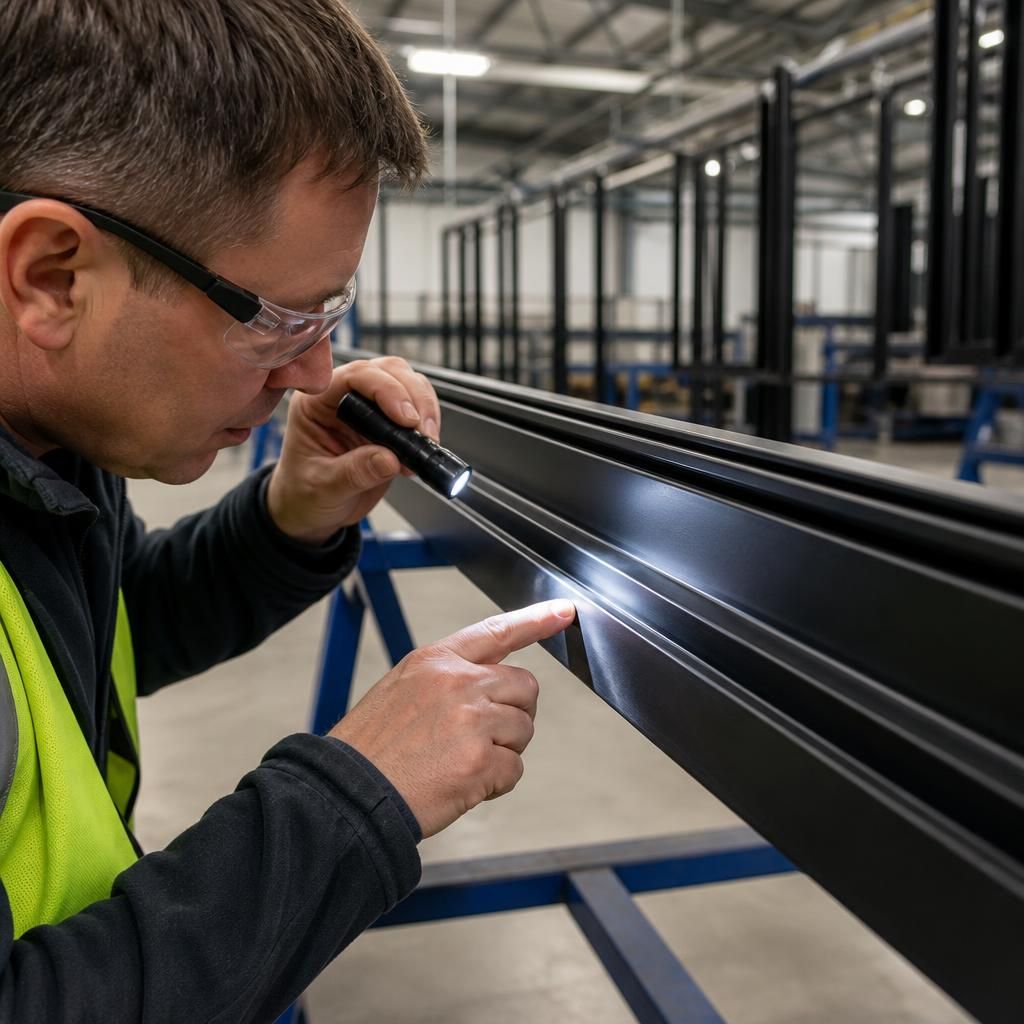
One way powder coating extends an aluminium profile’s useful life is by making surface deterioration easier to identify and manage before it affects the underlying metal. Scratches, impact marks, staining or loss of gloss can indicate that a profile has experienced conditions beyond those allowed for in the original specification. Inspecting these areas during routine equipment or building maintenance helps distinguish normal cosmetic wear from damage that needs attention.
Where the coating has been breached, the repair method should be compatible with the original coating system and the service environment. The affected area should be clean, dry and free from loose coating before a suitable touch-up or refinishing process is selected. Early corrective work helps prevent a small defect from becoming a wider problem, particularly on profiles exposed to moisture, abrasion or contaminants. This planned approach supports longer service life without treating the powder coating as a substitute for sound design, installation or maintenance.
Discuss Your Aluminium Profile Powder Coating Requirements
Discuss your aluminium profile powder coating requirements with the team, including the profile design, intended environment and performance criteria. This helps establish a suitable coating specification before production or refurbishment begins.