

What impact does the choice of powder coating material have on the final price of powder coated aluminium products?
The choice of powder coating material affects the final price through its formulation, performance properties and application requirements. Standard polyester powder is typically more economical, while specialist materials such as nylon or highly protective formulations may cost more because they can require different preparation, application and curing processes.
The choice of powder coating material affects the final price through more than the cost of the powder itself. It can change the required film thickness, the amount of material consumed, the preparation of the aluminium, the application method, curing requirements, masking and inspection. Consequently, a material with a higher purchase price may not always produce the highest overall coating cost, while a lower-cost powder may become less economical if the specification requires additional processing.
Powder is generally priced by weight, but aluminium components are priced for coating according to the surface area and the coating specification. Powder density, coverage and the required dry film thickness determine how much material is needed. Two products with the same weight can therefore use different amounts of powder if their shapes and surface areas differ. A coating material that must be applied more heavily, or that has a lower practical transfer efficiency for a particular component, can increase consumption even when its price per kilogram appears competitive.
The intended service environment is a key influence on material selection. A coating for an internal component with limited exposure may only need basic resistance properties. An aluminium product exposed to weather, moisture, chemicals, abrasion or frequent handling may require a formulation with more suitable resistance. These higher-performance specifications can increase the material cost and may also involve tighter controls over surface preparation, film thickness and curing. The price difference therefore reflects both the formulation and the work required to apply it correctly.
Different materials can also alter the preparation process. Aluminium may need cleaning, conversion treatment or other preparation to support adhesion and corrosion resistance. Some coating specifications impose stricter limits on contamination, surface condition or moisture before application. If a selected material is less tolerant of the existing condition of the component, extra preparation, masking or inspection may be necessary. Those process requirements can have a greater effect on the final quotation than the powder price alone.
Specialist materials, including nylon-based coatings, can affect the quotation in several ways. They may require a different application approach, a particular film build, dedicated handling or closer control of the curing or bonding process. The coater may also need to allow for different cleaning arrangements between materials to prevent contamination. These requirements can add set-up and processing time, particularly where the order is small or the components need to be processed separately from standard work.
Colour and finish are related to material choice but should be assessed separately. A particular gloss level, texture, transparency or special appearance can limit the available formulations and may affect powder consumption or process control. Small quantities of unusual finishes can also involve additional purchasing or set-up considerations. A like-for-like comparison should therefore confirm the material type, colour, gloss, texture and required film thickness rather than comparing the price of “powder coating” as a general service.
- Material formulation: the basic powder cost and the performance properties required for the application.
- Film thickness: the specified build and the resulting amount of powder used per unit of coated area.
- Preparation: cleaning, pre-treatment, masking and any additional work needed for adhesion or protection.
- Application and curing: the equipment, set-up, handling and process controls required for the chosen material.
- Inspection: checks such as appearance, coverage, adhesion or film thickness where the project specification requires them.
- Order characteristics: the number, size and consistency of the aluminium components being processed.
When comparing quotations, it is useful to ask whether the price is based on the same coating material, preparation standard, film thickness and finish. A quote using a general-purpose formulation should not be compared directly with one using a specialist protective or nylon coating unless the performance requirements are also equivalent. The quotation should also make clear whether masking, preparation, testing, collection or delivery is included, as these items can remain similar or change independently of the powder material.
Material selection should ultimately balance initial coating cost against the conditions the aluminium product must withstand. Choosing a cheaper formulation that does not meet the required exposure or durability specification can lead to earlier remedial work or recoating. Conversely, specifying a higher-performance material without a corresponding service requirement can add cost without a practical benefit. For an accurate price, provide the coater with the component drawings or dimensions, expected environment, finish requirements, quantity and any required coating standard so that the material and associated processing can be assessed together.
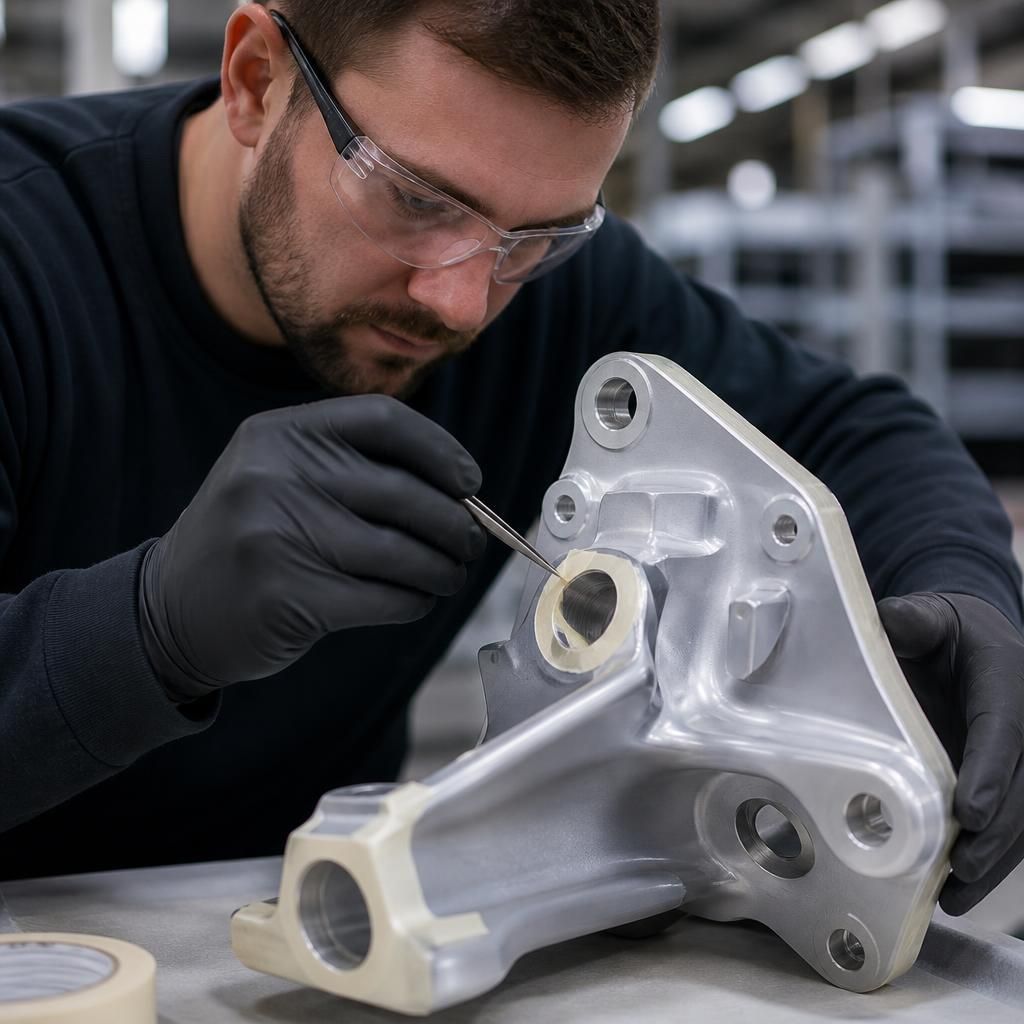
The chosen powder coating material can affect the price where the aluminium component has close-fitting, threaded or mating surfaces. A coating specification with a greater film build may require additional masking to keep critical areas within tolerance, followed by checks that the finished part still fits or operates correctly.
This work is separate from the powder’s purchase price. It can involve more preparation, careful application around interfaces and additional inspection, particularly for engineered components supplied for assembly. When requesting a quotation, identify any surfaces that must remain uncoated or meet a specific dimensional requirement so the material choice and associated processing can be priced accurately.
Discuss Your Aluminium Coating Material Requirements
Discuss your aluminium coating material requirements with the team and provide the component details, service environment and required finish. This information can be used to assess the appropriate material and associated processing for a clear quotation.