

What are the benefits of choosing powder coated aluminium for industrial applications?
Powder coated aluminium combines aluminium’s low weight and corrosion resistance with a tough, uniform finish that helps protect components from abrasion, weathering and everyday industrial wear. It also provides consistent colour and appearance across production batches, making it suitable for equipment, architectural components and fabricated parts where long-term finish quality matters.
Powder coated aluminium is valuable in industrial applications because it combines a lightweight metal substrate with a bonded, engineered surface finish. The coating can improve resistance to handling, chemicals and environmental exposure, extend the serviceable life of components and provide a controlled appearance without adding the bulk associated with heavier materials.
Lower maintenance requirements
A correctly prepared and cured powder coating forms a continuous surface that is easier to clean than many unfinished aluminium surfaces. This can be beneficial for enclosures, fabricated panels, machine components and architectural parts that are handled regularly or exposed to dust, grease and general industrial contamination. The finish helps reduce the need for repeated painting or other surface treatments, although cleaning methods and maintenance intervals should still reflect the operating environment.
Resistance suited to different environments
Powder coating systems can be selected for particular service conditions rather than treated as interchangeable. The formulation, pretreatment and final film thickness influence resistance to moisture, cleaning agents, oils, chemicals and ultraviolet exposure. For components used outdoors or in demanding industrial settings, the specification should take account of temperature, pollutants, abrasion and the likely contact with chemicals. Specialist protective coatings may be appropriate where a standard decorative system would not provide the required performance.
Greater design flexibility
Aluminium components can be produced in complex profiles, housings, brackets and fabricated assemblies, then finished in a wide range of colours, gloss levels and surface textures. This allows different parts of an installation or product range to follow a consistent specification while still distinguishing panels, access covers or safety-related components. The finish can also support visual inspection by making defects, damage or contamination easier to identify during routine maintenance.
Efficient application and material use
Powder is applied as a dry coating and then cured to form the finished film. Unlike liquid paint systems that rely on solvents as part of their application, powder coating does not require the same solvent evaporation stage. Unattached powder may also be recoverable in suitable application systems, subject to the equipment and colour-management requirements. These characteristics can make the process efficient for repeatable production work, but the coating still requires controlled preparation, application and curing to achieve dependable results.
Useful electrical and functional properties
Depending on the product specification, a powder-coated surface may provide electrical insulation as well as protection from physical contact. This can be relevant to cabinets, covers and other metal parts where the surface finish has a functional role. It should not, however, be treated as a substitute for a separately engineered insulation system: thickness, continuity, edges, fasteners and operating voltage all need to be considered.
Compatibility with industrial production
Powder coating is suitable for repeat orders because the process can be specified and monitored through factors such as substrate preparation, coating type, colour, film build and cure conditions. This helps manufacturers and fabricators define a repeatable finish across batches. Aluminium’s relatively low mass can also simplify the handling of components before and after coating, particularly where large panels, profiles or assemblies are involved.
These benefits depend on correct specification rather than on the coating alone. Aluminium alloys, castings and fabricated sections may require different preparation, and contamination, sharp edges, trapped moisture or unsuitable masking can affect adhesion and appearance. The component’s dimensions must also be compatible with the curing equipment, while assembled parts may need to be coated separately to avoid inaccessible areas or unwanted coating build-up.
For that reason, the most suitable powder coated aluminium specification considers the alloy, component geometry, intended environment, required appearance, handling conditions and any special performance requirement. A coating provider can use this information to establish whether a standard powder system or a more specialised protective coating is appropriate for the application.
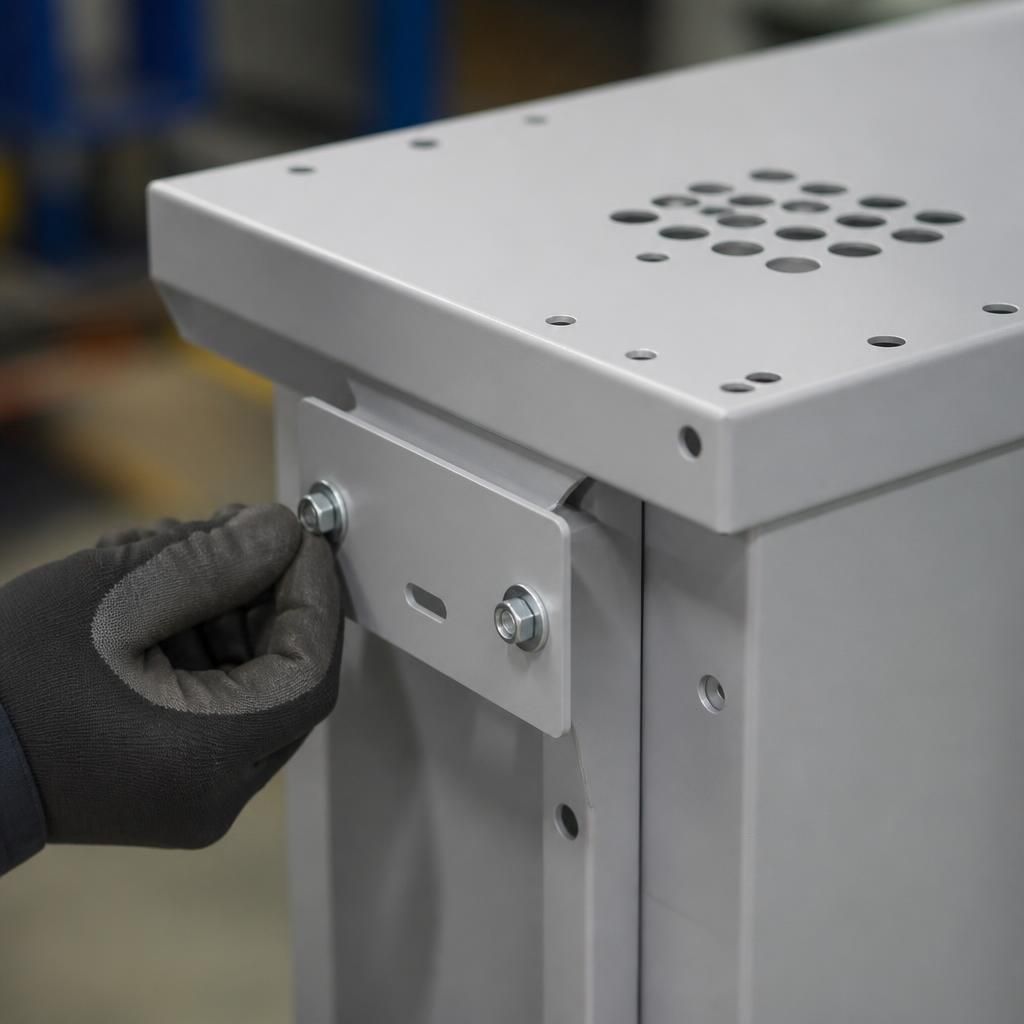
Powder coating can also help preserve the functional interfaces of aluminium components by creating a consistent barrier between the metal surface and adjacent materials. This may be useful for housings, brackets and panels assembled alongside other metals, where direct contact and moisture can contribute to surface deterioration. The coating should not be treated as the sole control for galvanic interaction: compatible fasteners, suitable isolation methods and sealed joints may still be required. These details are particularly important where coated parts form part of an engineered assembly rather than being used as standalone items.