

What specific environmental factors should be considered when choosing between matte clear powder coat and polyester coated aluminium for outdoor applications?
Choose between matte clear powder coat and polyester coated aluminium by assessing UV exposure, moisture, salt, industrial pollutants, temperature changes and likely abrasion. Matte clear powder coat can preserve the aluminium’s appearance while showing its surface character, whereas polyester-coated aluminium provides a coloured, opaque finish that may offer more consistent visual coverage; the specification should therefore match both the exposure conditions and the required appearance.
The better choice depends on the exposure profile, the required appearance and how much variation in the aluminium substrate can be accepted. A matte clear powder coat leaves the metal’s character visible, so marks, colour variation and changes in the underlying surface may remain apparent. Polyester-coated aluminium uses an opaque, pigmented layer, which normally gives more uniform visual coverage. For outdoor work, the decision should therefore consider not only coating durability, but also the surroundings, component design, substrate condition and the consequences of surface change over time.
Assess the direction and intensity of sunlight. Two components in the same installation may experience very different exposure if one faces the open sky while another is recessed, shaded or positioned beneath a canopy. A matte clear finish can alter the perceived tone of the aluminium as the viewing angle and light conditions change. This may be desirable where a natural-metal appearance is required, but it makes colour consistency more dependent on the condition and finish of the aluminium beneath it. A pigmented polyester finish provides a defined colour that is easier to coordinate across a project, although its long-term appearance still depends on the selected exterior-grade formulation.
Consider whether the substrate will remain visually consistent. Aluminium can vary between batches, extrusions, castings and fabricated sections. Weld areas, ground sections, repaired marks and differences in surface texture may be more noticeable beneath a clear matte coating than beneath an opaque polyester finish. Clear coating is consequently better suited to components where the aluminium has been prepared to a consistent standard and the natural substrate is part of the intended appearance. Where a uniform corporate, architectural or equipment colour is more important, an opaque polyester coating is usually the more forgiving option.
Examine the component’s geometry and its ability to shed water. Crevices, overlapping joints, folded returns, horizontal ledges and unsealed fixings can retain contamination and create localised coating stress. This is not a reason to reject either finish, but it should influence the design and preparation specification. Rounded transitions, adequate drainage, clean edges and suitable joint detailing reduce the likelihood of local deterioration. A clear finish may make staining around such areas more visible, whereas a coloured polyester finish can mask some visual variation without removing the underlying design risk.
Check adjacent materials and the installation environment. Aluminium components may be installed against steel, stainless steel, timber, masonry, rubber or treated surfaces. Trapped deposits at interfaces, incompatible fasteners and direct contact between dissimilar metals can create local staining or corrosion-related problems. The coating choice should therefore be considered alongside isolating washers, sealants, drainage paths and the treatment of cut edges or drilled areas. These details are particularly important where the finished component cannot easily be removed for inspection.
Account for airborne deposits and cleaning requirements. Fine dust, soot, construction residue, hard-water marks and organic deposits can change the appearance of a matt surface. Because a matte clear coating does not conceal the aluminium beneath it, deposits or local discolouration may be more noticeable than on a darker or more heavily pigmented polyester finish. Specify a surface that can be cleaned using the proposed maintenance method, and avoid assuming that a visually subtle finish will require less care. Aggressive cleaning products or unsuitable tools can alter the sheen of either coating.
Consider windborne grit and contact with nearby materials. Components located beside roads, loading areas, unpaved ground, vegetation or moving equipment may be exposed to particles and repeated contact. A matte surface can make local scuffing or a change in sheen visible even when the coating remains intact. A polyester finish may provide a more consistent visual field after minor marking, but colour and gloss still affect how noticeable damage is. The specification should distinguish between cosmetic marking and a failure that exposes the substrate, then set an appropriate preparation, coating and inspection standard.
Allow for movement in the installed assembly. Aluminium expands and contracts with changes in temperature, while glass, steel, sealants and fixings may move at different rates. Long panels, tightly restrained sections and rigidly joined dissimilar materials can place stress on edges, joints and drilled points. Correct tolerances, suitable fixings and sound fabrication are as important as the choice between a clear and polyester finish. Coating cannot compensate for movement designed into an assembly incorrectly.
Specify the coating system rather than relying on the word polyester. Polyester describes a resin family, not a complete outdoor performance specification. The supplier should confirm that the proposed powder is intended for exterior use and provide the relevant application requirements, including preparation of the aluminium, film build, curing conditions and visual acceptance criteria. A clear product and a pigmented product may require different appearance controls, particularly where the substrate will remain visible. Sample panels made from representative aluminium and fabricated in the same way as the production parts can reveal differences that a colour card will not show.
For outdoor components, the practical choice can be summarised as follows:
- Choose matte clear powder coat where the natural appearance of well-prepared aluminium is central to the design and variation in the substrate can be controlled and accepted.
- Choose polyester-coated aluminium where consistent colour, stronger visual masking of substrate differences or easier coordination with surrounding materials is the priority.
- Review the design before coating where the part contains water traps, concealed joints, cut edges, mixed metals or difficult-to-clean recesses.
- Use representative samples when appearance, texture or visibility of fabrication marks is commercially important.
For a manufactured or fabricated part, the coating decision should be recorded alongside the intended location, substrate preparation, edge treatment, fixing details and inspection requirements. A regional powder-coating specialist can use those details to advise whether a clear matte system or an exterior polyester finish is the more suitable specification for the component and its installation conditions.
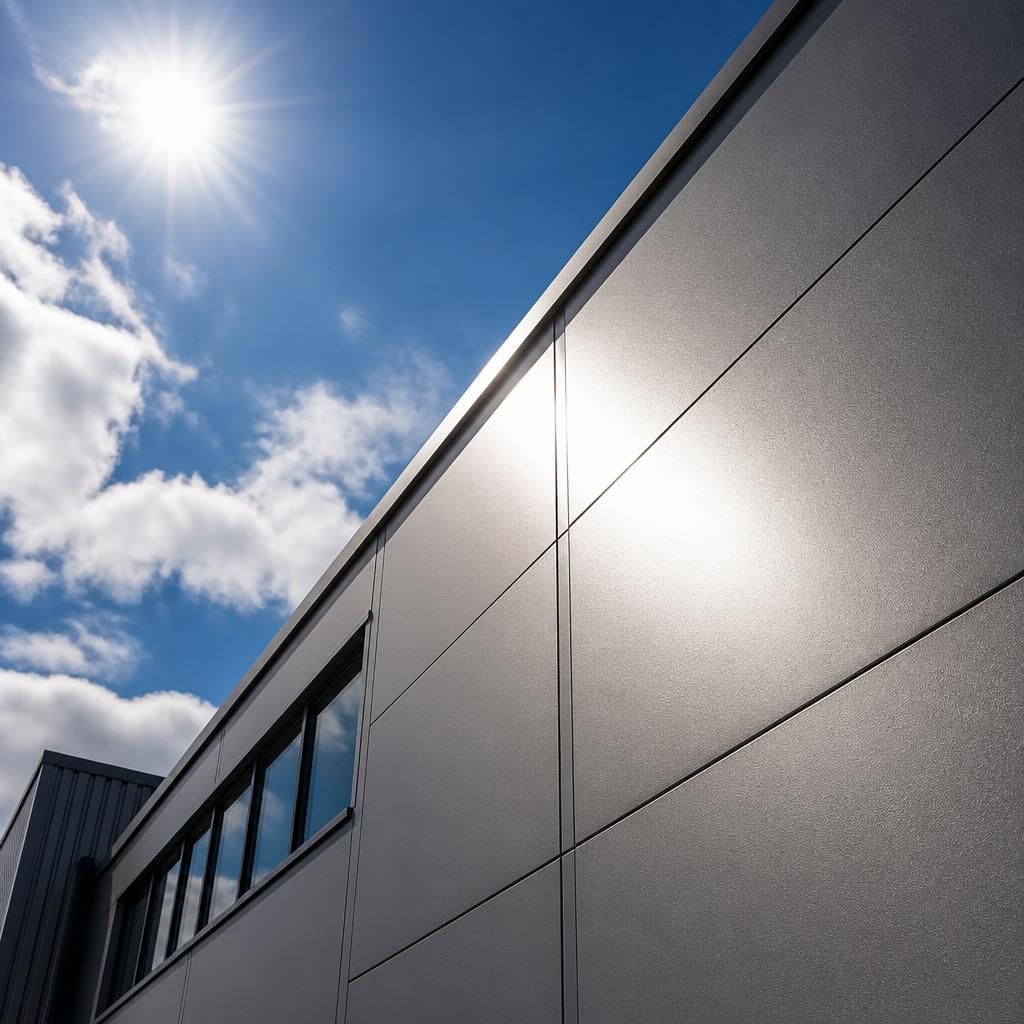
A key environmental consideration is solar heat loading, not just the recorded air temperature. A dark, pigmented polyester finish may absorb more sunlight than a lighter finish, increasing the temperature of the aluminium surface and contributing to greater expansion in long panels or tightly restrained assemblies. This can place additional demands on joints, fixings and sealants.
Matte clear powder coat should not automatically be assumed to remain cooler, as the result also depends on the aluminium’s reflectivity, surrounding surfaces, orientation and shading. Assess the likely surface temperature alongside the selected colour, panel dimensions and fixing arrangement, particularly where the component is exposed to strong direct sunlight.
Discuss Your Matte Clear or Polyester Coating Requirements
Discuss your component’s exposure conditions, aluminium substrate and appearance requirements with a powder-coating specialist before finalising the specification. Providing drawings, representative samples and installation details can help determine whether a matte clear powder coat or exterior polyester finish is more appropriate.