

How do the properties of nylon and other special protective coatings enhance the functionality and longevity of powder coated aluminium components in demanding industrial environments?
Nylon and other specialist protective powder coatings enhance powder coated aluminium by adding resistance to abrasion, impact, chemicals, moisture and corrosion-related deterioration. This helps components retain their protective performance and functional surface for longer in demanding industrial environments, provided the coating is selected for the specific operating conditions.
Nylon and other specialist protective powder coatings improve aluminium components by adding a tailored working surface. Rather than relying only on the aluminium substrate or a standard decorative finish, the coating can be selected to control friction, surface toughness, chemical exposure, electrical behaviour, weathering and temperature performance. This makes the component more suitable for demanding service conditions and can reduce deterioration caused by repeated contact, handling or exposure.
Nylon coatings are particularly useful where surface toughness and low-friction contact are important. Nylon is a thermoplastic coating material that can form a relatively substantial, resilient layer on a correctly prepared aluminium component. Its combination of hardness and flexibility helps the surface tolerate rubbing, sliding contact and repeated handling without behaving like a brittle paint film. This can be relevant to guards, guides, trays, rollers, brackets, housings and fabricated parts that are frequently moved, loaded or placed against other surfaces.
The low-friction character of nylon can also support smoother movement between mating surfaces. It may help reduce scuffing and surface marking where coated aluminium components slide against other parts, although the suitability of the coating depends on the load, movement, counter-surface and operating temperature. It should not be treated as a substitute for a purpose-designed bearing or lubricant where the application involves high loads, high speeds or precise friction control.
Specialist protective coatings can also be chosen for a particular exposure rather than for general-purpose appearance. For example, a chemically resistant system may be appropriate where components encounter cleaning agents, oils or process fluids. A flexible or impact-tolerant formulation may be more suitable for fabricated parts subject to knocks and vibration, while a system designed for exterior exposure may offer more appropriate resistance to sunlight and changing weather conditions. In some applications, the coating is specified to provide electrical insulation, a controlled surface texture or improved grip.
Each coating type involves trade-offs. Nylon may be unsuitable where continuous high temperatures exceed its working capability, where very tight dimensional tolerances leave no allowance for coating build, or where prolonged ultraviolet exposure requires a different formulation. Epoxy-based protective systems can provide strong adhesion and chemical resistance but may need additional protection where colour and gloss retention in sunlight are important. Polyurethane or other weather-resistant topcoats may be considered where exterior appearance and weathering performance are priorities. The correct choice should therefore follow the actual service conditions, not simply the base metal or desired colour.
Performance depends on the complete coating system and the preparation of the aluminium. Aluminium naturally forms an oxide layer, and contamination, handling residues, sharp edges, weld deposits or unsuitable pretreatment can interfere with adhesion. Degreasing, cleaning, suitable abrasion or chemical pretreatment, and thorough removal of contaminants help create a consistent surface for the powder to bond to. The component should also be designed and prepared so that recesses, joints and edges can be coated evenly without trapping contamination or creating weak areas.
Application control is equally important. The powder must melt and cure according to the requirements of the selected material, while the coating thickness must be consistent enough to provide protection without interfering with assembly, drainage, clearances or moving interfaces. Complex aluminium components may need particular attention at corners, internal faces, apertures and contact points. Areas that must remain electrically conductive, be welded after coating or meet a close dimensional fit should be identified before coating so that masking or an alternative finish can be considered.
When assessing a specialist coating for an industrial aluminium component, consider:
- the type and frequency of contact, including sliding, impact, vibration and loading;
- exposure to oils, solvents, detergents, process chemicals, moisture, salt or airborne contaminants;
- indoor or outdoor use, including ultraviolet exposure and temperature changes;
- required friction, grip, insulation, appearance and surface texture;
- permitted coating build, tolerances, masking requirements and assembly clearances; and
- cleaning methods, inspection requirements and the consequences of local coating damage.
These factors determine whether nylon, a chemically resistant system, a weather-resistant finish, a flexible coating or another protective specification is appropriate. A coating can extend the useful service of aluminium, but it cannot correct unsuitable component design, poor preparation or exposure beyond the material’s capability. Defining the operating environment and functional requirements before processing gives the best basis for selecting a coating that protects the aluminium while preserving the way the component is intended to work.
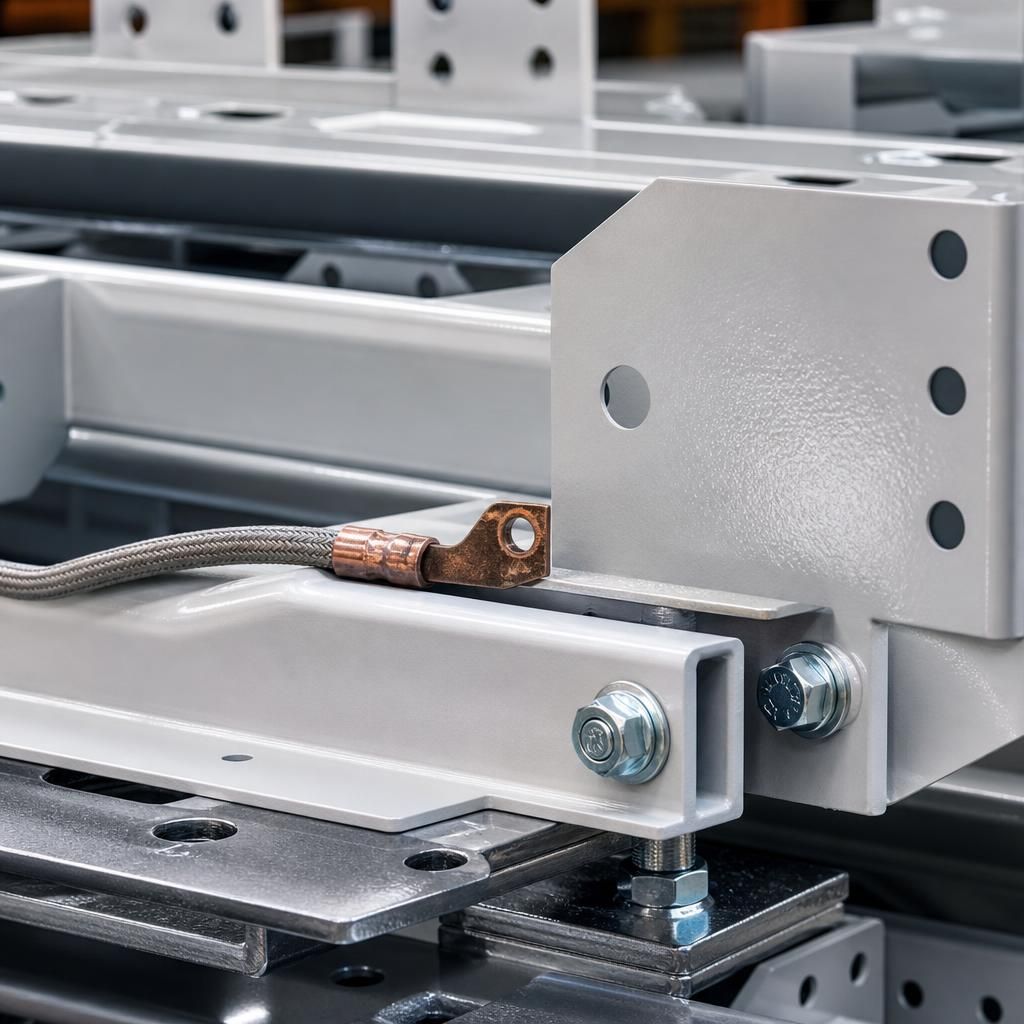
For aluminium components assembled with dissimilar metals, a specialist powder coating can provide electrical separation that helps reduce galvanic corrosion. This is particularly relevant where aluminium is connected to steel, stainless steel or copper in the presence of moisture or conductive contamination.
Where electrical insulation is required, the coating specification should confirm the necessary dielectric performance and account for areas that must remain conductive, such as earthing points, threaded connections and contact faces. These locations may need controlled masking or a separate design provision rather than relying on the coating to perform two conflicting functions.
Coating continuity is also important around fasteners, joints, apertures and exposed edges. Water entering a damaged or poorly sealed interface can create a local corrosion cell, even when the surrounding aluminium remains well protected. Reviewing joint design, drainage and contact points before coating helps preserve the protective barrier during assembly and service.
Discuss the right protective coating for your aluminium components
Discuss your aluminium components, operating conditions and required performance with our powder-coating team to assess whether nylon or another specialist protective coating is appropriate. Component drawings, dimensions and exposure details can help establish a practical coating specification.