

What maintenance practices are necessary to ensure the longevity of powder coated aluminium frames and parts in industrial settings?
Maintain powder coated aluminium frames and parts through regular cleaning with mild detergent and water, followed by thorough rinsing and drying, while avoiding abrasive tools and aggressive chemicals that can damage the finish. Inspect surfaces, edges, fixings and joints for dirt build-up, impact damage, corrosion or coating breakdown, and arrange suitable repairs or recoating promptly to prevent defects spreading.
The longevity of powder coated aluminium frames and parts depends on controlling their exposure, preventing mechanical damage, maintaining surrounding components and correcting defects with compatible materials. A planned maintenance regime should reflect the operating environment, the coating specification and the consequences of coating failure rather than relying solely on occasional visual checks.
Control the service environment
Review the conditions around the coated aluminium. Persistent condensation, high humidity, airborne salts, industrial pollutants and chemical vapours can place greater demands on the coating than a dry, enclosed environment. Where possible, improve ventilation, prevent water from becoming trapped and keep parts away from direct contact with process chemicals. If the operating conditions change, confirm that the existing powder coating remains suitable for the new exposure.
Prevent standing water and moisture traps
Frames should be installed and maintained so that water can drain rather than collect in ledges, channels, joints or hollow sections. Keep drainage paths clear and check that modifications, debris or displaced seals have not created pockets where moisture can remain. Particular care is needed at horizontal interfaces and enclosed sections, because corrosion may develop beneath or at the edge of the coating without being immediately obvious on the main face.
Maintain seals, gaskets and adjacent materials
Perished seals, damaged gaskets and failed jointing materials can allow water or contaminants to reach cut edges and connections. Replace them with materials compatible with the aluminium, coating and service environment. Avoid introducing sealants, cleaners or lubricants that contain substances known to attack the finish. Where aluminium meets another metal, retain suitable separation and check that the connection has not created a route for galvanic corrosion.
Look after fixings and interfaces
Fasteners, brackets, hinges and other attached components should be maintained in accordance with their specification. Loose or incorrectly fitted hardware can cause movement, fretting and local coating damage. When a component is removed or replaced, protect newly exposed metal and reinstate any washers, isolators, seals or edge protection required by the original design. Do not overtighten fixings, as excessive pressure can mark the coating or distort the frame.
Reduce avoidable mechanical wear
Use suitable handling equipment and protective separators when moving or stacking coated parts. Do not drag frames across floors or place them directly against rough surfaces. In service, identify points where doors, tools, pallets, cables or neighbouring components repeatedly contact the coating. Guards, buffers or changes to the layout can prevent recurring wear more effectively than repeated local repairs.
Use an appropriate repair method
Small local defects should not be treated as an opportunity to apply an incompatible household paint or an unverified touch-up product. The repair system should be selected for adhesion, colour, gloss, chemical exposure and expected weathering, and should be compatible with the existing powder coating. Remove any loose material and contamination according to the repair product instructions, then protect the exposed area and its surrounding edge. Larger damage, widespread loss of adhesion or corrosion at joints generally requires assessment by a powder-coating specialist and may require removal, preparation and recoating rather than a superficial patch.
Manage alterations carefully
Drilling, cutting, welding and machining after coating can expose unprotected aluminium and damage nearby surfaces. Plan alterations before finishing wherever practical. If site modification is unavoidable, use suitable protection during the work, remove swarf and residues safely, and treat exposed edges using a compatible system. Any fire, welding or grinding work should also be controlled so that heat and sparks do not degrade adjacent coating.
Keep maintenance records
Record the coating specification, installation conditions, exposure to chemicals or salt, alterations, repairs and recurring problem areas. A documented history helps maintenance teams identify whether deterioration is environmental, mechanical or related to an interface. It also supports consistent selection of repair materials and makes it easier to decide when refurbishment or complete recoating is more appropriate than repeated local work.
For industrial assets, the most effective approach is preventive: match the coating to the environment, keep moisture and incompatible materials away from vulnerable interfaces, prevent avoidable wear and use technically suitable repairs. The required maintenance frequency should then be set by the severity of exposure and the operational importance of the aluminium frame or part.
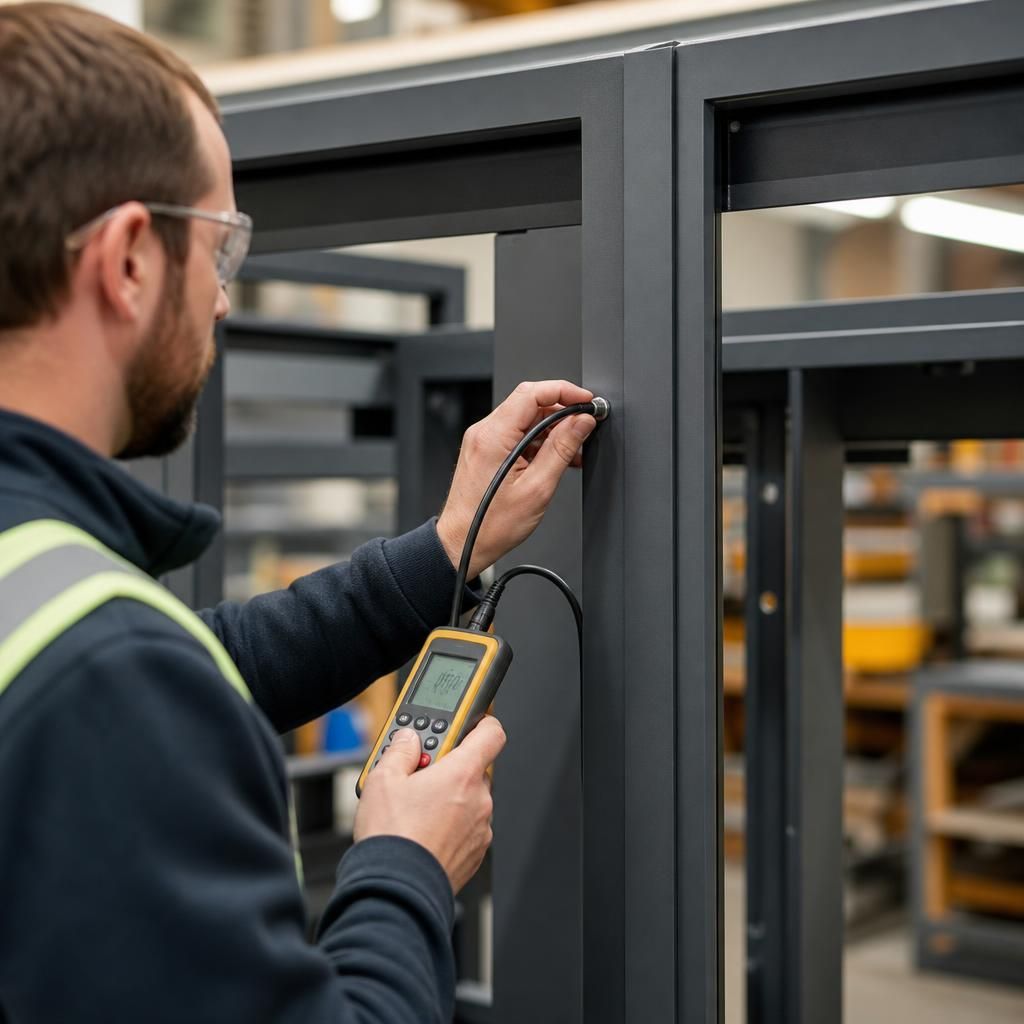
For critical industrial aluminium frames and parts, visual inspection alone may not reveal early coating deterioration. Where failure would affect production, safety or component integrity, arrange condition assessments using suitable methods such as coating-thickness checks, adhesion testing or close examination of suspect areas. These assessments can help distinguish normal weathering from loss of adhesion, under-film corrosion or damage caused by the operating environment.
Testing should be carried out by a suitably experienced coating specialist and interpreted alongside the original coating specification and service conditions. The results provide an evidence-based basis for deciding whether continued monitoring, local treatment, refurbishment or complete recoating is appropriate.
Discuss Maintenance for Your Powder Coated Aluminium Frames and Parts
Discuss your aluminium frames or parts with a powder-coating specialist to review the existing finish, operating conditions and suitable maintenance or recoating options. Provide details of the component, exposure and any visible deterioration so the appropriate next step can be identified.