

What maintenance is required for powder coated aluminium frames to ensure longevity?
Maintain powder coated aluminium frames by cleaning them regularly with clean water and a mild, non-abrasive detergent, then rinsing and drying thoroughly. Inspect the coating for scratches, chips, corrosion or loose fittings, and address any damage promptly to prevent moisture and contaminants reaching the aluminium beneath.
Long-term care for powder coated aluminium frames depends on controlling exposure, preventing mechanical damage and preserving the conditions that allow water to drain away. Alongside routine washing and prompt attention to visible defects, maintenance should cover the frame’s surroundings, fixings, moving parts, drainage paths and any materials that come into contact with the coating.
Keep the frame’s drainage routes clear. Weep holes, channels, slots and rebates can become obstructed by dust, sealant residue, leaves or other debris. Blocked drainage allows water to remain against the coating or collect around joints, increasing the risk of staining and corrosion at damaged areas. Do not enlarge drainage openings or remove components without checking the frame design, as these features are part of the system’s water-management arrangement.
Pay particular attention to locations where aluminium meets other materials. Trapped moisture and contact with incompatible metals can contribute to galvanic corrosion, while cement, mortar, plaster, bitumen and some sealants can mark or chemically attack the finish. Remove construction residues using a method suitable for the coating, rather than scraping them with metal tools or applying strong solvents. During nearby building, fabrication or repair work, protect the frames from sparks, abrasive dust, wet cement and paint overspray.
Mechanical damage is often caused by impact, friction or poorly adjusted hardware rather than by the coating itself. Check that doors, windows, access panels and other moving elements do not bind against the frame. Fasteners, hinges, handles, rollers and brackets should remain secure and correctly aligned, because movement or vibration can wear through the finish at contact points. Any replacement fastener or accessory should be suitable for use with coated aluminium and installed without crushing or gouging the surface.
Do not use abrasive pads, wire brushes, abrasive powders or unapproved solvents to remove marks. These methods can create a permanently dull area, remove the coating or leave scratches that are difficult to repair invisibly. Cleaning products should also be kept away from joints and seals where they could affect adjacent materials. If a stain cannot be removed using a coating-appropriate method, obtain technical advice before increasing the strength of the treatment.
Where the frames are installed in industrial, coastal, high-traffic or chemically exposed environments, the maintenance plan should reflect the actual conditions. Salt deposits, airborne pollutants, process chemicals, high humidity and frequent abrasion can place greater demands on the finish than a sheltered indoor installation. Identify the likely contaminants and check the coating manufacturer’s care guidance for compatible cleaning agents, protective treatments and repair materials.
Small areas of coating loss should not simply be covered with an arbitrary paint. A suitable repair requires the affected area to be prepared without spreading damage, any corrosion to be dealt with, and a compatible touch-up or refinishing system to be selected. Touch-up products can differ in colour, gloss and texture from the original powder coating, so they may be appropriate for local protection without producing a visually identical finish. More extensive deterioration may require assessment by a powder coating specialist and controlled re-coating.
Maintenance records are useful for industrial installations and managed buildings. Record the frame location, exposure conditions, cleaning products used, hardware work, defects found and repairs completed. This creates a reference for identifying recurring problems, such as water collecting at a joint or repeated impact from adjacent equipment, and helps prevent unsuitable repair methods being used later.
- Keep drainage paths, joints and rebates free from obstructions.
- Prevent contact with wet cement, mortar, harsh chemicals, abrasive dust and hot work debris.
- Maintain hardware and alignment so moving parts do not rub against the coating.
- Use compatible fasteners, sealants and repair materials.
- Obtain specialist advice where corrosion, widespread coating loss or chemical attack is present.
The most effective maintenance approach is therefore preventive: control the frame’s environment, avoid incompatible materials and tools, maintain associated hardware, and deal with defects before they extend beneath the finish. For frames used in demanding industrial applications, a coating specialist can help assess the existing finish and specify an appropriate repair or re-coating system.
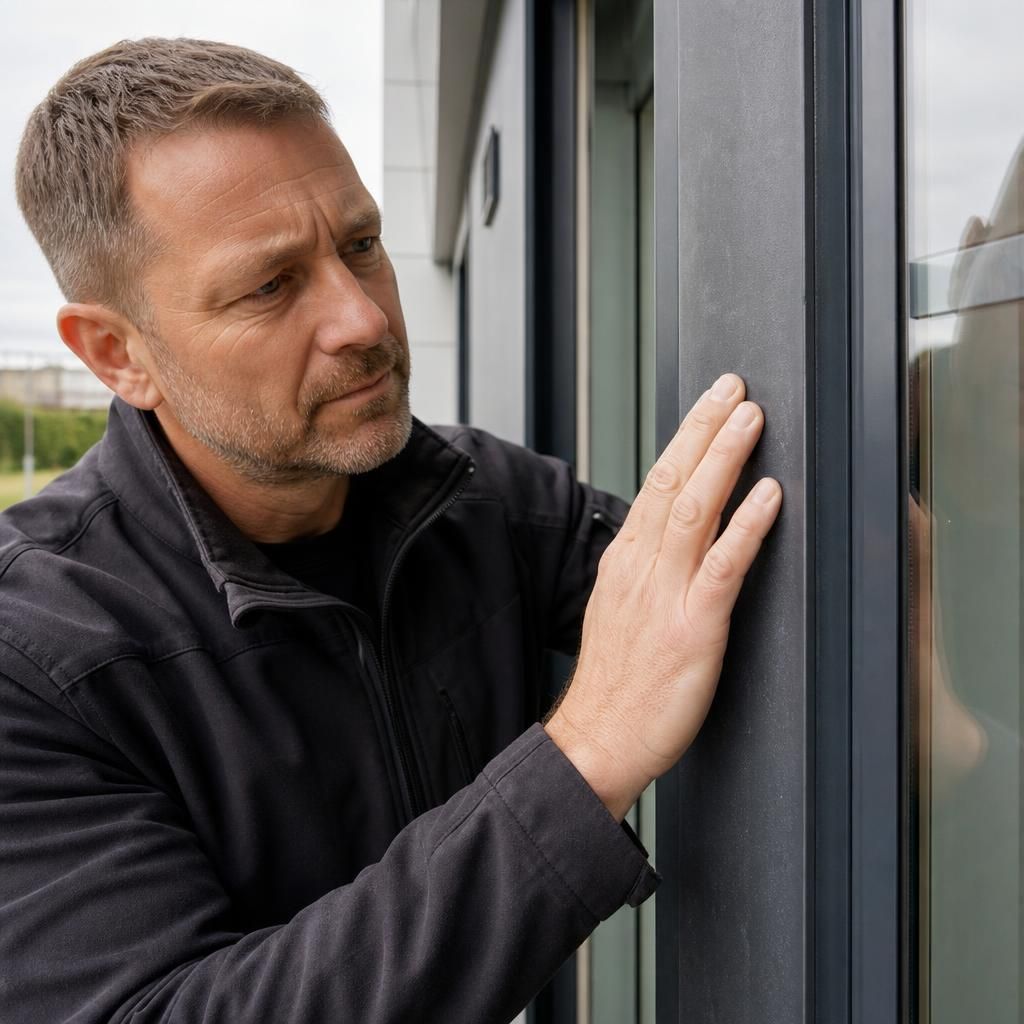
Chalking is a gradual powder-coating change in which ultraviolet exposure causes a light, powdery residue or loss of gloss on the surface. It is not the same as ordinary dirt, and should be assessed alongside colour change, blistering, flaking or exposed aluminium when reviewing a frame’s condition.
After cleaning, examine the finish in good light and compare less-exposed areas with surfaces facing the weather. A change in appearance does not automatically mean the frame needs recoating, but worsening chalking or visible breakdown indicates that the protective finish may be losing performance. Record the affected locations and seek coating-specific advice before applying a polish, sealant or new coating, as an unsuitable product can interfere with future repairs.
Discuss maintenance for your powder coated aluminium frames
If your aluminium frames show widespread coating deterioration, corrosion or uncertain damage, ask a powder coating specialist to assess their condition and recommend a suitable repair or re-coating system. Provide details of the frame’s environment and any previous treatments to support an appropriate specification.