

How does the powder coating process for aluminium frames work?
Powder coating aluminium frames involves cleaning and preparing the metal, applying an electrostatically charged dry powder, and curing it in an oven so the particles melt and form a continuous protective finish. The process creates an even coating designed to improve the frame’s resistance to wear, corrosion and everyday industrial use.
The powder coating process for aluminium frames is a controlled sequence of inspection, preparation, masking, powder application, curing and final quality checks. Each stage affects adhesion, appearance and service performance, so the frame must be prepared for its intended use before the coating is applied.
- Initial inspection and specification: The aluminium frame is checked for its condition, dimensions, previous finishes, welds, sharp edges, contamination and any damage that could remain visible after coating. The required colour, gloss level, texture, coating type and performance requirements are confirmed at this stage. Frames may need to be supplied assembled or separated into components, depending on access, masking requirements and the finished design.
- Surface preparation: Oils, grease, handling marks, dirt, oxidation and existing residues are removed using a suitable preparation process. Aluminium requires particular care because its surface can oxidise quickly and contamination can interfere with adhesion. Any burrs, sharp projections or surface defects that need attention are dealt with before the frame proceeds. Preparation does not necessarily remove every mark in the base metal, so the condition of the aluminium is an important part of the expected final appearance.
- Pretreatment: After cleaning, the aluminium is treated to create a surface that supports adhesion and improves resistance to corrosion. The exact pretreatment depends on the aluminium, the coating system and the conditions in which the frame will be used. Thorough rinsing and controlled drying are important because remaining chemicals, moisture or residues can lead to defects beneath the finish.
- Masking and racking: Areas that must remain uncoated, such as threads, precision holes, electrical contact points, drainage paths or mating surfaces, are protected with suitable masking materials. The frame is then positioned on a rack so that the powder can reach the required surfaces and the component can pass safely through the coating equipment. Contact points need to be selected carefully: they must support the frame while allowing the necessary electrical connection for powder application.
- Powder application: Dry powder is sprayed onto the prepared frame using an electrostatic process. The charged particles are attracted to the earthed aluminium, helping them distribute across the surface. The operator controls the application to achieve consistent coverage, including around corners, joints, recesses and profiles. Frame geometry can make some areas more difficult to coat than broad, accessible faces, so the hanging position and spray technique are significant. Excess powder is recovered or managed according to the coating equipment and material being used.
- Oven curing: The coated frame enters a curing oven where heat causes the powder to flow, melt and chemically cross-link into a continuous film. The relevant curing schedule is determined by the powder manufacturer’s specification, the coating system and the mass and shape of the aluminium frame. It is the temperature reached by the component, rather than simply the air temperature in the oven, that determines whether the coating cures correctly. Insufficient curing can affect the finish and performance, while excessive heat or an unsuitable cycle can damage the coating or the substrate.
- Cooling and inspection: Once cured, the frame is allowed to cool before it is handled or packed. It is inspected for coverage, colour consistency, gloss, texture, runs, pinholes, inclusions, bare areas and damage. Masking is removed and holes, threads and contact surfaces are checked to confirm that they remain usable. Where a visible or functional issue is identified, the appropriate corrective action depends on its cause and the agreed specification.
- Protection and delivery: Finished frames are handled and packed to reduce the risk of scuffing, impact or contact damage during storage and transport. Any assembly, wrapping or protective measures should take account of the final coating’s condition and the shape of the frame.
Aluminium frames present some process considerations that differ from simple flat components. Hollow sections, folded profiles, welds, tight corners and concealed faces can create areas where contamination, trapped moisture or uneven powder coverage is more likely. Drainage and venting may also be relevant where enclosed sections are being processed. These details should be considered before production rather than treated as finishing issues afterwards.
The finished specification should also reflect the frame’s working environment. Indoor architectural or equipment applications may prioritise colour and appearance, whereas industrial frames exposed to abrasion, moisture, chemicals or outdoor conditions may require a coating system selected for those demands. Colour and texture are not merely decorative choices: they can influence how marks, dirt, surface irregularities and wear are seen. The required finish should therefore be agreed alongside the frame’s use, handling conditions and cleaning regime.
For industrial orders, the process is normally supported by a job specification covering the component material, preparation requirements, masked areas, coating system, colour, finish and inspection criteria. Supplying accurate drawings and identifying areas that must remain free of powder helps avoid interference with assembly or subsequent operations. Collection and delivery can be arranged for businesses across the Midlands and surrounding areas where the work forms part of a wider manufacturing or fabrication requirement.
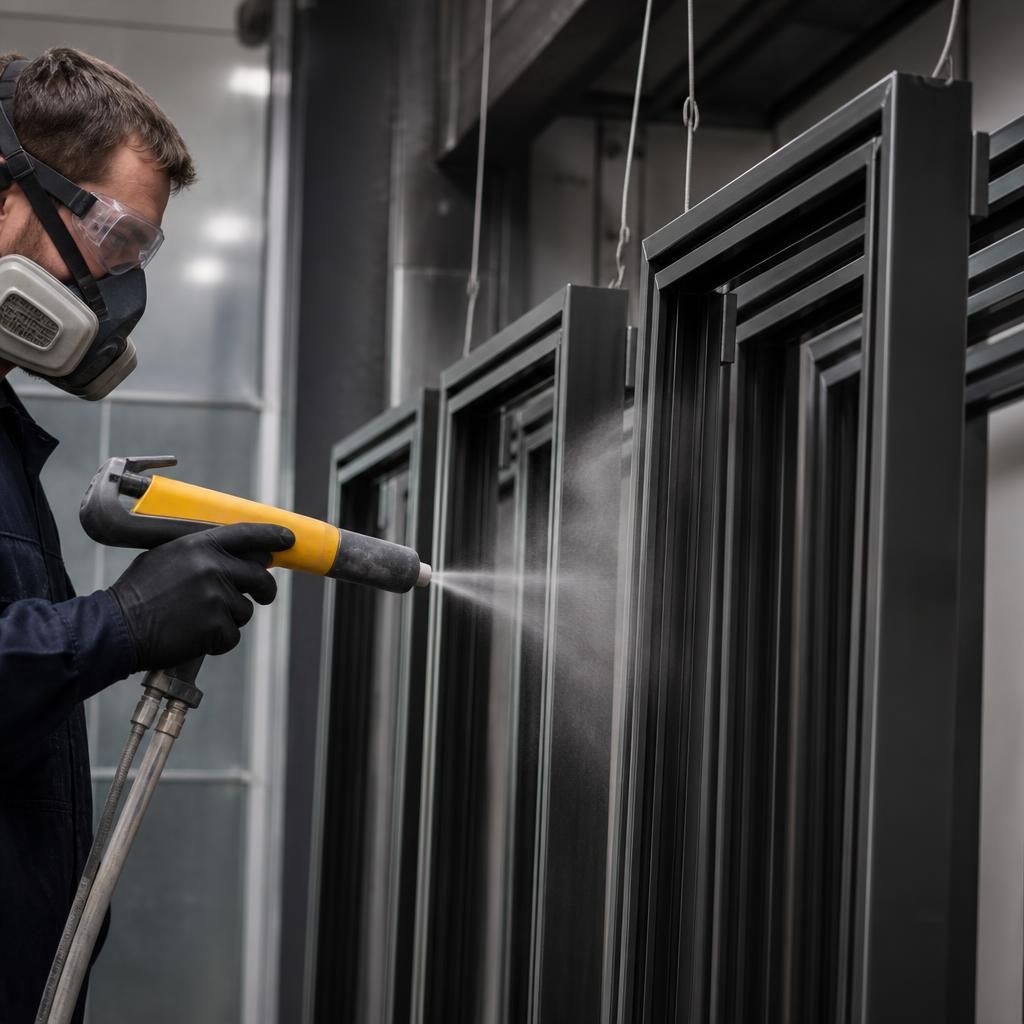
Aluminium frame profiles can be affected by the Faraday cage effect during powder application. Recesses, internal corners and narrow channels may receive less powder because the electrostatic field concentrates on more exposed edges. The operator must therefore adjust the spray angle, gun settings and application technique rather than relying on a single pass.
This is one reason why frame drawings and section profiles are important before coating. They show where access may be restricted and help determine whether the design needs additional application passes, specialist masking or a different racking position. Addressing these points during planning helps produce a more consistent finish across both visible faces and less accessible areas.