

How does the choice of colour and texture in powder coated aluminium frames affect their suitability for different industrial applications?
Colour and texture influence both the functional performance and visual suitability of powder coated aluminium frames for different industrial applications. The right finish can support application-specific requirements such as surface durability, appearance, visibility, cleaning and resistance to environmental exposure.
The colour and texture of a powder-coated aluminium frame should be selected according to the frame’s operating environment, cleaning requirements, identification needs and visual specification. Colour mainly affects appearance, visibility and heat absorption, while texture affects the perceived finish, cleanability, ability to disguise minor surface irregularities and resistance to visible marking. Neither should be chosen independently of the coating specification, aluminium preparation or the conditions in which the frame will be used.
Colour selection for industrial applications
Colour may be specified to match surrounding equipment, corporate design requirements or an existing installation. It can also provide a practical identification system. Different colours may distinguish guarding, access panels, production zones, service components or safety-related features, although any safety marking should follow the relevant site and statutory requirements rather than relying on coating colour alone.
- Light colours: These can make enclosed frames and work areas appear brighter and can make dust, oil or handling marks easier to identify during inspection. They may therefore suit equipment where visual cleanliness is important, although they can require more frequent cleaning to retain their intended appearance.
- Dark colours: These can provide visual contrast against pale walls, floors or machinery and may be suitable where a less visually prominent finish is preferred. Scratches, accumulated dust and light-coloured deposits can be more noticeable against some dark finishes.
- High-visibility colours: Strong contrast can help operators identify guards, access points and potential obstructions. The surrounding environment, lighting and the need for separate warning signage should be considered before specifying a bright finish.
- Metallic or special-effect colours: These can give an aluminium frame a particular visual character, but they may show variation in appearance depending on viewing angle, batch and orientation during coating. A reference sample is useful where multiple components must appear consistent.
Colour can also influence surface temperature. Darker finishes generally absorb more radiant heat than lighter finishes, which may be relevant for frames exposed to direct sunlight or used close to heat-sensitive components. The effect depends on the coating, light source, ventilation, frame design and the temperature limits of the complete assembly, so colour should not be treated as a substitute for thermal assessment.
How texture changes suitability
A smooth finish is often appropriate where the frame must be easy to wipe down, where dirt accumulation needs to be minimised or where a clean, precise appearance is required. It can suit equipment housings, display-facing structures and components used in controlled production environments. However, a smooth surface may make small scratches, handling marks or minor substrate imperfections more apparent.
Fine-textured finishes provide a less reflective appearance and can help reduce the visual prominence of minor marks. They are often considered for machine frames, guards, enclosures and structural components where a uniform industrial appearance is preferred. More pronounced textures can conceal small surface variations effectively, but their deeper profile may make cleaning more demanding, particularly where the frame is exposed to powder, grease, fibres or other deposits.
Texture can also affect how a component is handled. A matt or textured surface generally produces less glare than a high-gloss surface, which can be useful around inspection stations or equipment viewed under strong artificial lighting. It does not, however, automatically provide a non-slip or high-friction surface, and it should not be specified for that purpose without confirming the coating’s technical properties.
Matching the finish to the application
- Machine frames and guarding: A durable, low-glare finish can support clear visibility of the equipment without creating distracting reflections. Colour contrast may help distinguish the guard from the machine or surrounding floor and walls.
- Manufacturing equipment and assemblies: The finish should be compatible with the level of handling, contact and cleaning involved. A texture that disguises minor marking may be useful, but excessive texture can retain contamination around joints, corners and fixings.
- Architectural or customer-facing industrial installations: Colour matching and consistent gloss or texture may be more important because the frame forms part of the visible environment. Samples should be assessed under the lighting conditions in which the installation will be viewed.
- Outdoor or exposed frames: The selected colour and texture must be considered alongside the required pretreatment and coating system. Resistance to ultraviolet exposure, moisture and atmospheric contaminants is determined by the complete specification, not simply by whether the finish is light, dark, smooth or textured.
- Hygiene-sensitive or frequently cleaned areas: A finish with a profile that can be effectively wiped and inspected is generally easier to manage than a heavily textured surface. The cleaning chemicals, temperature and mechanical action should be checked for compatibility with the coating.
Colour and texture are not the same as coating performance
Two aluminium frames may have a similar colour but different suitability because of differences in pretreatment, powder chemistry, film thickness, curing and the required resistance to abrasion or chemicals. Conversely, two finishes with different colours may provide comparable protection when they use the same suitable coating system and are correctly applied. The application should therefore be specified in terms of both appearance and performance.
Important specification details can include the colour reference, gloss level, texture type, acceptable variation, exposure conditions, cleaning method and any requirements for resistance to scratching, chemicals or weathering. Where a project includes multiple batches or replacement parts, retaining an approved physical sample or agreed reference can reduce disputes caused by differences in lighting, screen display or production batch.
For aluminium frames used in demanding industrial settings, the most suitable choice is usually the finish that balances appearance with inspection, cleaning and operating requirements. A smooth light finish may suit a clean, highly visible assembly; a darker fine-textured finish may be preferable for robust machine framing; and a high-contrast colour may assist identification where visibility is important. The final decision should be confirmed against the frame’s environment and the coating system specified for that use, with sample pieces reviewed where colour or texture consistency is critical.
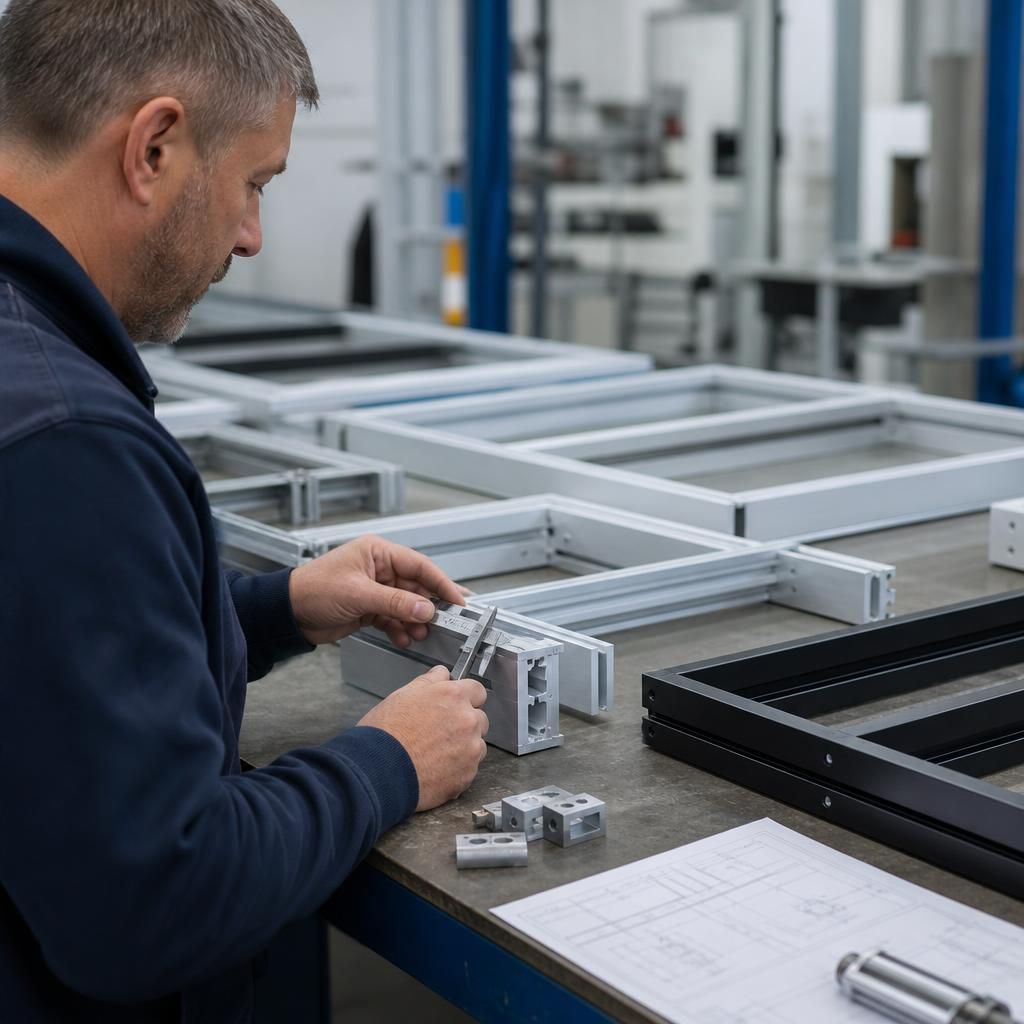
Colour has little effect on the physical fit of a powder-coated aluminium frame, but the selected texture and coating build can affect interfaces between components. This is important where frames include sliding sections, threaded holes, hinge points, bearing seats, clips or tightly toleranced mating surfaces.
A pronounced texture can increase the effective surface profile and may interfere with close-fitting parts if clearances have not been allowed for. Coating can also affect electrical contact, so earthing points, conductive joints and other areas that must remain exposed should be identified and masked or treated as part of the specification.
Before production, the coating requirements should therefore be reviewed alongside the frame drawings. The specification should identify:
- surfaces requiring masking or post-coating machining;
- critical dimensions and permitted coating build;
- threaded, hinged or sliding interfaces that must remain functional; and
- earthing or bonding points that require reliable metal-to-metal contact.
This approach allows the chosen colour and texture to support the intended appearance without compromising assembly, adjustment or electrical function.
Discuss your aluminium frame colour and texture requirements
Discuss your aluminium frame drawings, operating environment and required finish with our powder-coating team to identify suitable colour and texture options. Where appearance consistency or tight interfaces matter, request a review of sample approval and masking requirements before production.