

What are the steps involved in the collection and delivery process for powder coat aluminium finishes?
The process typically involves confirming the aluminium components and coating requirements, arranging collection, checking and preparing the parts, applying and curing the powder coat finish, then inspecting and delivering the completed items. Collection and delivery arrangements are agreed around the size, quantity and handling needs of the order.
The collection and delivery process for powder-coated aluminium is a planned chain of handling, coating and transport stages. It begins with agreeing the technical requirements and transport arrangements, then continues through secure collection, controlled processing, quality checks and protected return of the finished components. Each stage is important because aluminium can be marked, contaminated or distorted if it is handled or packaged incorrectly.
- Share the component and order details. The coating provider needs enough information to assess the job accurately. This normally includes component dimensions, approximate weights, quantities, existing surface condition, required colour or finish, masking requirements and any areas that must remain free from coating. Drawings, photographs or part references can help identify fixing points, threaded sections, mating faces and other areas requiring protection.
- Agree handling and collection arrangements. The size and shape of the aluminium parts determine how they should be loaded and secured. Larger or delicate items may need suitable stillages, pallets, separators or other protective packaging. The collection plan should also cover access for the vehicle, loading requirements, contact details and any documents needed to identify the order. For businesses across the Midlands and surrounding areas, collection and delivery arrangements can be considered as part of the service.
- Prepare the parts for transport. Components should be separated so that they cannot rub together, strike one another or become contaminated during movement. Loose fixings, swarf, oil, labels and temporary protective materials should be removed where possible. If parts arrive damp or contaminated, this can affect subsequent preparation and may require further assessment before coating.
- Record the consignment on receipt. Once the aluminium arrives, the order can be checked against the accompanying information. Quantities, visible damage, component identification and any agreed masking or finishing instructions should be confirmed before work proceeds. This creates a clear reference point if parts arrive with pre-existing marks or if several similar components are being processed together.
- Prepare the aluminium for powder application. Aluminium requires a suitable preparation route because its surface oxide and any oil, dirt, previous coating or fabrication residue can interfere with adhesion. Cleaning and surface treatment are selected according to the condition and intended use of the parts. Masking is applied to threads, holes, contact faces and other areas where powder would affect assembly or electrical continuity. Hanging or racking points are also planned so that the parts can be processed without compromising important visible surfaces.
- Apply and cure the coating under controlled conditions. The powder is applied to the prepared aluminium and cured according to the requirements of the selected coating system and the component itself. Correct curing depends on the metal reaching the required temperature for the appropriate period; the surface may appear finished before the coating has developed its intended performance. Part size, profile, thermal mass and the number of items in a batch all influence how the process is controlled.
- Complete post-coating checks. Finished parts are examined for issues such as incomplete coverage, visible contamination, damage, incorrect masking or inconsistencies in appearance. Critical dimensions, threads and assembly faces may also need checking where the coating could affect fit. If the order contains multiple components, identification and quantities are reconciled before the items are released for packing.
- Pack the finished components for return. Aluminium parts should be allowed to cool and then protected from scuffing, impact and contact with materials that could mark the finish. Separators, wrapping, edge protection or a suitable palletised arrangement may be used according to the component design. Packaging should also keep small parts together and preserve the identification needed for installation or production.
- Arrange delivery and receipt. The completed order is returned using handling arrangements appropriate to its size and packaging. The receiving business should inspect the outer packaging and contents, check the number of items and note any apparent transport damage when the delivery is received. Any concern is easier to investigate when it is linked to the relevant order details and component condition.
Good communication at the quotation and collection stages reduces avoidable disruption later. In particular, the provider should be told about tight tolerances, visible faces, masking limits, assembly interfaces, lifting points and whether components are part of a time-sensitive production sequence. Clear identification of batches also helps prevent mixed parts or uncertainty during return.
For repeat work, an agreed packaging method and consistent part references can make future collections and deliveries more straightforward. The same information should be retained for each batch, including the finish specification and any changes to the component design. This is especially useful where aluminium parts are sent for coating as one stage within a wider manufacturing, fabrication or construction process.
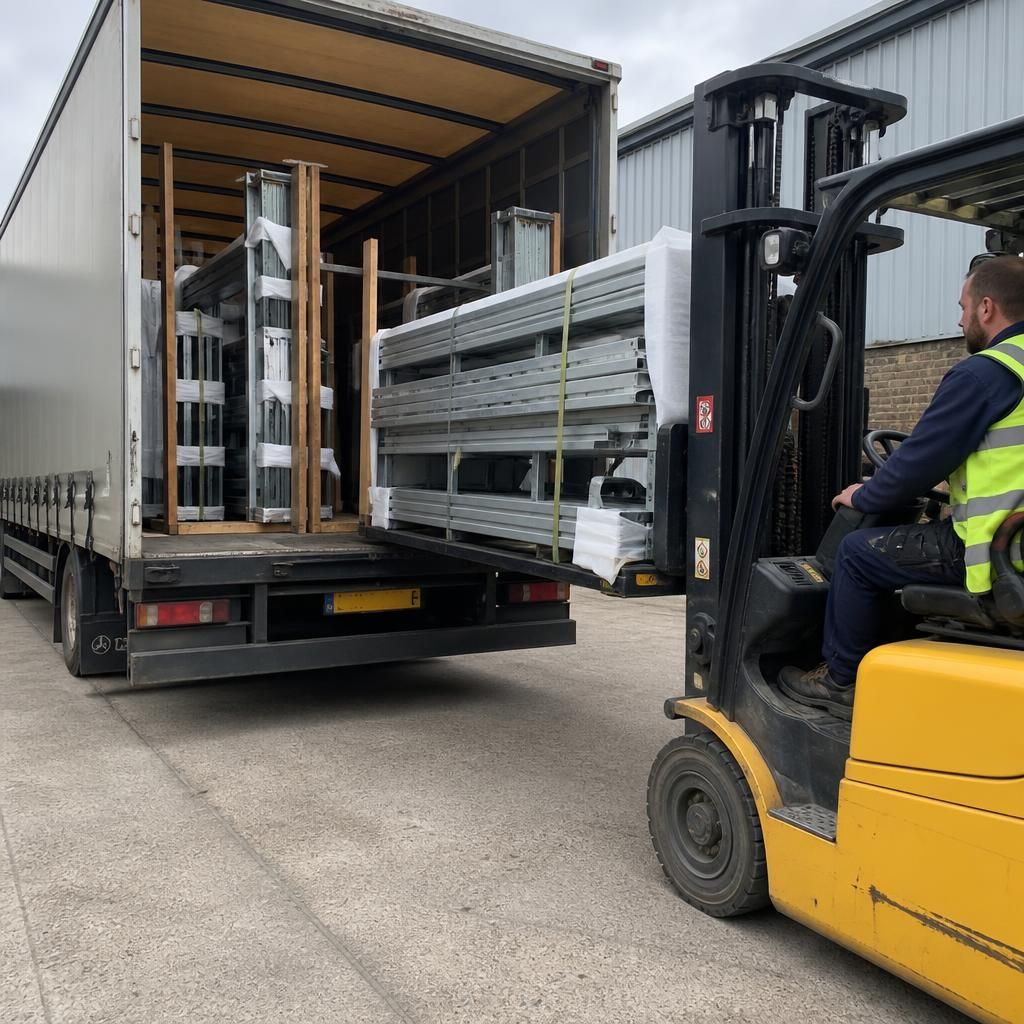
Delivery handling is the final part of protecting a powder-coated aluminium finish. Large frames, profiles and fabricated components should be unloaded using methods that avoid dragging them across pallets, vehicle floors or other hard surfaces. Contact points should be padded or separated from the finished coating, particularly at corners, visible faces and edges where impact or abrasion can leave marks.
Before the items are moved into production or installation, the receiving team should check that the packaging has remained secure and that the components have not shifted during transit. Keeping the parts supported until they reach their intended storage or assembly area reduces the risk of damage after delivery and helps preserve the finish achieved during coating.