

What are the maintenance requirements for powder-coated aluminium finishes to ensure long-term performance?
Powder-coated aluminium finishes require regular cleaning with mild detergent and clean water, prompt removal of contaminants, and periodic checks for scratches, chips, corrosion or coating breakdown. Avoid abrasive tools and harsh chemicals, and repair any damage using a compatible coating system to help preserve the finish and protect the aluminium beneath.
Long-term performance of powder-coated aluminium depends on a planned care regime that controls exposure, preserves drainage and joints, and identifies deterioration before it spreads. The maintenance approach should be based on the component’s environment, design, orientation and use rather than applying the same programme to every installation.
Set a risk-based inspection programme
Assess the conditions surrounding the aluminium before deciding how often it needs attention. Components exposed to coastal air, industrial emissions, road spray, heavy traffic dust or persistent moisture generally require closer monitoring than those in a clean, sheltered environment. Horizontal surfaces, ledges, recesses and areas beneath overhangs can retain deposits and water, while shaded faces may remain damp for longer.
Inspections should consider the complete assembly, not only the visible coating. Check panel edges, folded sections, drilled holes, joints, fixings, brackets, sealants, gaskets and interfaces with other materials. These locations can allow moisture to remain against the aluminium or coating even when the main surface appears sound.
Keep drainage and ventilation effective
Powder coating cannot compensate for a design that traps water. Gutters, weep holes, drain paths and ventilation gaps should remain clear so that water does not collect around the coated component. After installation or modification, confirm that drilling, sealant application and adjacent construction have not blocked intended drainage routes.
Where aluminium sections meet, joints should be arranged to minimise capillary gaps and stagnant moisture. Deteriorated sealants or damaged gaskets may need attention because they can allow water behind the coating or into the assembly. Any replacement material should be suitable for contact with powder-coated aluminium and compatible with the surrounding construction materials.
Control contact with incompatible materials
Aluminium can be affected by galvanic corrosion when it remains wet while in contact with certain dissimilar metals. During maintenance or alteration, use appropriate separation, washers, coatings or fixings where required by the design. Avoid leaving steel swarf, metallic particles or contaminated tools on the coated surface, particularly where moisture is present.
Fresh cement, mortar, plaster, concrete residue and building chemicals should be prevented from drying on the finish. These materials may become difficult to remove and can attack or mark the coating. Protective measures during nearby construction should not hold moisture against the aluminium, and they should be removed in a way that does not tear sealants or damage edges.
Manage operational and mechanical risks
Many coating failures result from impact, abrasion or repeated contact rather than general weathering. Review areas affected by loading, handling equipment, opening mechanisms, tools, straps and adjacent metalwork. Add suitable buffers or change the handling method where repeated contact is causing wear.
Do not use a damaged area as evidence that the entire finish has failed. The cause should be established first. A local impact, movement at a joint, chemical exposure or water retention requires a different corrective action. Treating only the visible mark without addressing the source can lead to recurring damage.
Use a controlled repair process
Minor local damage should be assessed against the original coating specification, including colour, gloss, texture, coating type and expected exposure. A liquid touch-up product may be suitable for limited protection, but it will not necessarily reproduce the appearance or performance of a factory-applied powder coating. Repairs should therefore be agreed with the coating specialist where appearance, corrosion protection or service conditions are important.
More extensive breakdown may require removal of the affected component, preparation of the substrate and recoating through a controlled process. Simply applying a new layer over contamination, loose coating or corrosion can conceal the problem without providing a durable repair. The repair record should identify the location, likely cause, preparation method and product used.
Review the finish as part of wider asset management
For production equipment, building components and fabricated assemblies, include the aluminium finish within the site’s planned maintenance records. Record the original coating specification where available, installation conditions, inspection observations and any remedial work. Photographs can help compare changes over time, particularly on large assemblies where gradual loss of uniformity is difficult to judge from memory.
Escalate an assessment when there is blistering, lifting at edges, recurring staining, corrosion around fixings, widespread loss of adhesion, cracking, or deterioration beneath seals and joints. These signs can indicate moisture ingress, substrate contamination, chemical attack or a preparation issue rather than a simple surface defect.
When components are being designed or specified, maintenance requirements should be considered alongside the initial finish. Accessible surfaces, protected edges, suitable drainage, compatible fixings and a coating system matched to the exposure conditions all reduce the likelihood of premature intervention. A maintenance plan built around these factors helps the powder-coated aluminium retain its protective and visual properties throughout its intended service life.
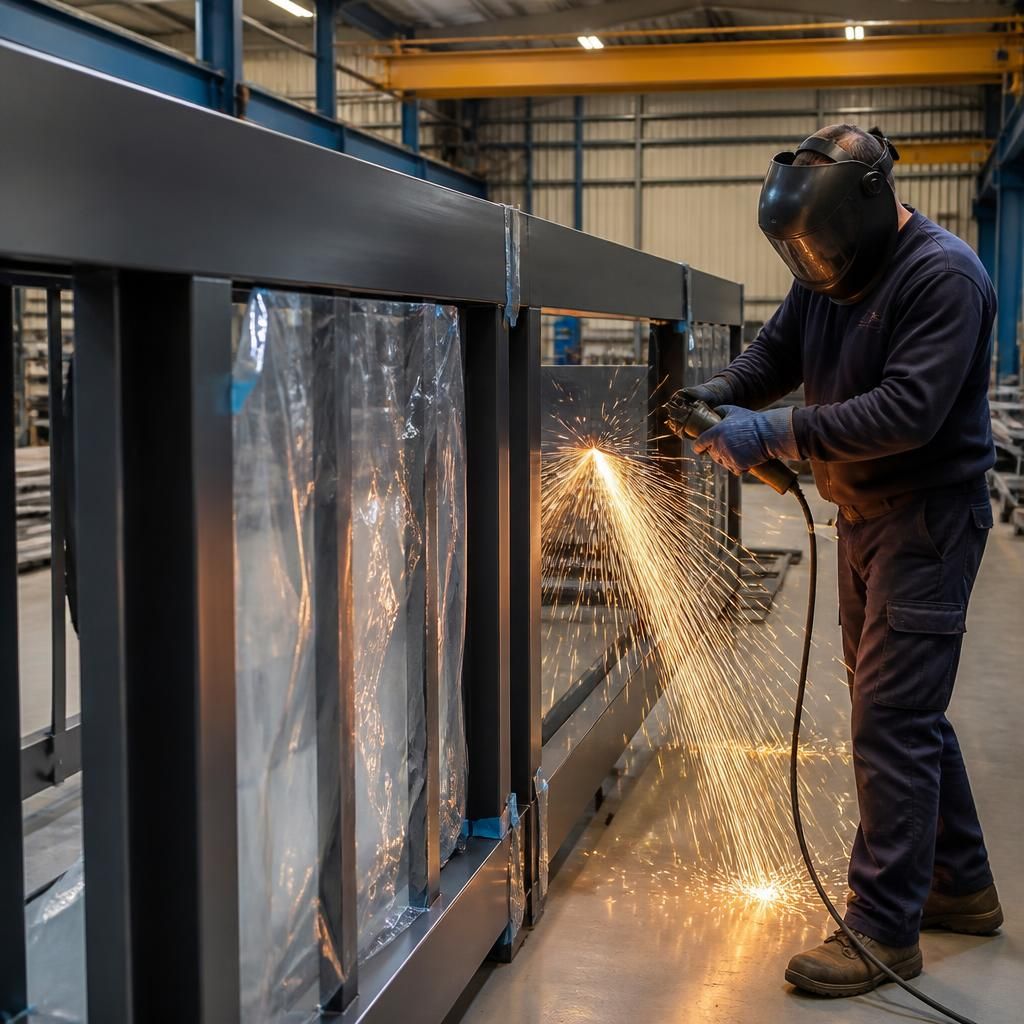
Protect powder-coated aluminium during nearby fabrication, installation and repair work. Grinding sparks, welding spatter and hot metal particles can permanently mark the finish or create localised damage that later allows corrosion to develop. Use a non-abrasive temporary shield and keep cutting, grinding and welding activities away from exposed coated surfaces wherever practical.
Temporary coverings should be clean, securely positioned and removed promptly after the work is complete. Avoid materials that can transfer adhesive, retain moisture or rub against the coating. Once the area is clear, examine the aluminium for embedded particles, heat marks and impact damage, then arrange a suitable repair if the coating has been breached.
Discuss your powder-coated aluminium maintenance requirements
Discuss your powder-coated aluminium maintenance requirements with a coating specialist, including the component’s environment, existing finish and any recurring defects. This assessment can help identify suitable maintenance measures or a compatible repair approach.