

What are the environmental benefits of using powder coating for aluminium components?
Powder coating aluminium components can reduce environmental impact by avoiding solvent-based liquid coatings and producing negligible volatile organic compound (VOC) emissions during application. The dry powder process also enables overspray to be recovered and reused, while the durable cured finish can extend component service life and reduce the need for frequent recoating.
The environmental performance of powder coating aluminium depends on the complete coating system, from surface preparation and curing through to the component’s use and eventual recycling. When the process is properly specified, it can reduce material losses, limit hazardous waste and support a longer working life for aluminium parts without relying on solvent-based application methods.
Aluminium’s recyclability is an important part of the assessment. Aluminium can be recycled repeatedly, and powder coating does not automatically prevent a component from entering established metal-recycling streams. At end of life, the coated item should be directed to an appropriate recycler that can process painted or coated aluminium. Keeping components identifiable and avoiding unnecessary combinations of incompatible materials can make recovery more straightforward.
Powder coating can also reduce the quantity of coating material treated as waste. Unlike a liquid system containing a carrier, the coating is supplied as a dry formulation. This allows the coating specification to be controlled by the required film thickness and component geometry. Careful application settings, suitable racking and regular equipment maintenance help prevent excessive build-up, rejected parts and avoidable use of raw materials.
There may be benefits in reducing hazardous waste from the finishing operation. Powder overspray, contaminated filters, masking materials and residues still need to be managed responsibly, but the process does not generate liquid paint sludge in the same way as many liquid coating systems. The precise waste profile depends on the powder formulation, colour changes, cleaning procedures and the method used to prepare the aluminium.
Surface preparation should be considered as part of the environmental calculation rather than treated as a separate issue. Degreasing, etching, conversion treatments and rinsing can consume water and chemicals and may produce controlled waste streams. A suitable preparation system should match the aluminium alloy, the intended service conditions and the performance required from the finished component. Using excessive treatment where it is not needed can increase resource use without improving the result.
Curing requires heat, so powder coating is not automatically impact-free. Oven temperature, curing time, loading pattern, insulation, extraction and heat recovery all influence energy consumption. Components should be specified and loaded so that the powder cures fully without unnecessary over-curing. In some cases, a lower-temperature or appropriately formulated powder may reduce process energy, but compatibility with the aluminium, coating thickness and performance requirements must be confirmed before selection.
The most environmentally responsible specification therefore considers the whole life cycle:
- choose a coating formulation and pretreatment system with suitable environmental and safety information;
- specify only the performance level required for the component’s exposure conditions;
- use accurate application and curing controls to minimise rejected work and excess material;
- manage powder residues, filters, wash water and chemical waste through appropriate routes;
- design the component so aluminium can be separated, identified and recycled at end of life.
For manufacturers and fabricators, environmental claims should be supported by evidence from the coating supplier and the finishing process itself. Product data sheets, safety data sheets, waste records and energy information provide a more reliable basis for comparison than describing powder coating as universally green. The strongest outcome comes from combining an efficient application process with responsible pretreatment, controlled curing and an end-of-life route that preserves the value of the aluminium.
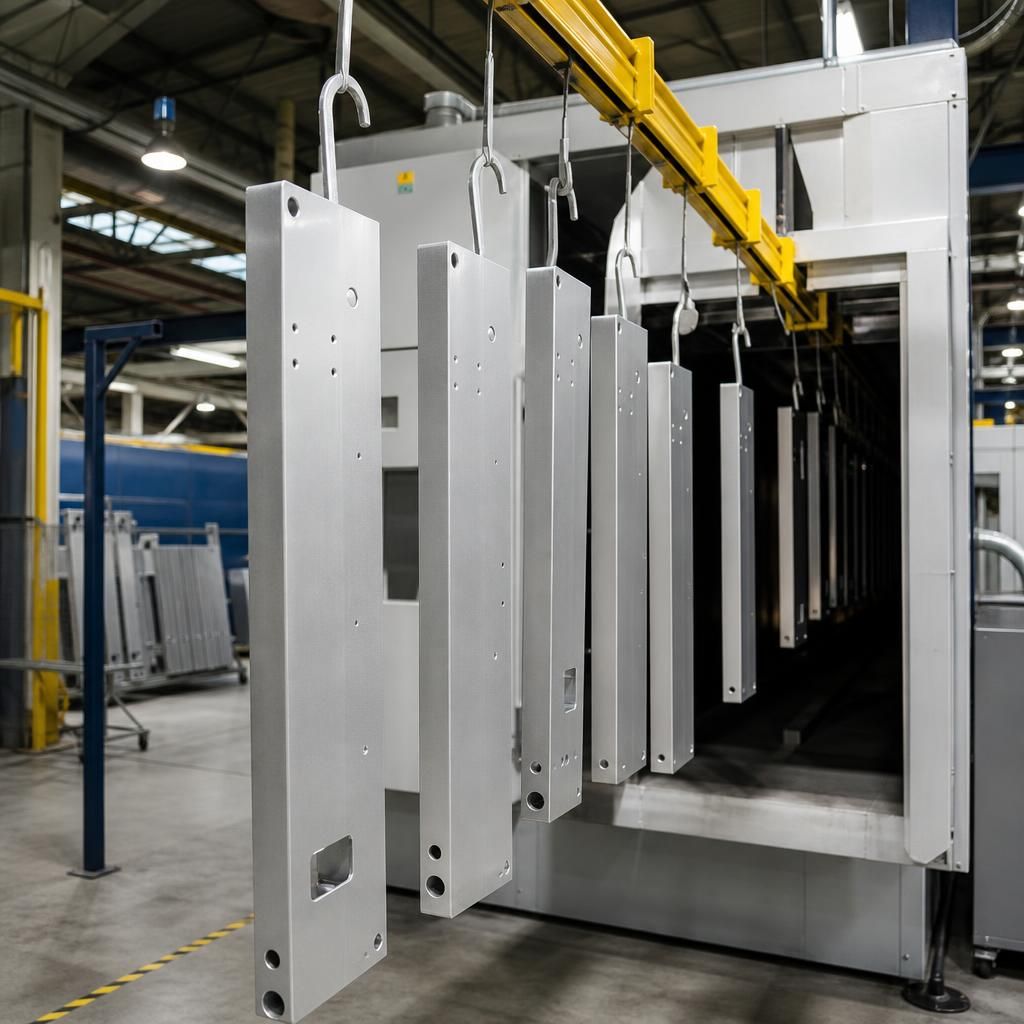
Powder coating can reduce the need for solvent control during the curing stage because the coating is applied as a dry film rather than a liquid formulation that must release a carrier as it dries. The environmental outcome still depends on the powder chemistry, oven design and extraction arrangements, so the relevant technical and safety information should be checked for the specified system.
For aluminium components, this makes the curing stage an important part of responsible process design. Correct oven loading, airflow and temperature control help achieve the required finish without creating avoidable process losses or additional treatment requirements. Environmental performance should therefore be assessed alongside the coating’s technical specification, not from the application method alone.
Assess the environmental benefits of powder coating aluminium components
Discuss your aluminium components with Powder-coatings.co.uk to identify a coating specification that balances environmental considerations with the required technical performance. Provide details of the alloy, component design, service conditions and production volumes so the finish can be assessed appropriately.