

How does the curing process affect the quality and durability of powder-coated aluminium finishes?
Curing melts the powder and chemically cross-links it to form a continuous coating on the aluminium, directly affecting adhesion, hardness, flexibility and resistance to wear, moisture and corrosion. Insufficient or excessive curing can leave the finish weak, brittle or prone to defects, so the correct time and temperature must be controlled for consistent quality and long-term durability.
Curing affects powder-coated aluminium finishes by determining whether the coating reaches its specified performance across the whole component. The critical control is the aluminium’s actual metal temperature and time at that temperature, rather than the oven’s displayed air temperature alone. A correctly developed cure profile helps produce a consistent finish on faces, edges, recesses and areas with different thermal masses.
Aluminium transfers heat differently from heavier steel components, so the oven setting and the time required for the part to reach the powder manufacturer’s specified cure condition must be assessed for each job. Thin sections may heat quickly, while thicker areas, enclosed sections and densely loaded fixtures can take longer. If the cure schedule is based only on oven temperature or conveyor speed, some areas may receive a different thermal treatment from others.
Several production factors influence the result:
- Component thickness and geometry: variations in section size, folded edges, deep recesses and enclosed profiles can create differences in heat penetration.
- Loading arrangement: closely packed parts can restrict heat circulation and make the effective cure profile less uniform.
- Powder film thickness: an uneven or excessive layer can affect appearance and may alter how consistently the coating cures.
- Oven airflow and temperature distribution: balanced circulation helps reduce differences between locations within the oven.
- Part movement and racking: secure, suitable contact points support consistent positioning and help prevent damage during handling.
Surface preparation remains important because curing cannot compensate for contamination, oxidation, unsuitable pretreatment or poor application. The powder must be applied to a clean, appropriately prepared aluminium surface before the component enters the oven. A sound substrate and even application give the curing stage a consistent coating system to develop.
Correct curing also supports the finish’s physical properties. It influences resistance to handling damage, abrasion, chemical exposure, moisture and outdoor conditions, as well as the coating’s ability to remain attached when the aluminium expands or contracts. These properties are particularly relevant for fabricated parts, architectural components, vehicle-related parts and industrial assemblies that may be exposed to repeated handling or changing service conditions.
Appearance can provide useful evidence of process consistency, although visual inspection alone is not sufficient to confirm cure. Differences in gloss, colour, texture, surface smoothness, pinholing or other finish irregularities may indicate variation in application or oven conditions. A coating can appear acceptable while still requiring further process investigation, so production checks should be matched to the finish specification and the component’s intended use.
For repeat work, the curing process should be validated against the complete part range rather than treated as a single setting for every aluminium component. Profiling equipment can record the temperature experienced at representative points on the workpiece, including locations likely to heat more slowly. This information can then be compared with the powder system’s technical requirements and used to establish suitable loading, racking and conveyor conditions.
Quality control may include checks of coating appearance, film thickness, adhesion and resistance to relevant handling or performance tests. The appropriate checks depend on the powder system, the component design and its service environment. Recording oven conditions, part configuration and inspection results also makes it easier to identify whether a defect originates from application, preparation, handling or the cure cycle.
In practical terms, a reliable aluminium powder-coating specification should define the powder system, preparation method, target film characteristics, component arrangement and verified cure profile. Controlling these variables reduces variation between batches and helps the finished aluminium part meet the required balance of appearance, adhesion and service performance.
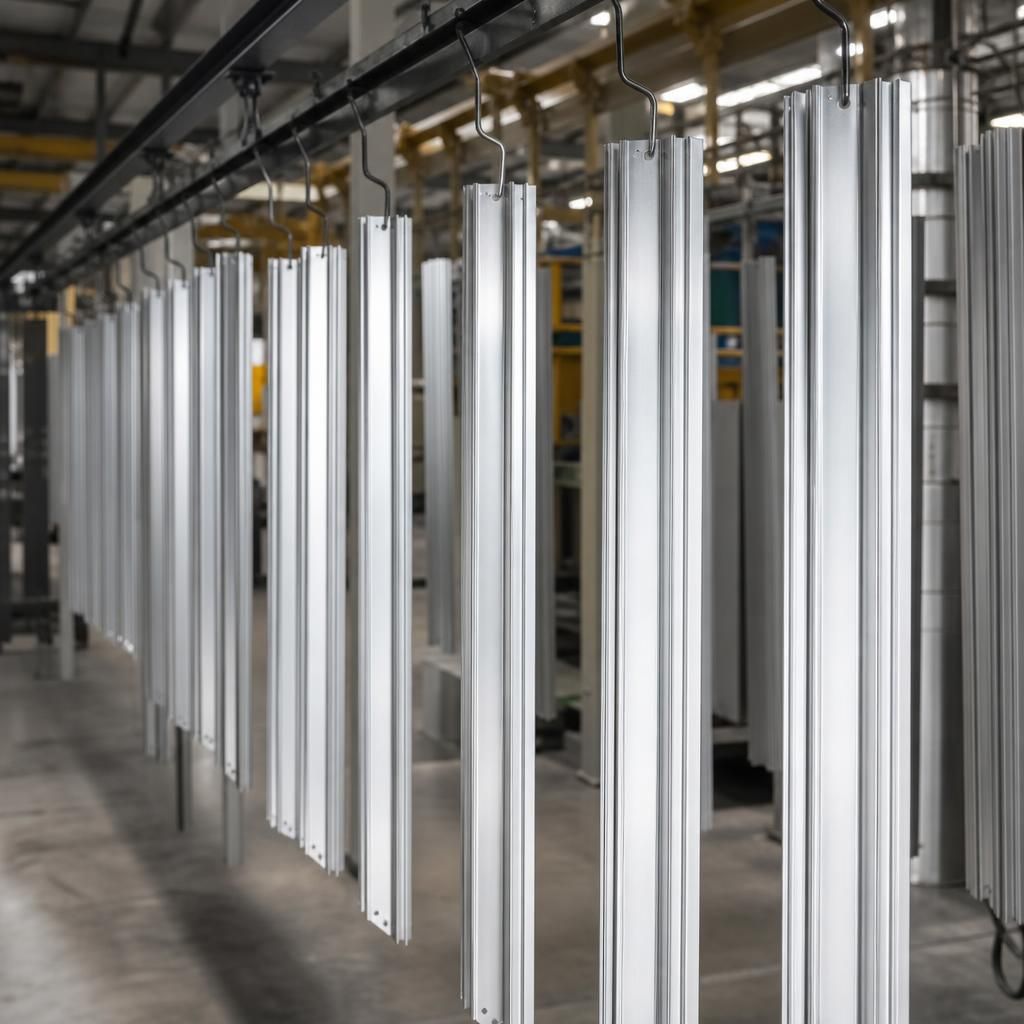
The period immediately after curing also affects the quality of a powder-coated aluminium finish. Although the coating has formed its structure in the oven, it can remain vulnerable to marking while the component is still hot. Contact with racks, packaging or neighbouring parts may leave impressions, scuffs or pressure marks that cannot be removed without refinishing.
Components should therefore be supported at suitable contact points and handled carefully until the coating has cooled sufficiently for packing or further assembly. Aluminium sections with different thicknesses may cool at different rates, so a surface that feels ready to handle may not indicate that every part of the component has reached the same condition. Including controlled cooling and protected handling in the finishing procedure helps preserve the appearance achieved during curing.
Discuss the Curing Requirements for Your Aluminium Finish
Discuss your aluminium components and required performance criteria with the powder-coating team to establish a suitable powder system and verified curing specification. Provide component drawings, section thicknesses, intended environment and finish requirements so the process can be assessed accurately.