

How do powder coat finishes on aluminium contribute to cost-efficiency in production?
Powder coat finishes on aluminium can improve production cost-efficiency by applying a durable protective layer that reduces the need for remedial work and recoating. Efficient batch processing, consistent coverage and minimal solvent use can also help control finishing, maintenance and material costs.
Powder coating can improve the cost-efficiency of aluminium production by lowering the total cost of finishing, ownership and maintenance rather than simply reducing the initial coating price. The financial benefit comes from combining controlled application with a finish that can remain serviceable for longer, while reducing disruption caused by repairs, replacement or repeated finishing work.
Lower lifecycle costs: The relevant comparison is the complete cost of a coated aluminium component. This includes surface preparation, coating, curing, inspection, handling, installation and future maintenance. A finish selected for the component’s environment can reduce the frequency of touch-ups and recoating. That is particularly important for items that are difficult to remove, located at height or incorporated into larger assemblies, because access and labour can cost more than the coating operation itself.
Reduced production disruption: A coating defect discovered after assembly can require disassembly, transport, rework and another inspection. These indirect costs may exceed the value of the original coating job. Defining the required appearance, film build, masking points and acceptance criteria before production helps prevent unsuitable parts progressing to later stages. It also makes inspection more straightforward, allowing defects to be identified before components are installed or dispatched.
Better use of aluminium components: Aluminium is often selected where low weight, corrosion resistance and a clean appearance are important. Powder coating adds a functional and decorative finish without requiring a separate liquid-paint system. The coating specification must, however, account for aluminium’s surface condition and any alloy-specific preparation requirements. Correct pretreatment is essential: contamination, oxide formation or inadequate adhesion can lead to premature failure and create avoidable rework costs.
Labour and handling efficiency: Cost control depends on how much manual intervention is needed before and after coating. Components should arrive clean, suitably prepared and designed for practical racking, masking and inspection. Appropriate hanging points, accessible surfaces and clearly identified areas that must remain uncoated can reduce handling time and prevent damage. Components that require extensive masking, special positioning or individual treatment may carry a higher finishing cost even when the powder itself is inexpensive.
Specification avoids over-engineering: The most economical finish is not necessarily the lowest-cost powder or the thickest coating. Selecting a system according to exposure, impact, appearance and expected service conditions prevents unnecessary specification. For example, an internal component with limited environmental exposure may not require the same coating system as an external architectural or industrial part. Conversely, using an unsuitable economy-grade finish in a demanding environment can create greater costs through premature repair or replacement.
Design and dimensional control: Powder coating adds a measurable layer to the component, so tolerances, threads, slots, mating faces and moving interfaces need consideration. Masking or post-coating machining may be required where coating build could affect assembly. Addressing these details at the design or quotation stage helps avoid rejected parts and secondary operations. The cost impact is especially relevant for close-tolerance aluminium assemblies, where a small change in fit can interrupt an otherwise efficient production process.
Colour and changeover planning: Colour, gloss level and texture affect handling and production planning. Grouping compatible work and confirming the required finish before manufacture can reduce unnecessary changeovers, cleaning and reprocessing. A clearly defined colour reference is also important where components are produced in separate batches, as visual inconsistency can lead to avoidable replacement or rework.
For a meaningful cost comparison, manufacturers should assess:
- the aluminium alloy, component size, geometry and total surface area;
- the required pretreatment and any existing coating or contamination;
- the performance conditions, including exposure, impact and handling;
- critical dimensions, masking requirements and assembly interfaces;
- the required colour, gloss, texture and visual acceptance standard;
- inspection, packaging, transport and any collection or delivery arrangements; and
- the likely cost of access, repair or replacement if the finish fails in service.
Powder coating is therefore most cost-efficient when it is treated as part of the production design rather than as a final cosmetic operation. A suitable specification, prepared components, practical loading and clear quality requirements help control the initial finishing cost while limiting the indirect costs associated with defects, installation problems and future intervention.
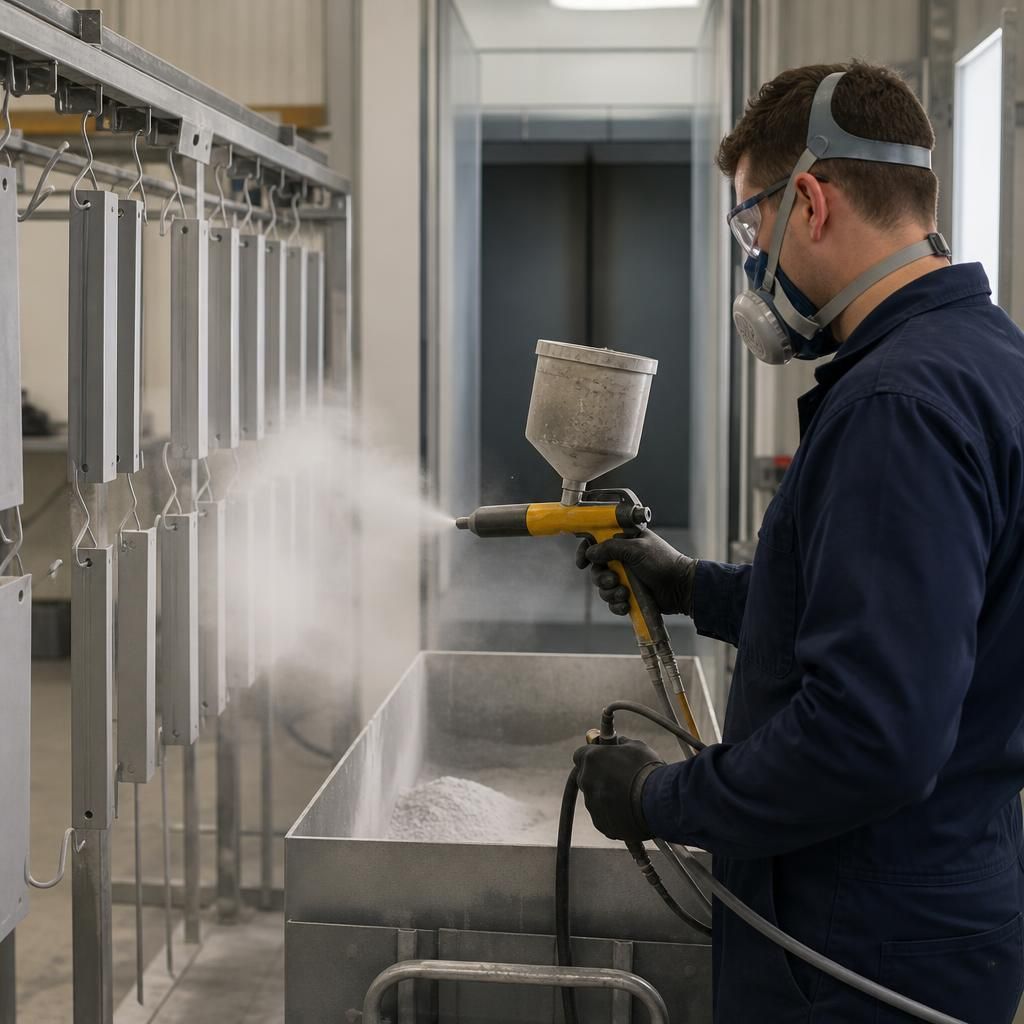
Powder utilisation can influence the cost of finishing aluminium, particularly where components have complex shapes or large surface areas. In suitable systems, overspray may be collected and reused, reducing the amount of unused powder sent for disposal and helping make better use of purchased coating material. Recovery is not appropriate in every application, because colour, contamination and specification controls must be considered before reclaimed powder is returned to production.
This makes material-control procedures an important part of a cost assessment. The relevant questions include whether overspray can be recovered, how different colours and coating types are kept separate, and how reclaimed material is checked before use. A controlled approach can reduce avoidable waste without compromising the finish required for the aluminium component.
Discuss the cost-efficiency of your aluminium coating specification
Discuss your aluminium coating specification with Powder-coatings.co.uk to assess the finish, preparation and handling requirements for your components. Providing details of the alloy, dimensions, operating environment and required appearance will help establish a suitable production approach.