

What are the key benefits of using matte clear and white powder coatings on aluminium surfaces?
Matte clear and white powder coatings give aluminium a durable, uniform finish that helps protect the surface from corrosion, weathering and everyday wear. Matte clear retains more of aluminium’s natural appearance with reduced glare, while white provides a clean, consistent colour and can help reflect solar heat.
The key benefits of matte clear and white powder coatings on aluminium are controlled appearance, consistent coverage, strong design flexibility and an efficient finish for repeat production. The two options serve different visual purposes: matte clear is suited to applications where the aluminium substrate should remain part of the design, while white creates an opaque, uniform surface that can standardise the appearance of different components.
Matte clear powder coating provides a restrained finish without introducing a strong colour. This can be useful for architectural features, fabricated panels, enclosures and components where the character of the aluminium needs to remain visible but a highly reflective surface is not wanted. It can also provide a consistent finish across parts that may otherwise show differences in sheen after fabrication, provided the aluminium is properly prepared.
White powder coating offers a neutral finish that works across industrial, commercial and architectural applications. Its opacity can help create a more consistent visual result where aluminium parts have different underlying tones or where welds, machining marks and fabrication stages would otherwise produce noticeable variation. White also provides a clear background for colour coding, identification labels and contrasting fittings.
- Consistent film formation: Powder is applied as a dry coating and cured to form a continuous finish. With suitable preparation and application control, this can produce an even appearance across flat sections, profiles and repeat batches.
- Repeatable production results: Defined preparation, application and curing conditions make it possible to reproduce the selected finish across multiple aluminium components. This is particularly important where parts are manufactured in batches or need to match previously coated items.
- Choice of surface character: Matte clear and white finishes allow the specification to reflect the role of the component. The clear option keeps the visual treatment subtle, whereas white gives a stronger, more noticeable design finish and can help separate the coated part from surrounding materials.
- Compatibility with varied component designs: Powder coating can be used on many aluminium forms, including sheet, profiles, fabricated assemblies and smaller components. The practical result depends on the part’s geometry, access for spraying, masking requirements and the coating system selected.
- Efficient material use: Powder is applied without the liquid carrier used in conventional wet paint systems. Uncured powder can, subject to the equipment and coating system, be collected for controlled reuse, which can help reduce material waste during suitable production work.
- Reduced reliance on post-finish decoration: A specified white or matte clear coating can provide the required appearance as part of the finishing process, avoiding the need for additional surface decoration where the design does not require it.
The final result depends heavily on preparation. Aluminium should be cleaned and treated using a process compatible with the selected powder system, with contaminants, oxidation and fabrication residues removed before coating. Edges, recesses, threaded areas and assembled joints also need consideration because they can affect powder deposition and curing. Matte clear finishes are less forgiving of substrate blemishes because they do not provide the same visual coverage as an opaque white coating.
Specification should therefore consider the aluminium grade, component dimensions, intended environment, required appearance, masking points and whether parts need to match other coated items. For manufacturers and fabricators, supplying accurate drawings and identifying areas that must remain uncoated helps the coating process achieve a predictable result. Powder-coating specialists serving businesses across the Midlands can also advise on preparation, batch consistency and collection or delivery arrangements for aluminium components.
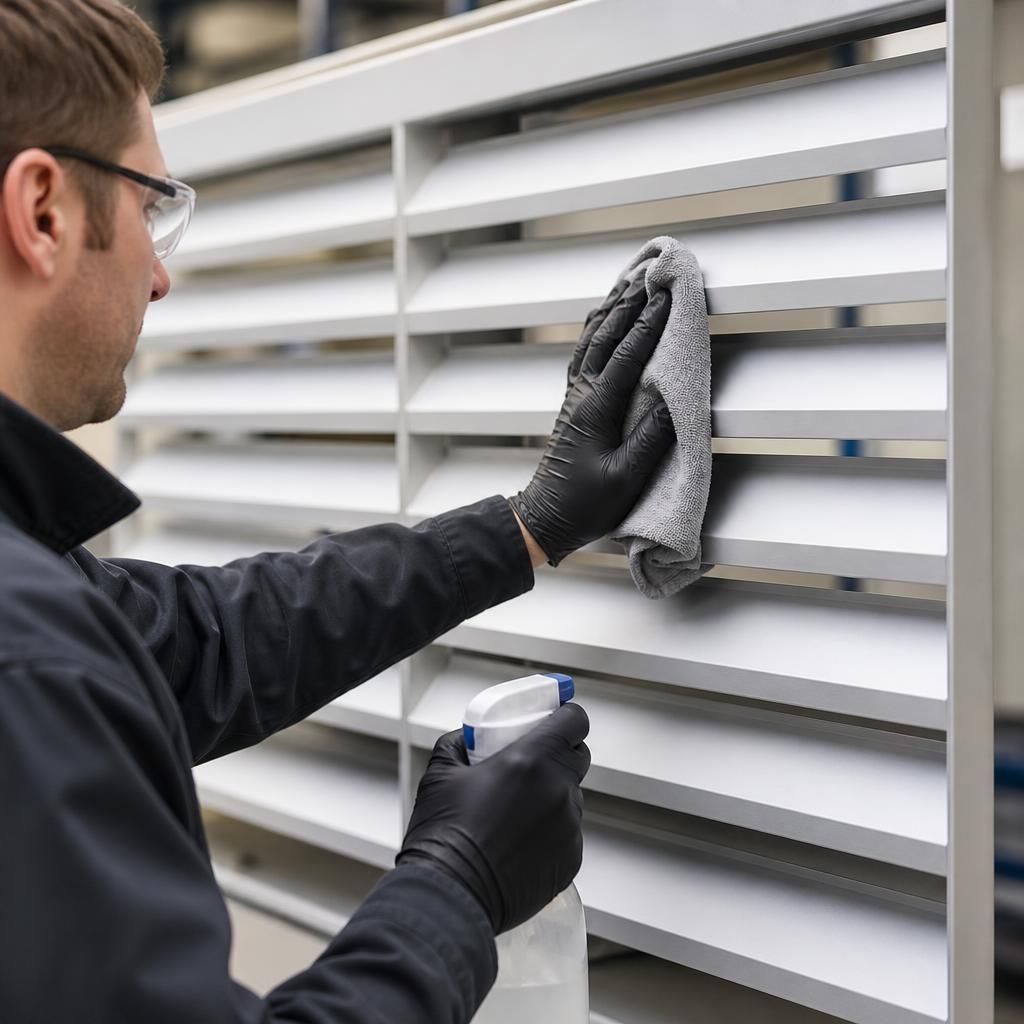
A further benefit of a correctly cured powder coating is that it provides a practical, cleanable surface for aluminium components. Dust, fingerprints and light surface contamination can generally be removed with clean water, a soft cloth and a mild, pH-neutral detergent. This is useful for enclosures, panels and other parts that are handled, inspected or positioned in visible areas.
Cleaning methods still need to suit the specified coating system. Abrasive pads, aggressive solvents and untested chemical cleaners can alter a matte appearance or damage the finish, so routine cleaning should use gentle materials and follow the coating supplier’s guidance. This helps preserve the intended surface character of both matte clear and white finishes without introducing unnecessary maintenance processes.