

What are the application methods for achieving optimal results with matte clear and white aluminium powder coatings?
Optimal results with matte clear and white aluminium powder coatings depend on thorough surface preparation, consistent electrostatic spray application and tightly controlled oven curing. Aluminium should be cleaned and pre-treated correctly, the powder applied at an even film thickness, and the cure schedule matched to the coating manufacturer’s specification to achieve uniform appearance, adhesion and protection.
Optimal application of matte clear and white aluminium powder coatings combines the right spray technique with controlled part positioning, reliable earthing, careful masking and disciplined inspection. The method should be selected according to the component’s geometry, production volume, surface visibility and the visual requirements of the finished coating.
Manual electrostatic spraying is suitable for varied batches, prototypes and components with intricate profiles. The operator can adjust the gun angle and distance as the part shape changes, helping to reach recesses, returns and partially shielded areas. Several light, controlled passes are generally preferable to concentrating powder in one location, particularly on visible faces where uneven coverage can affect the appearance of a matte finish.
Automated spraying is beneficial for repeat production involving consistent component sizes and hanging positions. Reciprocating guns or programmed equipment can provide repeatable movement across each part, while manual touch-in may still be needed for difficult edges, recesses or areas hidden from the main spray pattern. A consistent loading arrangement is important: changes in spacing, orientation or part presentation can alter how powder reaches each surface.
Corona and tribo application are two electrostatic approaches that may be considered where the powder product and component design are suitable. Corona charging is widely used and can provide efficient transfer to accessible surfaces. Tribo charging uses friction to impart charge to the powder and may help in some recessed or geometrically complex areas. The choice should be based on the powder’s technical requirements, the component profile and the coater’s equipment, rather than treating one method as universally superior.
Correct earthing and racking are essential during spraying. The component needs a dependable conductive path so charged powder is attracted to the aluminium rather than accumulating unpredictably on the gun, rack or surrounding equipment. Contact points should be positioned where they will not compromise visible surfaces, and racks need to remain suitable for the component size and weight. Poor contact, over-used hooks or heavily coated hanging points can contribute to inconsistent transfer and visible contact marks.
Gun movement and orientation also affect the result. The spray should be directed consistently across broad faces, with additional attention given to edges, internal corners and recessed features. Faraday cage effects can make powder avoid deep corners, while excessive powder application to edges can contribute to uneven texture or local defects. Complex components may therefore require a planned sequence of passes rather than one uniform movement around the whole item.
Masking should be decided before coating begins. Threads, machined faces, bores, electrical contact areas and close-tolerance interfaces may need suitable high-temperature plugs, caps or tape. Masking materials must remain stable during the oven process and should not leave residue or interfere with coating adhesion. Racks and masks should be designed so that protected areas remain accessible for later assembly without damaging adjacent coated surfaces.
The application approach differs between the two finishes:
- White powder coating: coverage and visual uniformity are the main concerns. The operator must watch for thin areas, shadowing and differences caused by component orientation. White can make surface irregularities, contamination and uneven texture especially noticeable, so the booth, equipment and handling process must be kept clean.
- Matte clear powder coating: the finish allows the underlying aluminium appearance to remain visible, making surface marks, pretreatment variation, dust and handling damage more apparent. Clean presentation and consistent spraying are therefore particularly important. Any decorative grain, machining mark or other substrate feature should be assessed before coating so the expected final appearance is understood.
Where both finishes are specified within one production programme, the coating sequence and booth-control procedure need careful planning. White powder can contaminate equipment and surrounding surfaces, while clear products can reveal traces of previous colour contamination. Thorough cleaning between products, separate application equipment where appropriate and controlled handling reduce the risk of specks, colour shift or unwanted texture.
Parts should be loaded and unloaded using methods that avoid contact with coated faces. Rubbing, stacking too early or allowing components to strike one another can mark a matte surface and may create damage that is difficult to disguise. Protective separators and suitable packaging are particularly useful for large aluminium sections, finished panels and components with broad visible areas.
Final checks should cover appearance, coverage of difficult features, masking lines, contact points and any signs of contamination. Depending on the specification, verification may also include dry film thickness, adhesion and cure assessment. Inspection is most useful when carried out under consistent lighting and against agreed acceptance criteria, since matte and white finishes can appear different as viewing angle and light direction change.
For business-to-business projects, the coating method should be agreed alongside the component drawings, batch quantities, visible-face requirements and assembly tolerances. A coating specialist can then determine whether manual, automated or combined application is most appropriate and arrange collection and delivery for aluminium components across the Midlands and surrounding areas.
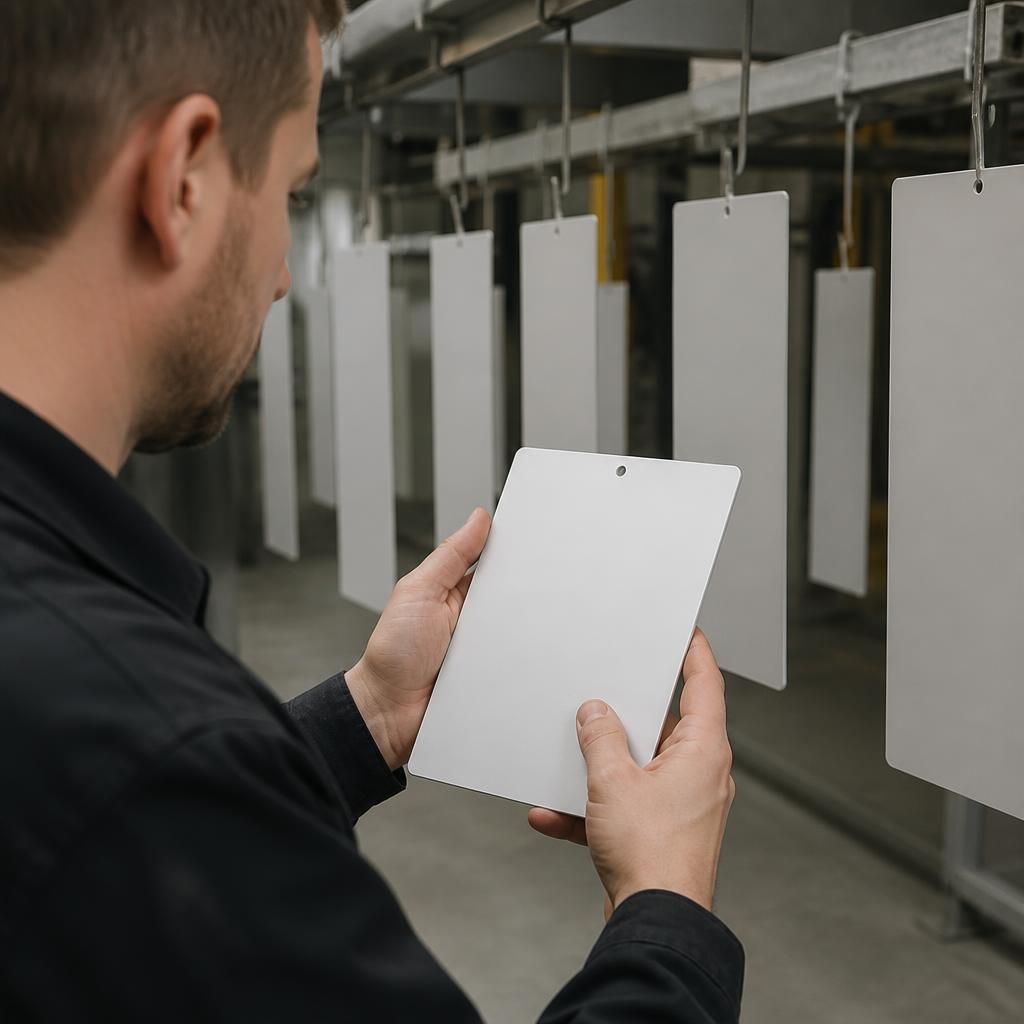
A pre-production sample panel is a practical way to confirm the required appearance before coating a full batch of aluminium components. It should use the intended substrate, pretreatment, powder, application settings and cure schedule, because changes in any of these can affect the final shade, texture and level of mattness.
The approved panel can then serve as a visual reference for production checks. Compare finished parts under consistent lighting, paying attention to white shade, matte uniformity, visible substrate features and the transition between coated areas and masked zones. This is especially useful where matte clear coating is intended to preserve the appearance of the aluminium beneath it.