

How can I ensure the proper maintenance of aluminium surfaces coated with matte clear and white powder finishes?
Maintain aluminium surfaces with matte clear or white powder finishes by washing them with clean water and a mild, pH-neutral detergent, using a soft cloth or sponge rather than abrasive tools. Rinse and dry thoroughly, inspect periodically for chips, scratches or corrosion, and address any coating damage promptly while avoiding harsh solvents, strong alkalis and abrasive cleaners.
Proper maintenance of aluminium with matte clear or white powder finishes means controlling exposure, handling the coated parts carefully, and using a planned inspection and repair process. The coating should be treated as a protective surface rather than as a substitute for sound design, suitable storage, or protection from aggressive contaminants.
Begin by assessing the environment in which the aluminium is installed or stored. Coastal air, industrial emissions, road salt, cement dust, de-icing materials and chemical vapours can place greater demands on the finish than a clean indoor environment. The maintenance plan should reflect the actual exposure, with particular attention to areas where contaminants can settle or remain damp. Horizontal ledges, recesses, joints and drainage points often need closer observation than exposed vertical faces.
Good water management is also important. Check that the design allows water to drain away rather than collect against the coated aluminium, and keep drainage routes clear of dirt and debris. Persistent moisture at joints, fixings or concealed edges can affect the substrate even when the visible face still appears sound. Where components are stored before installation, keep them dry, separated and protected from condensation, building dust and contact with materials that could mark the finish.
Matte clear coatings can show changes in surface appearance if they are polished, rubbed aggressively or locally repaired with a product that has a different sheen. White finishes may make isolated dirt, staining or handling marks more noticeable. For that reason, avoid spot treatments that leave a visible difference in gloss or texture. Any proposed cleaning agent, sealant or touch-up material should be checked for compatibility with the powder coating and tested on an inconspicuous area where appropriate.
During installation and subsequent maintenance work, protect the coated surface from abrasion. Do not drag aluminium sections across benches, floors or vehicle beds, and use clean packing materials that will not transfer colour, adhesive or grit. Temporary tapes, labels and protective films should be suitable for coated metal and removed in line with the coating or tape supplier’s guidance. Leaving adhesive residues or films in place for too long can complicate later cleaning and may alter the appearance of the finish.
Pay particular attention to interfaces between aluminium and other materials. Trapped dirt, moisture, sealant residues or metal swarf around fixings can create localised staining or damage. Remove installation debris without scraping the coating, and ensure that adjacent materials and jointing products are compatible with powder-coated aluminium. If a component is cut, drilled or modified after coating, the exposed area and any resulting swarf should be dealt with as part of the repair and finishing process rather than left unprotected.
A practical maintenance record should identify each coated item, its location, the surrounding exposure and the date of each inspection. Record changes such as loss of uniform appearance, staining that does not clear with normal care, coating lift, exposed metal or deterioration around edges and fixings. Photographs can help distinguish gradual weathering from new mechanical damage and can support a consistent decision about whether a local repair or more extensive refinishing is appropriate.
Minor marks should not automatically be covered with household paint or an unverified aerosol product. A repair needs to match the existing colour, sheen and coating system, and the damaged area must be properly prepared without widening the defect unnecessarily. Where damage is extensive, corrosion is present, or the repaired area would be conspicuous, obtain a coating specialist’s assessment. The appropriate remedy may involve removing contamination, preparing the aluminium and applying a compatible repair system, or stripping and recoating the component.
Maintenance should also be reviewed after changes to the operating environment. New nearby construction, altered industrial processes, exposure to cleaning chemicals or a change from indoor to outdoor use can introduce contaminants that were not considered originally. Updating the inspection frequency and handling controls at that point helps preserve both the protective function and the intended appearance of the matte clear or white finish.
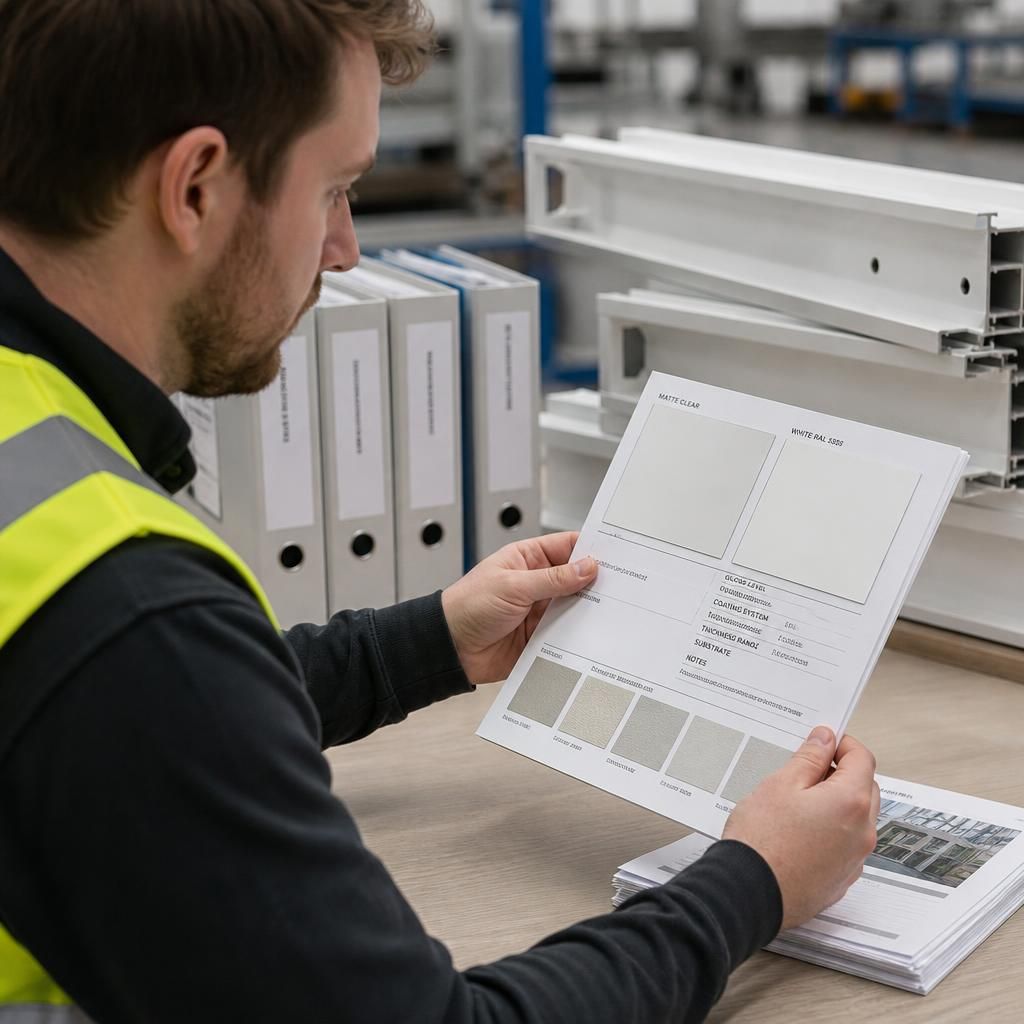
Retain the original coating specification with the aluminium asset records. Details such as the matte-clear or white finish, colour reference, gloss level and coating system help ensure that any future repair or replacement coating is assessed against the correct standard rather than an approximate visual match.
This information is particularly important where several aluminium components appear similar but have different finish requirements. Before approving remedial work, compare the proposed material with the retained specification and confirm that it is suitable for powder-coated aluminium. Keeping a small reference sample, where practical, can also help distinguish normal weathering from a finish that has been altered by unsuitable maintenance or repair.