

What potential environmental and operational factors should be considered when selecting the best edge powder coating for aluminium components?
Selecting the best edge powder coating for aluminium components depends on the environment the part will face—such as moisture, UV exposure, chemicals, salt or temperature changes—and the operational demands placed on its edges, including impact, abrasion and handling. Also assess the component’s edge geometry, required film coverage, surface preparation, coating compatibility, colour and finish requirements, batch volumes, and whether the proposed process can deliver consistent results across the full production run.
The best edge powder coating for aluminium is the one whose formulation, pretreatment and application controls match the component’s full service specification. Selection should therefore consider exposure severity, regulatory or project requirements, assembly conditions, dimensional tolerances, maintenance expectations and the coater’s ability to verify a repeatable result—not simply the required colour or nominal coating thickness.
Define the exposure category. Aluminium used indoors, externally, in a coastal location or within an industrial process may require different levels of coating performance. The specification should identify whether the part will be exposed continuously or intermittently, whether contaminants can accumulate at the edge, and whether water can remain against joints or enclosed sections. A coating system suitable for a sheltered architectural component may not be appropriate for metalwork exposed to persistent contamination or demanding industrial conditions.
Where a project has a recognised coating specification, use its environmental classification and performance requirements as the starting point. This gives the coater a measurable basis for recommending a powder type and pretreatment system. It also helps prevent an unsuitable general-purpose finish being selected for a component whose service conditions demand a more carefully qualified system.
Consider the aluminium alloy and its condition. Aluminium alloys vary in composition, surface characteristics and response to pretreatment. Cast, extruded, machined and previously coated parts may each require different preparation. Oils, machining residues, oxide layers and embedded contaminants must be removed in a controlled sequence, while the surface must remain suitable for good adhesion. If the alloy, temper or previous treatment is unknown, this should be established before the coating system is approved.
Particular care is needed where aluminium will contact dissimilar metals. The coating may form part of the separation between the materials, but fasteners, cut-outs and damaged areas can still create corrosion risks. The design specification should therefore address interfaces, insulating components, drainage and protection of exposed contact points rather than treating the powder coating as the only control.
Check the powder chemistry against the intended service. Different resin systems provide different balances of exterior durability, chemical resistance, hardness, flexibility and ease of recoating. A system selected for colour retention may not be the best choice where the part must tolerate process fluids, repeated cleaning or mechanical contact. Conversely, a highly resistant coating may be unnecessary for a protected component and could complicate later repair or overcoating.
Ask for the proposed system’s technical data and confirm the test methods behind any stated claims. Relevant information may include adhesion, flexibility, hardness, resistance to cleaning agents, corrosion performance and weathering results. Laboratory testing does not reproduce every site condition, but it provides a more useful comparison than relying on a generic description such as “durable” or “industrial grade”.
Account for manufacture and assembly. The coating must work with the way the aluminium component is produced and installed. Drilled holes, tapped threads, press-fit areas, bearing faces and electrical earth points may need masking or a defined uncoated tolerance. Powder build-up can affect close-fitting interfaces, moving parts and insertion points, while excessive masking can leave vulnerable transition areas. These requirements should be shown on the drawing or agreed in a written finishing schedule before production.
Also consider how the part will be supported during coating. Contact points used for racking can leave small marks or require later touch-up, and complex components may need a specified orientation to allow powder access and curing. The chosen process should provide a practical balance between complete coverage, acceptable contact marks and protection of functional surfaces.
Review cure requirements and substrate sensitivity. Powder coating is cured through a controlled combination of time and metal temperature. Thick aluminium sections, thin edges and assemblies with different mass can heat at different rates. The curing schedule must suit the powder system and the component, while avoiding distortion, loss of temper or damage to inserts and pre-assembled elements. If the component contains seals, adhesives or other heat-sensitive materials, their temperature limits must be considered before coating.
It is also important to establish whether the parts can be coated before final assembly. Coating separate components can improve access and inspection, whereas coating an assembled item may create masked areas, trapped residues or uneven curing. The most suitable sequence depends on the design, but it should be agreed before manufacture rather than treated as a finishing-stage decision.
Set acceptance criteria that can be inspected. A useful specification should define the permitted appearance and functional tolerances, including gloss or texture range, visible blemishes, edge coverage, masking boundaries, contact marks and areas where coating is not permitted. It should also state how adhesion, thickness and cure are to be checked, where those tests are relevant to the component.
For repeat production, retain an approved sample or reference panel and use consistent inspection conditions. Records of powder identification, pretreatment, curing and inspection can help trace variation between batches. This is particularly valuable where components are supplied over a long project period or assembled alongside parts finished at different times.
Plan for handling, installation and maintenance. The selected finish should tolerate the way parts are packed, transported and installed, including contact with protective materials, lifting equipment and site tools. Identify whether edges will be exposed to frequent cleaning, rubbing or adjustment after installation. Maintenance instructions should state which cleaning methods are acceptable and which solvents, abrasive pads or aggressive chemicals could damage the finish.
Finally, consider repair and replacement. Small installation defects may be handled with an approved touch-up system, but touch-up products can differ in colour, gloss and durability from the original powder coating. If future recoating is likely, establish whether the component can be stripped and refinished without affecting its dimensions or base material. A Midlands powder coating specialist can assess the aluminium, discuss the service specification and confirm which process controls and inspection records are appropriate for the proposed application.
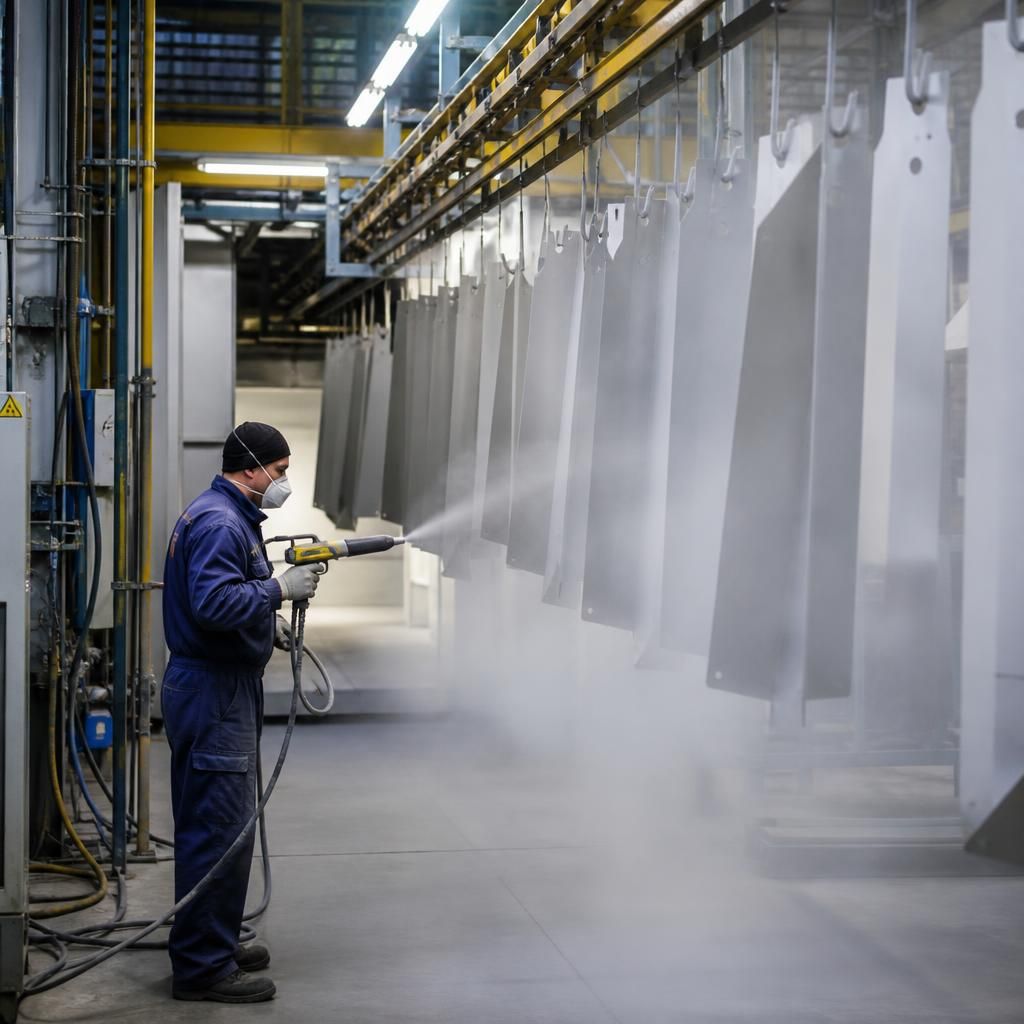
Environmental selection should consider the coating process itself as well as the conditions the aluminium component will face in service. Ask how powder overspray, masking materials, pretreatment residues and rejected parts will be managed, and whether the proposed specification avoids unnecessary rework. Powder type, colour changes and batch size can also influence cleaning requirements and material waste during production.
Energy use is another relevant consideration because curing requires controlled oven heating. A suitable system should cure within the component’s permitted temperature range without creating avoidable processing complications. Where environmental reporting or project sustainability requirements apply, request clear process information covering powder usage, waste handling, pretreatment and packaging so that the coating choice can be assessed across its full operational lifecycle.