

What is the process of applying edge powder coating to aluminium components?
Applying edge powder coating to aluminium components involves inspecting and preparing the edges, cleaning and pre-treating the metal, masking areas that must remain uncoated, and applying powder electrostatically. The coated component is then cured in an oven so the powder melts, flows into a continuous protective finish and bonds to the aluminium.
The process of applying edge powder coating to aluminium components is controlled around the component’s geometry, electrical conductivity and required finish. Particular attention is given to sharp corners, narrow lips, holes, recesses and transitions between coated and uncoated areas, because these features can affect powder deposition, film thickness and long-term protection.
1. Review the component and coating specification
Before processing, the coater should review the aluminium grade, component dimensions, edge profile, intended use and required appearance. Drawings should identify surfaces that must remain free from coating, contact points, threaded features, tight-fitting areas and any areas where coating thickness could affect assembly. The specification should also define the powder type, colour, gloss, texture, acceptable coating thickness, cure requirements and inspection criteria.
Edge geometry is especially important. Very sharp edges can make it difficult to achieve a consistent film because powder may build up unevenly at the corner or pull away slightly during melting and flow. Where the design permits, a small radius or chamfer generally gives the coating a more stable surface to cover. If the component cannot be redesigned, the application method and inspection plan need to account for the existing profile.
2. Control the substrate condition
Aluminium can carry machining oils, polishing compounds, oxide residues and handling contamination. These must be removed without damaging fine edges or altering critical dimensions. The chosen pre-treatment needs to suit the alloy and the intended service conditions. It should produce a clean, chemically suitable surface for powder adhesion rather than simply making the part appear visually clean.
Parts should be thoroughly dry before powder application. Moisture or retained treatment solution in a recess, folded edge or drilled feature can cause defects during heating. Components with deep cavities or overlapping sections may need particular attention to drainage, orientation and drying so that contamination is not released after coating has started.
3. Plan racking and masking
Racking determines how reliably the powder can reach each edge and how the component can be handled without damaging the finish. Contact points should be placed where small uncoated marks will not affect appearance, assembly or corrosion protection. The rack must also provide a sound electrical connection, since electrostatic application depends on the component being correctly grounded.
Masking is selected according to the temperature and cure conditions. Plugs, caps, tapes or other suitable masking materials may be used to protect threads, bores, machined faces, electrical contact areas and mating surfaces. Masking edges should be clean and secure; otherwise powder can creep beneath the mask or leave an irregular transition. The masking plan should also allow the operator to coat the required edge fully without creating an unintended bare strip.
4. Apply powder to the edge geometry
The powder is charged at the spray equipment and directed towards the grounded aluminium component. The operator controls gun distance, angle, movement and powder output to build an even deposit across the specified surfaces. Edges, corners and recesses may require changes in gun orientation rather than simply applying more powder from one position.
Electrostatic effects can make a sharp outside edge attract more powder than an adjacent flat area, while recessed or shielded edges may receive less. Excessive build-up can lead to an uneven appearance, loss of detail or problems with fit. Insufficient deposition can leave weak coverage at the very edge. Skilled application therefore uses overlapping passes and checks the part between stages rather than relying on a single heavy pass.
Where the design includes narrow channels or enclosed sections, the operator must consider the Faraday cage effect. Electrical fields can make it difficult for charged powder to reach sheltered areas. Adjusting the spray angle, reducing the electrostatic intensity where appropriate and using controlled manual application can improve access without causing excessive powder on exposed edges.
5. Melt and cure the coating
After application, the component enters the curing oven according to the powder manufacturer’s specified schedule. The relevant condition is the temperature reached by the metal for the required time, not merely the air temperature shown by the oven. Aluminium often transfers heat differently from heavier steel parts, while section thickness, mass and racking arrangement can all affect heat-up behaviour.
During curing, the powder melts, flows together and forms the final continuous film. If the component is under-cured, the finish may have inadequate adhesion or durability. Overheating or using an unsuitable cure cycle can affect colour, gloss, texture or the condition of the aluminium. For repeat production, the curing method should be repeatable for the full batch, including components positioned in different areas of the oven.
6. Inspect the finished edges
Once cooled, the component is checked against the agreed specification. Inspection commonly includes:
- visual continuity along outside edges, corners and transitions;
- coverage of narrow features, recesses and difficult-to-reach areas;
- film thickness at representative locations, including areas close to edges;
- colour, gloss, texture and general surface appearance;
- overspray on masked surfaces, threads, bores or contact points;
- runs, craters, pinholes, inclusions, impact marks and other visible defects; and
- adhesion or cure-related checks where these form part of the agreed quality plan.
Measurements on a small radius or irregular edge need to be interpreted carefully because gauges may not read the same way as they do on a broad flat surface. The inspection method should therefore be agreed before production, particularly where edge coverage or dimensional fit is critical.
7. Handle rework and batch consistency carefully
If an edge fails inspection, the correct remedy depends on the defect and the component’s dimensional requirements. Local correction may not be suitable where it would leave a visible transition or reduce protection. Removing and recoating a part can also affect masking lines, hole dimensions and the condition of the aluminium, so rework should be assessed rather than applied automatically.
For batch production, consistent racking, powder application, oven loading and inspection provide better control than treating every component as an isolated job. Representative samples, process records and clear acceptance criteria help identify whether a defect comes from the substrate, application technique, masking arrangement or curing cycle.
For manufacturers and fabricators, supplying accurate drawings and identifying critical edges before quotation or production allows the coating process to be matched to the component. A specialist powder coater can then advise on edge radii, masking, racking, powder selection and inspection requirements before the aluminium parts enter the line.
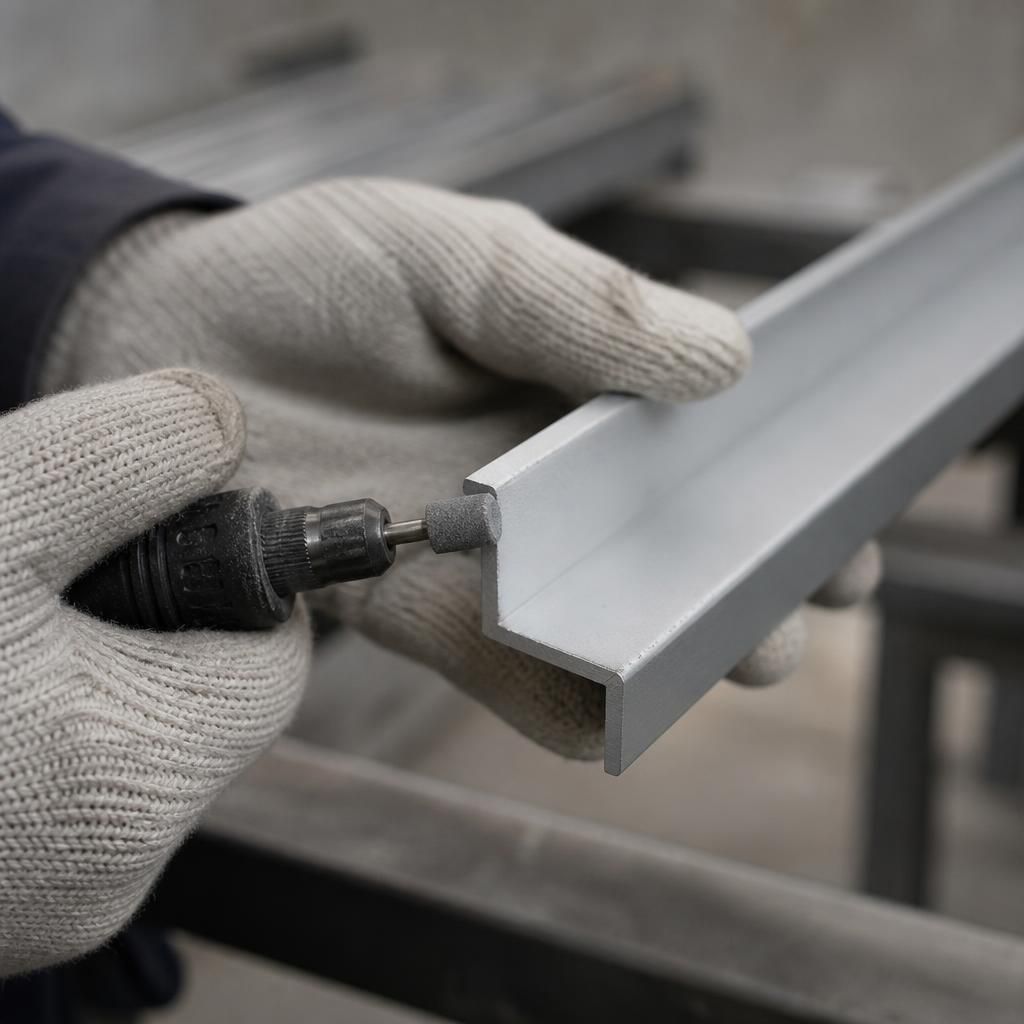
Edge preparation begins before chemical cleaning. Burrs, sharp machining marks and damaged sections on an aluminium edge can remain visible through the powder coating and create an uneven coating boundary. The edge should therefore be checked and, where permitted by the component drawing, lightly deburred or dressed without changing its required profile. This creates a cleaner surface for pre-treatment and helps the applicator achieve more consistent coverage without compromising mating faces, apertures or critical dimensions.