

How can I assess the expertise and capabilities of a provider specialising in edge powder coating for aluminium components?
Assess an edge powder coating provider by asking for evidence of experience with aluminium components, controlled preparation and application methods, suitable equipment, and inspection procedures for edge coverage and finish consistency. Review representative samples, technical specifications, quality records and their ability to work to your drawings, batch requirements and required performance standards.
Assess an edge powder coating provider by examining how well it converts your aluminium component requirements into controlled, measurable production steps. A capable provider should be able to discuss edge geometry, alloy and surface condition, masking, pretreatment, powder selection, curing, inspection and handling in relation to the finished part—not simply describe powder coating in general terms.
Test the depth of the technical discussion. Provide drawings, photographs or representative components and ask the provider to identify features that could affect edge coverage. These may include acute or exposed edges, internal corners, holes, slots, folded sections, overlapping joints and areas that must remain uncoated. The response should distinguish between cosmetic edge coverage and the level of protection required in service. It should also identify where the design, racking arrangement or masking method may need clarification before production.
Ask how the provider will account for the aluminium alloy, temper, previous finish and intended use. Aluminium can arrive with machining residues, oxide, oil, handling marks or other contaminants, and different surface conditions may require different preparation. A technically competent provider should explain how it establishes a suitable preparation route rather than treating every component identically. It should also be willing to flag information that is missing from the drawing or specification.
Examine the preparation and pretreatment controls. Edge performance depends on the bond between the coating and the prepared aluminium surface. Ask what checks are made before coating, how contamination is managed, and how the pretreatment route is controlled during production. The provider should be able to explain how it avoids inconsistent preparation at corners, cut edges, apertures and recessed areas. Where corrosion protection is important, request details of the required pretreatment and how its suitability will be verified for the component and operating environment.
Review the proposed masking and racking arrangement in detail. Masking should protect threads, mating faces, electrical contact points, bearing seats and other areas where coating could affect assembly. Racking must support the component without creating unacceptable contact marks or leaving critical edges shielded from the spray. Ask whether the proposed contact points and hanging orientation have been considered during sample approval, and how the provider will maintain repeatability when parts are processed in batches.
Check whether application decisions are appropriate for the geometry. The provider should be able to explain how powder application will reach exposed edges, recesses and internal features without creating excessive build-up elsewhere. Aluminium’s conductivity and component shape can affect electrostatic deposition, while complex profiles may produce areas with less even coverage. Ask how the coating team manages these differences and how it deals with Faraday-cage effects in narrow recesses or enclosed sections. The answer should relate to your actual component rather than rely on a generic statement that the powder will cover all surfaces.
Powder selection should be linked to the required appearance and service conditions. Ask the provider to identify the relevant coating type, colour and finish, and to explain any limitations concerning UV exposure, chemicals, abrasion, moisture, heat or frequent cleaning. If the coating is intended to protect an edge that will be handled, assembled or exposed to impact, the specification should address those conditions specifically. A provider should not recommend a finish solely on the basis of colour or initial appearance.
Scrutinise curing control rather than accepting an oven setting as proof. Powder manufacturers specify a curing schedule, but the important factor is the temperature reached by the component and the time at that temperature. Aluminium components with different wall thicknesses, masses and orientations may heat at different rates. Ask how the provider confirms that representative parts receive the required cure and how changes in loading or component design are controlled. The response should cover production verification and the handling of deviations, not just the nominal oven temperature.
Find out how the provider separates process approval from routine production. For a new component, a first-off or qualification stage can establish the acceptable appearance, edge coverage, masking result and assembly fit before the full batch is processed. Agree which characteristics will be approved, who will sign off the sample, and what happens if the supplied parts differ from the approved condition. This is particularly important where the edge finish is visible or must interface with another component.
Review the inspection plan and its relevance to edge coating. Visual inspection should cover runs, thin areas, bare spots, pinholes, inclusions, orange peel, contamination, colour variation and damage at contact points. Depending on the specification, objective checks may include coating thickness, adhesion, gloss, colour, cure and resistance to a stated environment. Ask which areas are inspected, how samples are selected, what equipment is used, and how measuring equipment is maintained. A credible inspection plan should define acceptance criteria in advance instead of relying on an undefined assessment of whether the finish looks acceptable.
Traceability is another useful measure of capability. Ask whether the provider can link a batch of finished components to the powder identification, preparation and application records, cure conditions, inspection results and any approved deviation. This does not require every project to have the same paperwork, but the records should be proportionate to the risk and sufficient to investigate a problem. Clarify how non-conforming parts are segregated, assessed and authorised for rework or release.
Assess production and handling capability against your actual supply pattern. Discuss component dimensions, weights, batch sizes, repeat orders, packaging requirements and any variation between parts. The provider should explain how it prevents contact damage after curing and how coated edges will be protected during internal movement, collection or delivery. If your components arrive as kits or have a required assembly sequence, ask whether identification and packing can preserve that sequence without compromising the finish.
Before appointing a provider, request a concise technical submission containing the proposed process route, powder specification, masking assumptions, curing approach, inspection plan, packaging method and exclusions. Compare the submission with your drawings and purchase requirements. Warning signs include unwillingness to discuss edge-specific risks, acceptance of incomplete technical information without qualification, unclear treatment of rejected parts, or claims of suitability unsupported by a defined test or acceptance method.
A practical assessment should end with a controlled trial using representative aluminium components, including the most demanding edge features. Use the trial to confirm fit, masking, appearance, coverage, cure and handling requirements, then record the approved condition in the purchase documentation. This gives you a clearer basis for comparing providers and for judging whether their stated capabilities are suitable for repeat production rather than only for a single satisfactory-looking sample.
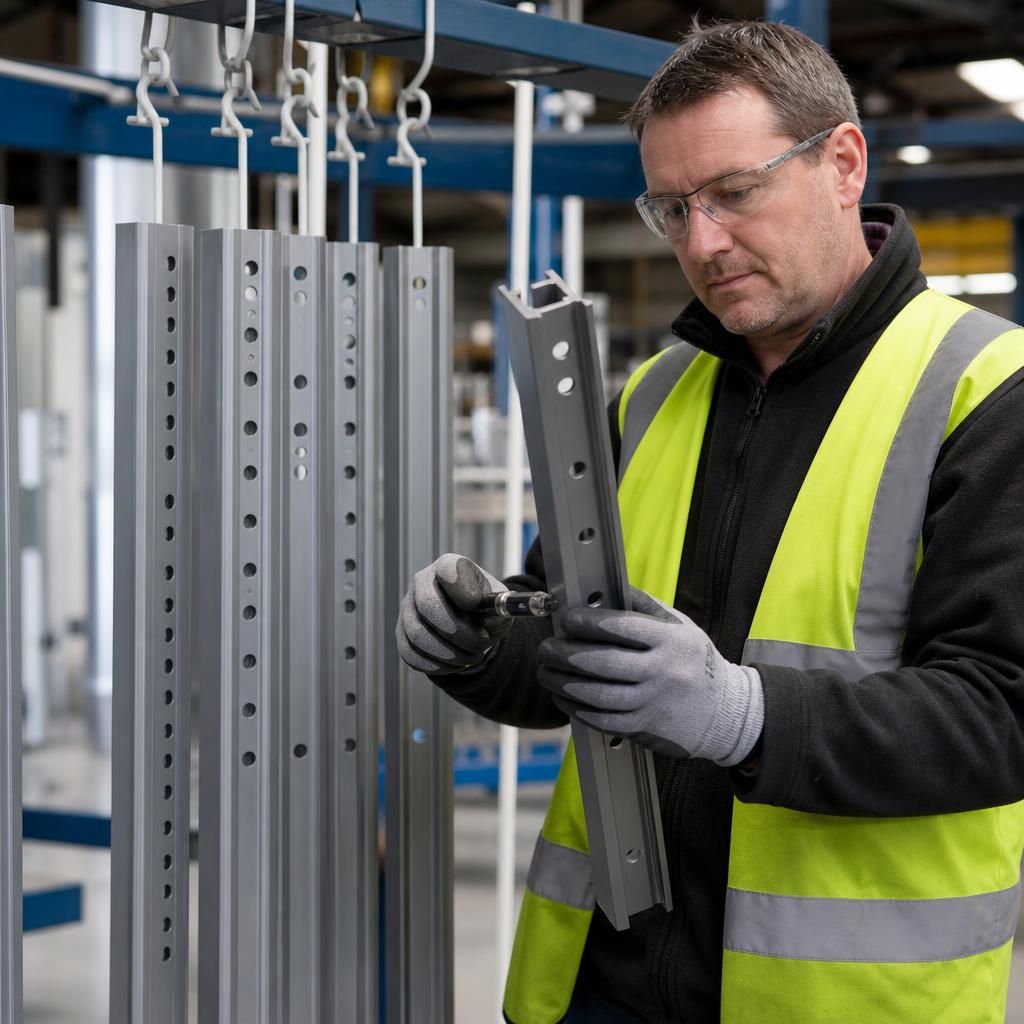
A provider’s change-control process is a useful indicator of whether its stated expertise will carry through to repeat production. Ask how it records revisions to aluminium drawings, alloy or temper, powder specification, masking, racking and curing conditions. Each change should be reviewed for its potential effect on edge coverage, appearance, assembly fit and performance rather than introduced informally on the shop floor.
Also establish how revised parts are distinguished from earlier versions and how approval is obtained before production continues. Clear revision records, retained reference samples and documented authorisation for process changes help prevent an acceptable first batch from becoming the benchmark for a different, unapproved finish later.