

What powder coat colours are available for aluminium surfaces?
Powder-coated aluminium can be finished in a wide range of RAL colours, including standard black, white, greys, metallics and brighter shades such as yellow, orange and red. The same colour can usually be specified with different surface finishes, including matt, satin, gloss, textured and specialist protective coatings, subject to the project requirements.
Aluminium powder coating is normally specified using a recognised colour reference, most commonly a RAL code, with the selected shade then matched to the required coating system and surface appearance. This allows manufacturers, fabricators and construction teams to identify a consistent colour for frames, panels, enclosures, profiles and other aluminium components.
The RAL Classic range is often the starting point because it provides widely recognised codes for common architectural and industrial colours. Where a more varied palette is needed, other RAL collections and proprietary powder ranges may provide additional shades, including unusual tones, deeper colours and more subtle variations. Custom colour matching may also be considered where a project has a corporate colour, an existing painted component or a particular design reference to reproduce.
A colour reference is not the only part of the specification. The chosen powder can have a smooth or textured appearance, and the level of sheen affects how the colour is perceived under different lighting conditions. A dark shade may appear flatter on a textured surface, while a smooth high-sheen surface can make small marks, handling damage or surface irregularities more noticeable. For this reason, colour decisions should be assessed alongside the required finish rather than from the colour code alone.
Metallic and pearlescent powders require particular care when matching separate components or coating items in different batches. Their appearance can vary with spray direction, component orientation and the way light reflects from the surface. If several aluminium parts must appear uniform when installed together, they should be considered as one colour and finish specification, with representative samples approved before production where appropriate.
Samples are useful because an on-screen colour, printed chart or small swatch may not show the final appearance accurately. The result can be influenced by:
- the aluminium alloy and condition of the surface before coating;
- the preparation and pre-treatment used;
- the powder formulation and curing process;
- the selected sheen and texture; and
- the viewing angle, surrounding colours and lighting.
Colour choice should also reflect the component’s location and use. A colour that meets an architectural brief may not be the most practical option for a part exposed to abrasion, chemicals, moisture or outdoor weathering. In these cases, the coating specification should address the required protective performance as well as the visual finish. The colour itself does not determine the full durability of the coating.
For replacement work, the existing aluminium should be assessed rather than relying only on its apparent colour. Ageing, ultraviolet exposure, cleaning and wear can alter the appearance of an original finish, so an exact new powder reference may not look identical beside an older component. A physical comparison and agreement on acceptable variation can help avoid mismatched parts.
For a project specification, record the colour reference, coating type, surface finish, intended environment and any sample approval requirement. Supplying drawings or component samples can also help establish whether the priority is an exact visual match, consistency across a batch or a coating system selected for demanding service conditions.
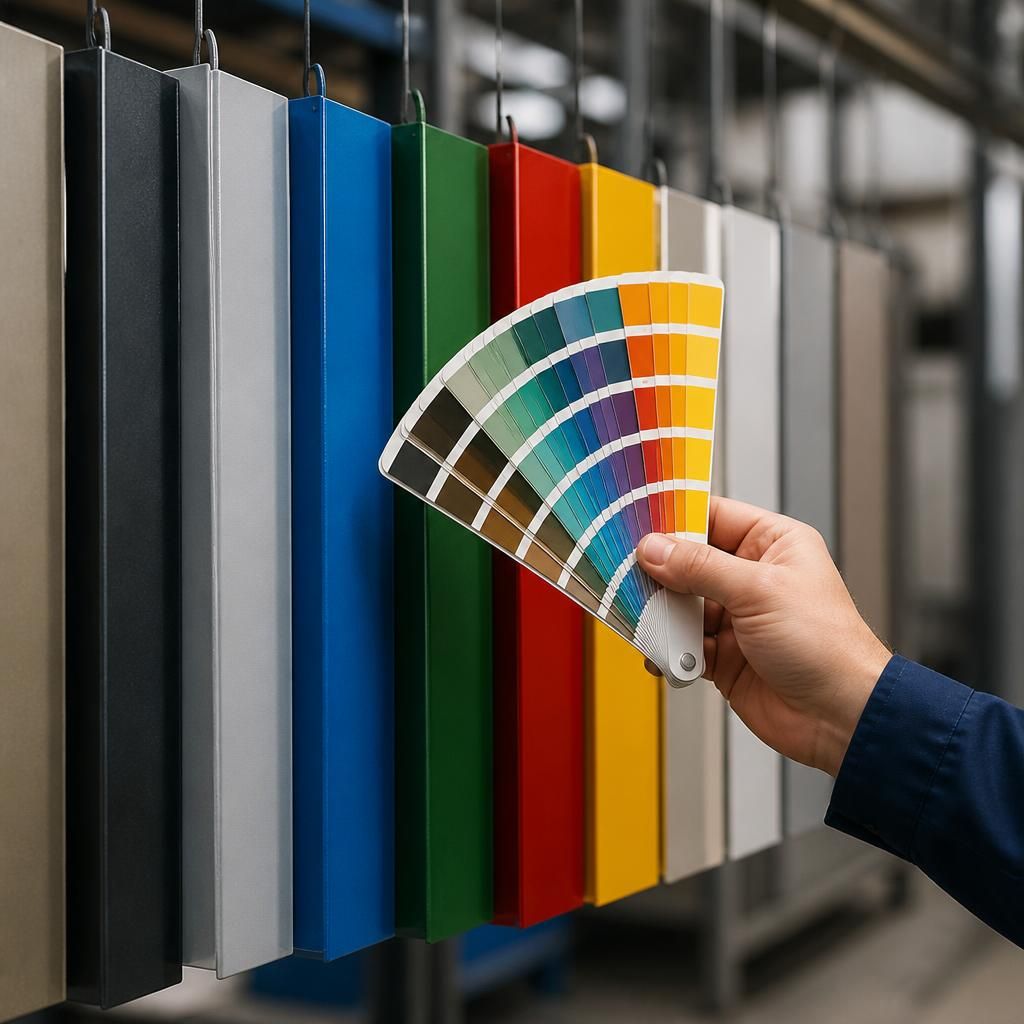
Colour availability for powder-coated aluminium depends on the coating system as well as the colour reference. Standard RAL shades are commonly available, but a particular shade may not be offered in every gloss level, texture or exterior-grade formulation. Specialist effects such as metallic, mica and pearlescent finishes can also have a more limited range than solid colours.
For this reason, the colour should be specified together with the intended use of the aluminium. Internal components may allow a broader decorative choice, while external frames, panels and fittings require a coating system selected for exposure to weather and ultraviolet light. A coating specialist can confirm which shades and effects are suitable for the required application before the final colour is approved.